


Introducción
Sourcing massive commercial inventories requires deep operational attention to international trade rules. Implementing a strict Kitchenware Material Testing protocol is the single most efficient way to protect your brand from global product liabilities. Without verifiable raw substrate verification, global wholesale distributors face major financial risks.
Are you an international commercial buyer wondering how to eliminate customs seizure risks for your upcoming production batches? Importing unverified materials can lead to dangerous substance leaching, product recalls, and severe trade penalties.
In this comprehensive guide, you will discover how professional chemical verification protects your international supply chain and builds marketplace trust. For a macro view of all performance standards, read The Ultimate Guide to Kitchenware Materials.
Key Takeaways
- Chemical Verification: Traceable chemical extraction checks ensure your items completely satisfy international customs thresholds.
- Heavy Metal Shield: Rigorous laboratory analysis guarantees zero toxic chemical leaching into everyday food items.
- Traceable Reports: Partnering with globally recognized inspection bodies delivers absolute transparent validation.
- End-to-End Control: Working with an experienced sourcing partner ensures standardized inspection services for every bulk order.
The Critical Importance of Professional Product Verification
Global B2B procurement teams must treat corporate legal compliance as a primary operational benchmark. Utilizing advanced product verification methodologies ensures that bulk consumer goods perform safely under high temperature exposure. This preventive practice eliminates the hidden risk of chemical cross-contamination before your freight leaves the factory floor.
Furthermore, conducting consistent quality inspection routines builds deep consumer confidence for your retail brand. Modern retail distribution chains refuse to accept inventory without traceable safety certifications. Investing in standardized material screening allows wholesale distributors to maintain smooth border clearance and secure profitable, long-term commercial contracts.
Technical Deep Dive: Migration Testing and Heavy Metal Screening
Understanding Chemical Migration Testing
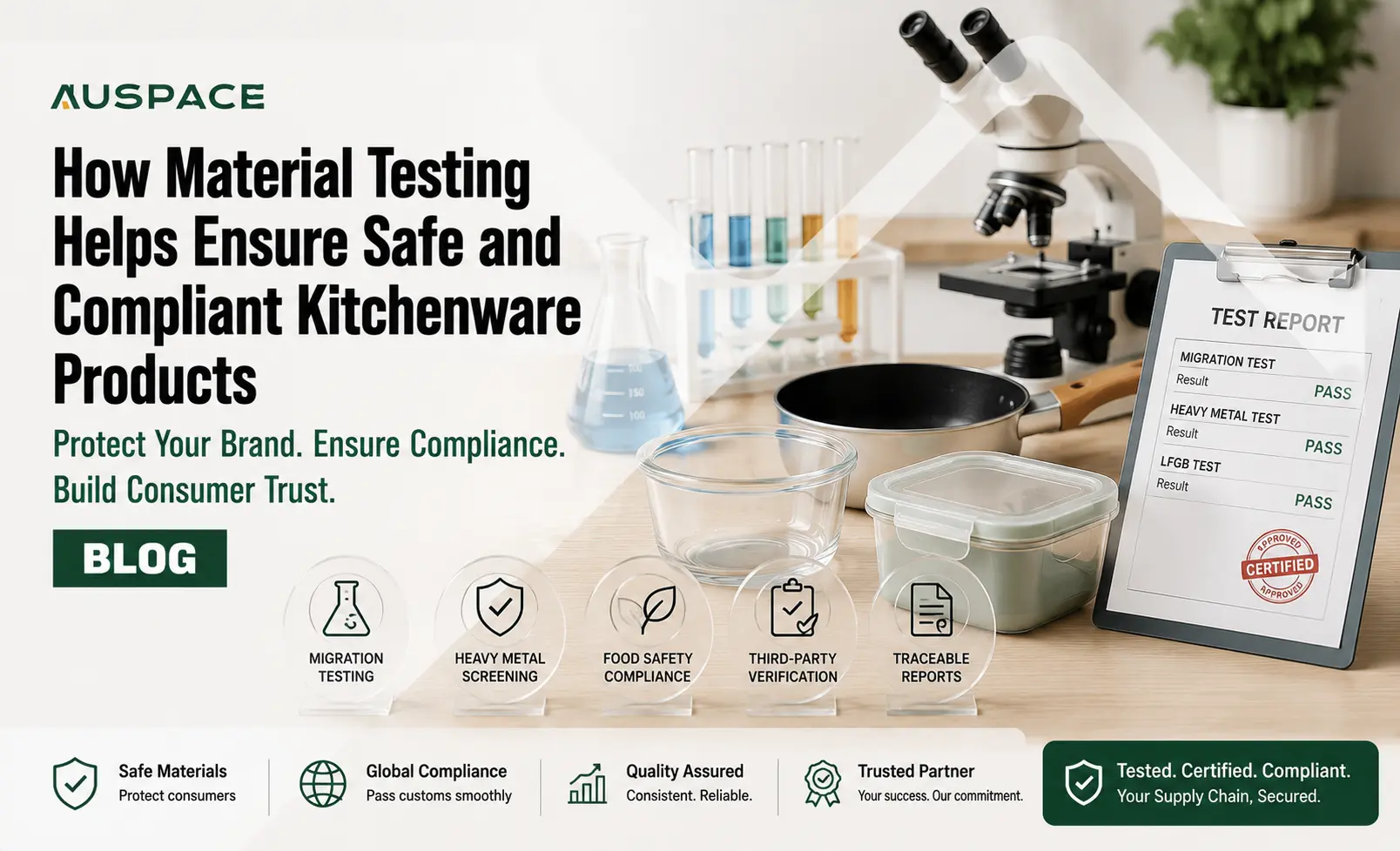
The absolute foundation of modern consumer safety is rigorous migration testing. This specialized scientific process replicates intense daily cooking conditions using chemical food simulants under extreme heat. Analysts calculate exactly how many milligrams of synthetic substances can migrate from a pan surface into ingredients, ensuring the material remains completely stable.
The Role of Heavy Metal Testing
Additionally, conducting comprehensive heavy metal testing is mandatory for all metal alloys and colored surface finishes. This specific analysis measures the presence of restricted toxic elements like lead, cadmium, and mercury. If you want to review how these safety metrics apply to premium steel grades, check out our guide on Food-Grade Stainless Steel in Kitchenware: What Importers Need to Know About 304 and 316 Grades.
Regulatory Benchmarks: LFGB Testing vs. Standard Criteria
Navigating European commercial distribution require compliance with the strictest regional regulations. While basic global markets utilize standard extraction guidelines, Western Europe enforces advanced LFGB testing thresholds. This strict protocol includes sensory odor and taste testing that other regional frameworks do not include.
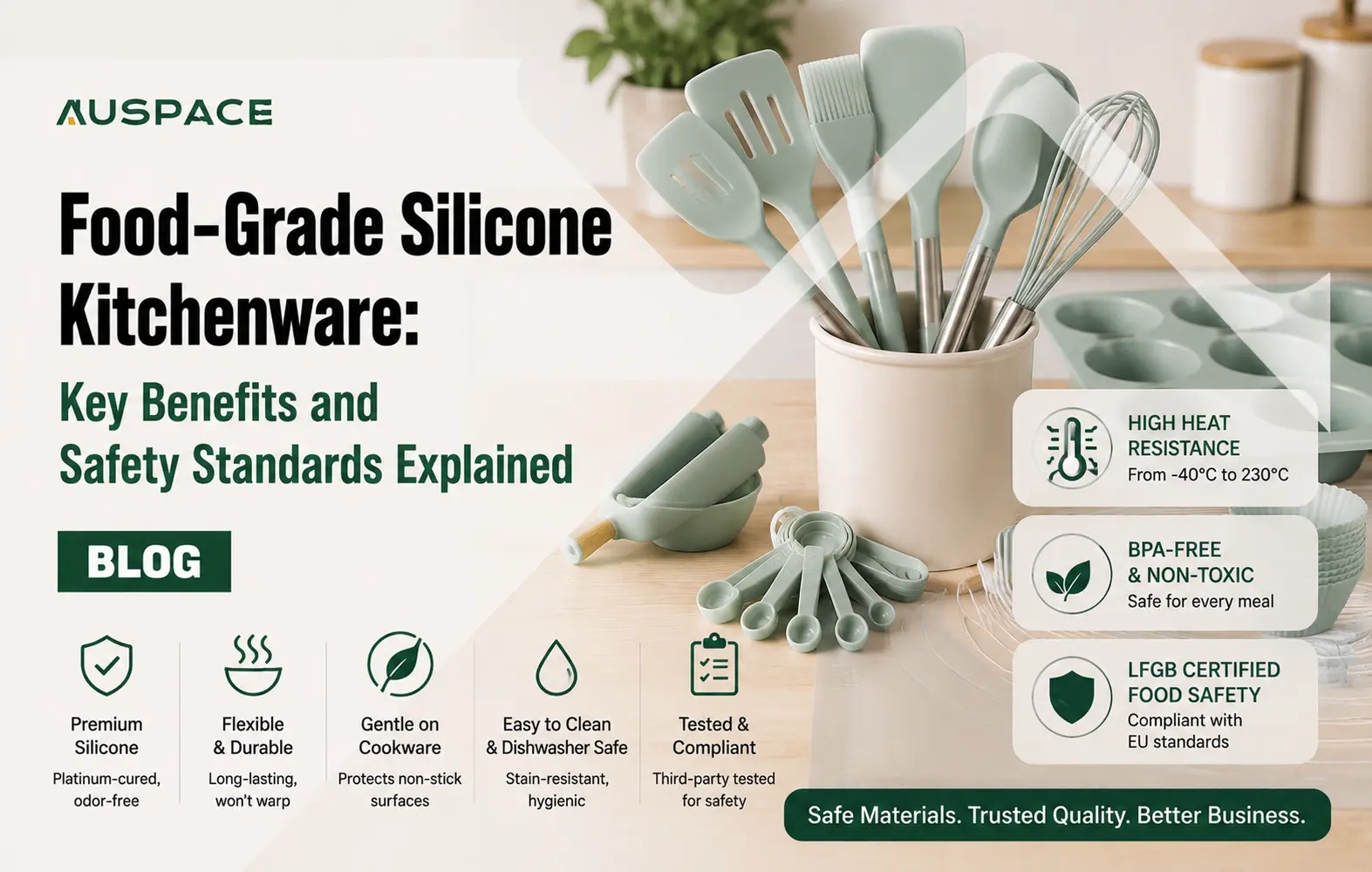
Passing these rigorous extraction checks guarantees that your products are 100% stable under high-acid and high-salinity cooking environments. Sourcing fully certified inventory ensures exceptional food contact safety metrics across all global marketplaces. To see how these compliance rules affect flexible polymers, read our report on Food-Grade Silicone Kitchenware: Key Benefits and Safety Standards Explained.
The Value of Independent Laboratory Testing and Traceable Reports
Wholesale buyers should never rely on unverified factory claims regarding raw material composition. True supply chain protection requires fully traceable documentation generated through independent laboratory testing. Securing official SGS reports or equivalent certifications from TÜV provides absolute legal proof of material purity.
These official inspection documents detail the exact chemical outcomes of every mechanical screening process. Presenting these traceable certificates to international customs officials streamlines your logistical timeline and minimizes costly port examination delays. For a detailed breakdown of how these certificates apply to polymer storage solutions, see Understanding Plastic Kitchenware Materials: Tritan, PP and BPA-Free Options.
FAQs on Kitchenware Material Testing
What is the main difference between global standards and LFGB testing parameters?
Advanced LFGB testing parameters enforce significantly lower chemical substance extraction limits and feature a mandatory sensory smell and taste evaluation. This makes it a much more premium safety benchmark than basic international criteria, ensuring superior overall food contact safety validation.
Why should an international importer always demand official SGS reports?
Official SGS reports provide globally recognized, legally binding evidence that your production batch has passed all relevant chemical and mechanical screenings. Having these documents readily accessible eliminates international customs friction and protects your wholesale business from product recall liabilities.
How does consistent quality inspection save manufacturing costs over time?
Implementing a rigorous quality inspection routine during early mass manufacturing catches composition defects before bulk goods are finalized. This proactive screening prevents massive factory waste, guarantees consistent product durability, and avoids expensive international freight returns.
Conclusión
Implementing a reliable Kitchenware Material Testing framework allows international distributors to eliminate legal liabilities and protect corporate brand equity. Prioritizing specialized procedures like migration checking and heavy metal analysis ensures your inventory satisfies strict global entry laws. This rigorous verification forms the backbone of a successful import business.
However, managing third-party laboratory coordination and factory verification checks alone can be a highly complex task. As an established Chinese Kitchenware Supplier with 11 years of industry expertise, AUSPACE streamlines your entire importing journey. We deliver comprehensive, One-Stop Services Kitchenware Supplier solutions from product development to final container logistics.
We protect your business by delivering detailed inspection services and standardized reports for every single order, guaranteeing 100% legal compliance. Our professional service offers flexible, negotiable payment terms to optimize your business cash flow, all backed by our efficient Plazo de producción estándar de 25 días..