


Введение
As the European Union continues to strengthen consumer protection and product safety regulations, ensuring EU Kitchenware Compliance has become a top priority for manufacturers, exporters, importers, and private-label brands. Whether producing cookware, bakeware, kitchen utensils, food storage containers, or drinkware, companies entering the European market must comply with a comprehensive legal framework designed to protect human health and ensure that food contact products are safe for everyday use.
For many businesses outside Europe, navigating these regulations can be challenging. Requirements often extend beyond basic product quality and include restrictions on chemical substances, migration limits, manufacturing practices, technical documentation, and product traceability. Failure to meet these standards may lead to customs delays, product recalls, financial penalties, or permanent damage to a company’s reputation. As a result, understanding EU Kitchenware Compliance is no longer optional—it has become an essential part of international business strategy.
Among the numerous regulations governing kitchenware products, REACH, LFGB, and food contact safety are three of the most frequently discussed topics. Although they are closely related, each serves a different purpose within the European regulatory system. REACH focuses on the registration and control of chemical substances, LFGB establishes one of the strictest food safety testing standards in Europe, and food contact legislation ensures that materials touching food do not release harmful substances during normal use.
For manufacturers exporting products to Europe, compliance begins long before production starts. Material selection, supplier management, production control, laboratory testing, documentation preparation, and ongoing quality assurance all contribute to successful EU Kitchenware Compliance. Companies that integrate compliance into product development from the beginning are more likely to enter European markets efficiently while reducing regulatory risks and long-term costs.
This guide provides a comprehensive explanation of the European regulatory framework for kitchenware products. It examines the legal requirements behind REACH compliance for kitchenware, explains the importance of LFGB certification, discusses food contact safety principles, and outlines practical strategies manufacturers can implement to ensure long-term compliance with European food contact regulations.
1. Understanding EU Kitchenware Compliance
1.1 What Is EU Kitchenware Compliance?
EU Kitchenware Compliance refers to the process of ensuring that kitchen products meet all applicable European laws, regulations, and safety requirements before being placed on the European market. These regulations are designed to protect consumers by ensuring that products intended to contact food remain safe throughout their entire service life. Compliance applies to a wide range of products, including frying pans, saucepans, stockpots, baking trays, food containers, kitchen utensils, cutting boards, reusable bottles, and storage products.
Unlike voluntary quality standards, many European food contact regulations are legally binding. Manufacturers, importers, and distributors are all responsible for ensuring that products comply with applicable legislation before products are sold within the European Economic Area. This means compliance is not simply the responsibility of the factory producing the goods. Every participant in the supply chain shares responsibility for product safety and regulatory conformity.
One of the reasons EU Kitchenware Compliance receives significant attention is that consumers expect products used in food preparation to present no health risks under normal or reasonably foreseeable conditions of use. Kitchenware often experiences high temperatures, prolonged food contact, acidic environments, and repeated cleaning cycles. These conditions increase the importance of material stability and chemical safety. Manufacturers must therefore demonstrate that their products remain safe throughout their intended lifespan.
Compliance also provides important commercial advantages. Buyers increasingly prefer suppliers capable of providing complete compliance documentation, laboratory reports, and traceability records. Companies with strong compliance systems often gain easier access to European retailers, improve customer confidence, and reduce the likelihood of product recalls or legal disputes. Rather than viewing compliance as a regulatory burden, many successful manufacturers now consider it an important competitive advantage.
1.2 Why Compliance Matters for Global Exporters
The European Union represents one of the world’s largest and most demanding consumer markets. Every year, millions of pieces of kitchenware are imported into Europe from manufacturers across Asia, North America, and other regions. However, market access depends heavily on compliance with European legislation governing food contact materials and chemical safety.
For exporters, achieving EU Kitchenware Compliance offers more than legal approval. It demonstrates commitment to product quality, responsible manufacturing, and consumer protection. European buyers increasingly request laboratory reports, declarations of conformity, and material safety documentation before placing orders. Suppliers unable to provide this information often struggle to compete against manufacturers with well-established compliance systems.
Failure to comply with European regulations can produce serious commercial consequences. Customs authorities may suspend shipments pending additional documentation or laboratory testing. Market surveillance agencies can order product withdrawals, impose financial penalties, or publish public safety alerts. In severe cases, repeated violations may damage relationships with distributors and retailers, making future market expansion significantly more difficult.
Global brands also recognize that compliance contributes to long-term brand value. Consumers increasingly pay attention to product safety, sustainability, and regulatory transparency. Demonstrating adherence to EU Kitchenware Compliance requirements helps strengthen consumer trust while supporting premium brand positioning.
In addition, European regulations often influence standards adopted in other international markets. Many countries reference European testing methodologies or introduce similar food contact regulations. Consequently, manufacturers investing in European compliance frequently strengthen their competitiveness beyond Europe itself. By integrating REACH compliance for kitchenware, food contact safety principles, and quality management into everyday operations, exporters establish stronger foundations for international growth.
1.3 The Main EU Regulatory Framework
The European regulatory system governing kitchenware products consists of multiple interconnected laws rather than a single regulation. Understanding how these legal requirements work together is essential for achieving effective EU Kitchenware Compliance.
The cornerstone of European food contact legislation is Regulation (EC) No. 1935/2004. This regulation establishes the general principle that food contact materials must not transfer substances into food in quantities that could endanger human health, change food composition, or negatively affect taste and odor. It applies to virtually every product intended to come into contact with food, regardless of material type.
Supporting this regulation are additional measures covering specific materials such as plastics, ceramics, regenerated cellulose, and recycled materials. These regulations establish migration limits, material specifications, and testing procedures designed to verify food contact safety under realistic conditions of use.
Alongside food contact legislation, REACH compliance for kitchenware plays a vital role in chemical safety. The REACH Regulation governs the registration, evaluation, authorization, and restriction of chemical substances used throughout manufacturing processes. Although REACH is not exclusively focused on food contact products, it significantly influences material selection and chemical management within the kitchenware industry.
Germany’s LFGB certification is another highly respected standard frequently requested by European buyers. While LFGB is a German regulation, its strict testing requirements have become widely recognized across international markets. Many importers consider LFGB testing an additional level of assurance that kitchenware products meet demanding food safety expectations.
Together, these regulations create a comprehensive compliance framework covering raw materials, manufacturing processes, product testing, documentation, and ongoing quality management. Manufacturers seeking successful EU Kitchenware Compliance must understand not only individual regulations but also how these legal requirements interact throughout the product lifecycle.
2. Understanding Food Contact Materials (FCM)
Food Contact Materials (FCMs) form the foundation of EU Kitchenware Compliance because every kitchen product intended to touch food must be evaluated for safety. Whether consumers are preparing meals, storing leftovers, or serving beverages, the materials used in kitchenware should not release harmful substances into food during normal use. For this reason, European legislation places significant emphasis on material selection, manufacturing control, and migration testing.
For manufacturers exporting to Europe, understanding food contact materials is not simply a legal requirement—it is an essential part of product development. Every material, coating, adhesive, pigment, and component used in a finished product may influence overall food contact safety. Even if the final product appears durable and attractive, hidden chemical risks can prevent it from meeting EU Kitchenware Compliance requirements.
The increasing demand for healthier lifestyles has also encouraged European consumers to pay closer attention to product safety. Buyers now expect cookware and kitchen utensils to be manufactured using food-grade materials that comply with the latest regulations. As a result, manufacturers that prioritize food contact safety during product design often gain stronger market acceptance and long-term customer trust.
2.1 Definition of Food Contact Materials
Food Contact Materials refer to any material or article intended to come into direct or indirect contact with food. According to European legislation, this definition covers products that are already in contact with food as well as products reasonably expected to contact food during normal use.
Examples include frying pans, saucepans, stockpots, baking trays, kitchen utensils, knives, cutting boards, food storage containers, lunch boxes, reusable bottles, coffee mugs, silicone baking molds, and stainless steel mixing bowls. Packaging materials, food processing equipment, and certain kitchen appliances may also fall within the scope of food contact regulations.
The fundamental objective of EU Kitchenware Compliance is ensuring that these products remain chemically stable under realistic conditions of use. During cooking, food storage, freezing, washing, or heating, materials should not release hazardous substances into food or negatively affect its composition, smell, or taste.
Manufacturers must therefore consider how consumers actually use their products. A frying pan exposed to temperatures above 200°C experiences very different conditions from a food storage container used only in a refrigerator. Likewise, acidic foods such as tomatoes or citrus fruits may interact differently with certain materials than dry foods. These variables influence testing methods and determine whether products satisfy food contact safety requirements.
Because kitchenware products are used repeatedly over many years, regulators also evaluate long-term performance rather than short-term functionality alone. Repeated washing, mechanical wear, thermal cycling, and prolonged food contact can gradually alter material behavior. Manufacturers seeking full EU Kitchenware Compliance must therefore ensure that products remain safe throughout their intended service life.
2.2 Common Materials Used in Kitchenware
Modern kitchenware incorporates a wide variety of materials, each offering different performance characteristics and compliance challenges. Selecting appropriate materials is one of the earliest and most important decisions affecting EU Kitchenware Compliance.
Stainless steel remains one of the most widely used materials for cookware and kitchen utensils because of its excellent corrosion resistance, durability, and food compatibility. High-quality stainless steel grades are generally well accepted for food contact applications when manufactured according to appropriate standards. However, manufacturers must still evaluate metal migration and production quality to ensure continued food contact safety.
Aluminum is another popular material, particularly for frying pans and cookware due to its outstanding thermal conductivity and lightweight characteristics. Because untreated aluminum can react with certain foods, manufacturers frequently apply non-stick or ceramic coatings to improve performance and enhance food contact properties. The quality of these coatings plays a critical role in achieving EU Kitchenware Compliance, making coating selection and application processes extremely important.
Plastic materials such as polypropylene (PP), polyethylene (PE), Tritan™, and other engineering polymers are commonly used for food containers, drinkware, measuring cups, and kitchen accessories. Plastic products intended for food contact must comply with strict migration limits established by European regulations. Manufacturers must verify that additives, stabilizers, colorants, and processing aids do not compromise food contact safety.
Silicone has become increasingly popular for baking accessories, spatulas, kitchen utensils, and collapsible food containers because of its flexibility and heat resistance. Although food-grade silicone generally performs well under high temperatures, manufacturers must carefully control formulation quality and production processes to meet EU Kitchenware Compliance requirements.
Other materials—including glass, ceramics, bamboo, wood, cast iron, and enamel-coated steel—also require careful evaluation. Each material presents unique compliance considerations relating to migration, durability, chemical stability, and intended use. Successful manufacturers understand that material selection represents the first stage of a much broader compliance strategy rather than an isolated engineering decision.
2.3 Potential Safety Risks
Despite advances in manufacturing technology, food contact materials may present safety risks if products are poorly designed, manufactured using inappropriate materials, or produced without adequate quality control. Understanding these risks is essential for achieving comprehensive EU Kitchenware Compliance.
One of the most significant concerns involves chemical migration. Under certain conditions, substances contained within a material may transfer into food during cooking or storage. The likelihood of migration depends on numerous factors, including temperature, contact time, food composition, and material characteristics. Fatty foods, acidic ingredients, and prolonged heating often increase migration potential, making appropriate testing particularly important.
Heavy metals remain another important consideration. Certain decorative coatings, pigments, or low-quality raw materials may contain substances such as lead or cadmium. European regulations establish strict limits to minimize consumer exposure, and manufacturers must verify compliance through laboratory testing. Maintaining strong supplier qualification procedures significantly reduces these risks and supports overall food contact safety.
Non-stick coatings require particular attention because they operate under demanding cooking conditions. Improper coating formulation, inadequate curing processes, or poor adhesion may reduce product durability or affect chemical stability over time. Manufacturers should carefully evaluate coating suppliers, conduct performance testing, and monitor production quality to ensure long-term EU Kitchenware Compliance.
Contamination during manufacturing can also compromise product safety. Poor housekeeping, inadequate process control, or improper storage of raw materials may introduce unwanted substances into finished products. For this reason, European buyers increasingly evaluate not only laboratory reports but also manufacturing practices when selecting suppliers. Well-organized production environments, documented quality procedures, and comprehensive traceability systems all contribute to stronger food contact safety performance.
Ultimately, preventing safety risks requires a combination of responsible material selection, effective production management, continuous quality control, and independent laboratory verification. Companies that integrate these practices into daily operations are significantly better positioned to achieve and maintain EU Kitchenware Compliance while building confidence among international customers.
3. REACH Compliance for Kitchenware
Among all European chemical regulations, the Registration, Evaluation, Authorisation and Restriction of Chemicals (REACH) Regulation is one of the most comprehensive and influential. Although REACH applies to numerous industries beyond kitchenware, it plays a critical role in ensuring that products intended for food preparation and storage do not contain unacceptable levels of hazardous substances.
For manufacturers, REACH compliance for kitchenware is more than simply completing paperwork. It requires careful chemical management throughout the supply chain, from raw material procurement to finished product manufacturing. Companies exporting to Europe must understand how REACH affects material selection, supplier qualification, product testing, and documentation.
Because chemical regulations continue to evolve, maintaining EU Kitchenware Compliance requires ongoing monitoring of regulatory updates rather than one-time certification. Manufacturers that establish robust chemical management systems are better prepared to adapt to future legislative changes while minimizing compliance risks.
3.1 What Is REACH?
REACH, which stands for Registration, Evaluation, Authorisation and Restriction of Chemicals, entered into force in 2007 and remains one of the world’s most comprehensive chemical safety regulations. Administered by the European Chemicals Agency (ECHA), REACH aims to improve protection of human health and the environment by ensuring that chemical substances used within the European market are properly evaluated and controlled.
For kitchenware manufacturers, REACH compliance for kitchenware primarily focuses on managing substances that may be present in finished products or used during manufacturing processes. Although cookware and kitchen utensils are generally considered articles rather than chemical substances, manufacturers still bear responsibility for ensuring that restricted substances are properly controlled.
One important aspect of REACH involves the Candidate List of Substances of Very High Concern (SVHCs). These substances may present serious health or environmental risks and are subject to increasing regulatory scrutiny. Manufacturers supplying products to Europe should regularly monitor updates to the Candidate List because new substances are added periodically. Failure to evaluate materials against current requirements may compromise EU Kitchenware Compliance even if products previously met regulatory expectations.
Another key principle of REACH is supply chain communication. Manufacturers should work closely with raw material suppliers to obtain declarations, technical data, and chemical composition information. Transparent communication throughout the supply chain allows businesses to identify potential compliance issues early and implement corrective actions before products enter production.
By integrating chemical management into everyday manufacturing activities, companies not only strengthen food contact safety but also improve operational efficiency and reduce long-term regulatory risks.
3.2 Restricted Substances
One of the primary objectives of REACH is to identify and control substances that may pose unacceptable risks to human health or the environment. For companies exporting cookware, bakeware, kitchen utensils, and food storage products, understanding restricted substances is a critical part of achieving EU Kitchenware Compliance.
REACH regulates thousands of chemical substances used across multiple industries. While not every restriction directly affects kitchenware products, manufacturers must ensure that raw materials, coatings, adhesives, inks, colorants, lubricants, and packaging materials comply with current regulatory requirements. This responsibility extends throughout the entire supply chain, requiring close cooperation between manufacturers, material suppliers, and testing laboratories.
Among the most closely monitored chemicals are Substances of Very High Concern (SVHCs). These substances may be carcinogenic, mutagenic, toxic to reproduction, persistent in the environment, or capable of accumulating in living organisms. The European Chemicals Agency regularly updates the Candidate List of SVHCs, meaning manufacturers cannot rely on historical compliance reports alone. Continuous monitoring is necessary to maintain EU Kitchenware Compliance as regulations evolve.
Certain phthalates used as plasticizers have also become increasingly restricted. Although these chemicals improve flexibility in some plastic products, prolonged exposure may present health concerns. Manufacturers producing plastic kitchen utensils, food containers, or silicone accessories should carefully verify material formulations to ensure compliance with applicable restrictions.
Heavy metals remain another important area of concern. Lead, cadmium, mercury, and hexavalent chromium are strictly controlled within many product categories because of their potential health effects. Decorative coatings, pigments, and colored printing inks should therefore be sourced from qualified suppliers capable of providing complete compliance documentation.
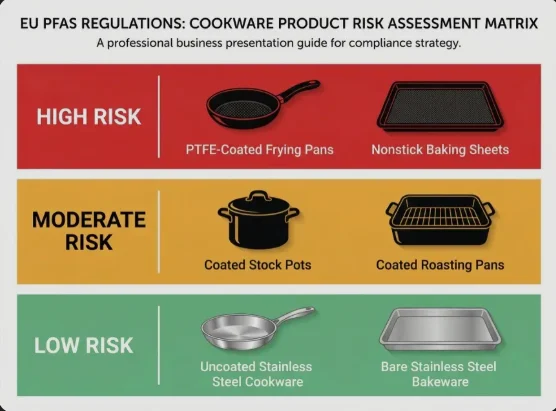
Per- and polyfluoroalkyl substances (PFAS) have also attracted growing regulatory attention. Although certain fluoropolymer coatings continue to be permitted under specific conditions, the European Union continues evaluating additional restrictions on PFAS-containing materials. Manufacturers producing non-stick cookware should closely monitor regulatory developments and work proactively with coating suppliers to prepare for future changes.
Successful REACH compliance for kitchenware depends on more than selecting compliant materials. Manufacturers should establish documented chemical management procedures, regularly review supplier declarations, maintain updated technical documentation, and conduct periodic laboratory testing to verify continued compliance. This proactive approach significantly reduces regulatory risks while supporting long-term food contact safety.
3.3 Manufacturer Responsibilities
Meeting REACH requirements is a shared responsibility throughout the supply chain. Although raw material suppliers, importers, distributors, and retailers each play important roles, manufacturers remain responsible for ensuring that finished products satisfy applicable regulatory requirements before entering the European market.
The first responsibility involves supplier qualification. Manufacturers should work only with raw material suppliers capable of providing complete technical documentation, material declarations, Safety Data Sheets (SDS), and evidence supporting chemical compliance. Establishing long-term partnerships with reputable suppliers reduces uncertainty and strengthens overall EU Kitchenware Compliance.
Material traceability is equally important. Every production batch should be traceable back to its original raw materials, allowing manufacturers to identify affected products quickly if compliance issues arise. Effective traceability systems also simplify internal audits and facilitate communication with regulatory authorities when necessary.
Manufacturers should also maintain comprehensive technical documentation covering product composition, manufacturing processes, laboratory reports, declarations of conformity, and quality control procedures. European customers increasingly request these documents before approving suppliers or placing purchase orders. Organized documentation demonstrates professionalism while supporting efficient supplier evaluations.
Employee training represents another critical responsibility. Engineers, purchasing personnel, quality managers, and production supervisors should understand how REACH influences daily operations. Even minor purchasing decisions or process modifications may affect chemical compliance if employees are unaware of applicable requirements.
In addition, manufacturers should establish formal procedures for monitoring regulatory updates. Because REACH continues to evolve, companies should regularly review changes published by the European Chemicals Agency and evaluate whether new restrictions affect existing products. Maintaining an active regulatory monitoring program helps businesses preserve EU Kitchenware Compliance over the long term rather than reacting only after compliance problems occur.
By integrating supplier management, traceability, documentation, employee training, and regulatory monitoring into everyday operations, manufacturers create a comprehensive compliance system that supports sustainable exports to the European market.
3.4 Testing Requirements
Laboratory testing forms an essential component of REACH compliance for kitchenware. Although supplier documentation provides valuable information, independent testing offers objective evidence that products satisfy applicable chemical safety requirements.
Testing typically begins with raw material evaluation. Manufacturers often verify material composition before production to ensure that incoming materials match supplier specifications and do not contain prohibited substances. Early-stage testing reduces the likelihood of costly production delays and minimizes the risk of non-compliant finished products.
Finished product testing provides additional assurance. Depending on product design and intended use, laboratories may perform chemical screening, heavy metal analysis, SVHC identification, and migration testing. These evaluations help determine whether products comply with both REACH requirements and broader food contact safety regulations.
Testing frequency should reflect production risks rather than relying on one-time certification. Material suppliers may change formulations, production conditions may evolve, and regulations may be updated over time. Regular verification therefore helps manufacturers maintain consistent EU Kitchenware Compliance while identifying potential issues before products reach customers.
Selecting an experienced laboratory is equally important. Accredited testing organizations use internationally recognized analytical methods and maintain strict quality management systems. Their reports are generally accepted by European buyers and regulatory authorities, providing greater confidence throughout the supply chain.
Manufacturers should also establish internal review procedures for interpreting laboratory reports. Simply receiving a passing test result is not sufficient. Quality teams should understand testing scope, applicable standards, sample selection methods, and any limitations associated with individual reports. This deeper understanding supports better compliance management and more effective communication with customers.
Ultimately, testing should be viewed as part of an integrated compliance strategy rather than a standalone requirement. Combined with strong supplier management, process control, and technical documentation, laboratory verification plays a central role in achieving long-term EU Kitchenware Compliance.
4. LFGB Certification Explained
While REACH focuses primarily on chemical management throughout the supply chain, LFGB certification is widely recognized as one of the most rigorous food contact testing standards for consumer products entering the European market. Although LFGB is based on German legislation rather than European Union law, many international buyers consider it an important benchmark when evaluating product safety.
For manufacturers exporting cookware and kitchenware, LFGB testing often serves as additional evidence that products satisfy strict food contact safety expectations. Retailers, importers, and brand owners frequently request LFGB reports alongside declarations of conformity and other compliance documentation, particularly for premium kitchen products.
Understanding how LFGB testing complements broader EU Kitchenware Compliance requirements enables manufacturers to better position their products within highly competitive European markets.
4.1 What Is LFGB?
LFGB stands for “Lebensmittel-, Bedarfsgegenstände- und Futtermittelgesetzbuch,” which translates to the German Food, Consumer Goods and Feed Code. This legislation establishes comprehensive requirements designed to protect consumers by ensuring that products intended to contact food remain safe during normal use.
Although LFGB is a German regulation, its influence extends well beyond Germany. Many European retailers require LFGB testing because it is recognized as one of the strictest food contact safety standards available. Products that successfully pass LFGB testing often gain stronger credibility among buyers throughout Europe.
LFGB certification applies to a broad range of food contact products, including cookware, kitchen utensils, bakeware, reusable bottles, food storage containers, lunch boxes, silicone accessories, and other household products. Manufacturers seeking stronger market acceptance frequently include LFGB testing as part of their overall EU Kitchenware Compliance strategy.
Unlike regulations focusing solely on material composition, LFGB evaluates finished products under realistic usage conditions. Testing considers how products interact with food during normal consumer use, providing a practical assessment of overall food contact safety. This comprehensive approach explains why LFGB continues to enjoy strong recognition among European buyers and regulatory professionals.

4.2 Products That Require LFGB Testing
Although not every kitchen product is legally required to obtain LFGB certification, many European retailers and importers request LFGB test reports before approving new suppliers. As consumer expectations continue to increase, LFGB testing has become a valuable indicator of product quality and food contact safety, particularly for products that come into direct contact with food or beverages.
Cookware is one of the largest categories requiring careful evaluation. Frying pans, saucepans, stockpots, woks, Dutch ovens, and pressure cookers are regularly subjected to food contact testing because they operate under high temperatures and prolonged cooking conditions. Manufacturers seeking EU Kitchenware Compliance often include LFGB testing as part of their overall product qualification program.
Kitchen utensils such as spatulas, ladles, serving spoons, whisks, tongs, peelers, measuring cups, and mixing bowls also frequently undergo LFGB evaluation. Since these products repeatedly contact food during preparation and serving, buyers expect manufacturers to demonstrate compliance through recognized laboratory testing.
Food storage products represent another important category. Plastic containers, lunch boxes, reusable silicone bags, glass storage jars, and vacuum food containers are commonly tested to verify that materials remain stable during refrigeration, freezing, microwave heating, and repeated cleaning cycles. These products must maintain food contact safety under a wide variety of everyday conditions.
Drinkware products—including reusable water bottles, insulated bottles, travel mugs, tumblers, children’s drinkware, and sports bottles—are also commonly evaluated. Since beverages may remain inside containers for extended periods, manufacturers must verify that materials do not release harmful substances or negatively affect taste and odor.
Silicone kitchen accessories have experienced rapid growth over recent years, making LFGB testing increasingly important. Baking mats, baking molds, oven mitts, spatulas, brushes, collapsible containers, and baby feeding products often require extensive evaluation because silicone formulations vary considerably between manufacturers.
Ultimately, LFGB testing helps buyers distinguish between products manufactured using carefully controlled food-grade materials and products that may present unnecessary safety risks. Companies integrating LFGB testing into their product development programs strengthen overall EU Kitchenware Compliance while improving competitiveness within European markets.
4.3 LFGB Test Procedures
LFGB testing is performed by accredited laboratories using standardized methods designed to evaluate food contact safety under realistic conditions of use. Unlike simple material inspections, LFGB testing examines finished products to determine whether they remain safe during actual consumer use.
The testing process usually begins with sample evaluation and product classification. Laboratories first determine the intended application of the product, including expected food types, operating temperatures, contact duration, and usage conditions. This information determines which testing protocols should be applied during evaluation.
Migration testing represents one of the most important elements of LFGB certification. During these tests, products are exposed to food simulants representing different categories of foods, including aqueous, acidic, alcoholic, and fatty substances. The objective is to determine whether chemicals migrate from the product into food beyond acceptable limits. Migration testing plays a central role in both LFGB certification and broader EU Kitchenware Compliance.
Sensory testing is another unique feature of LFGB evaluation. Laboratory specialists assess whether products transfer undesirable taste or odor to food or beverages during normal use. Even when chemical migration remains within legal limits, unpleasant taste or odor changes may indicate material quality problems that affect consumer satisfaction.
Mechanical performance may also be evaluated depending on product type. For example, cookware coatings may undergo durability assessments, while silicone accessories may be examined for heat resistance and structural stability. These evaluations help ensure products continue providing food contact safety throughout normal consumer use.
Manufacturers should remember that successful testing depends heavily on consistent production quality. A single compliant sample does not guarantee future production batches will perform identically. Maintaining robust quality management systems ensures that products leaving the factory continue meeting the same standards demonstrated during laboratory testing.
4.4 Common Reasons for Failure
Despite careful product development, some kitchenware products fail LFGB testing due to preventable manufacturing or material issues. Understanding these common causes allows manufacturers to improve production processes and strengthen EU Kitchenware Compliance before products reach the laboratory.
One frequent cause of failure involves excessive chemical migration. This problem may result from low-quality raw materials, unstable additives, inadequate curing processes, or improper manufacturing conditions. Migration failures often indicate weaknesses within supplier management or process control systems rather than isolated laboratory issues.
Poor-quality coatings represent another common challenge. Non-stick cookware requires precise coating application and curing procedures to achieve long-term stability. Inconsistent coating thickness, incomplete curing, or contaminated production environments may reduce coating performance and increase the likelihood of compliance failures.
Material contamination can also create significant problems. Cross-contamination between production batches, improper storage of raw materials, or inadequate cleaning of manufacturing equipment may introduce unwanted substances into finished products. Effective production management and documented cleaning procedures significantly reduce these risks.
Manufacturing inconsistency remains another important factor. Products developed using compliant materials may still fail testing if production parameters vary significantly between batches. Stable production conditions, equipment maintenance, employee training, and routine quality inspections help maintain consistent product performance.
Incomplete technical documentation may also delay product approval. Even when products satisfy laboratory requirements, buyers frequently request declarations of conformity, raw material certificates, production records, and traceability documentation. Manufacturers should therefore integrate documentation management into their overall EU Kitchenware Compliance program rather than treating paperwork as a separate administrative task.
Continuous improvement is essential for minimizing testing failures. Companies that regularly review laboratory reports, analyze production data, audit suppliers, and implement corrective actions typically achieve higher first-pass testing success rates while strengthening customer confidence.
5. Food Contact Safety Testing
Food contact safety testing provides scientific evidence that kitchenware products remain safe during intended use. It serves as one of the most important verification tools supporting EU Kitchenware Compliance because it demonstrates that materials, coatings, and finished products comply with applicable regulatory requirements.
Testing should not be viewed simply as a final approval step before shipment. Instead, it should be integrated throughout product development, supplier qualification, process validation, and ongoing production monitoring. Manufacturers that establish comprehensive testing programs are generally better equipped to identify compliance risks early and maintain consistent product quality over time.
5.1 Migration Testing
Migration testing is considered one of the most critical evaluations within food contact safety. The objective is to determine whether substances migrate from kitchenware materials into food during normal use.
Laboratories conduct migration tests using standardized food simulants designed to represent different food categories. Water-based simulants evaluate aqueous foods, acidic solutions represent fruits and vegetables, alcohol simulants assess beverages, and fatty simulants evaluate oils and high-fat foods. Testing conditions are selected according to the intended use of each product.
Migration testing may involve elevated temperatures, prolonged contact periods, repeated use cycles, or microwave exposure depending on product application. These procedures help simulate real-world consumer behavior while providing consistent laboratory data.
Results are compared with established migration limits specified by European regulations. Products exceeding these limits require reformulation, material modification, or process improvement before they can satisfy EU Kitchenware Compliance requirements.
5.2 Heavy Metal Testing
Heavy metal testing focuses on identifying potentially hazardous elements that may migrate from kitchenware into food. Although modern manufacturing has significantly reduced heavy metal usage, continuous verification remains essential because raw materials, pigments, decorative finishes, and recycled materials may still introduce contamination risks.
Testing commonly includes lead, cadmium, mercury, chromium, nickel, and other regulated metals depending on product composition. Cookware, ceramic products, enamel coatings, decorative printing, and metal utensils often receive particular attention during laboratory evaluation.
Manufacturers should carefully qualify raw material suppliers and maintain strict incoming material inspection procedures to minimize heavy metal risks. Routine laboratory verification provides additional assurance that finished products continue meeting food contact safety requirements.
5.3 Chemical Safety Assessment
Beyond migration and heavy metal testing, comprehensive chemical safety assessments evaluate broader aspects of product composition and manufacturing quality.
These assessments may include screening for restricted substances regulated under REACH, evaluation of volatile organic compounds, verification of plastic additives, assessment of coating ingredients, and identification of contaminants introduced during manufacturing.
Chemical safety assessments support both REACH compliance for kitchenware and overall EU Kitchenware Compliance by providing manufacturers with detailed information regarding product composition and regulatory conformity.
Advanced analytical technologies enable laboratories to detect extremely small concentrations of regulated substances, allowing manufacturers to identify potential compliance issues before products reach customers. Integrating chemical safety assessments into routine quality programs strengthens long-term compliance management while supporting continuous improvement initiatives.
5.4 Third-Party Laboratory Testing
Independent laboratory testing provides credibility that internal quality inspections alone cannot achieve. European buyers often prefer reports issued by internationally recognized laboratories because independent evaluations increase confidence in product safety and regulatory compliance.
Third-party laboratories maintain accredited testing facilities, standardized procedures, calibrated equipment, and qualified technical personnel. Their reports are widely accepted throughout international supply chains and frequently serve as supporting documentation during customs inspections and customer audits.
Manufacturers should select laboratories with experience evaluating food contact materials relevant to their specific product categories. Clear communication regarding intended product use, applicable regulations, and testing objectives helps ensure accurate and meaningful results.
Regular third-party testing also supports supplier performance monitoring. Rather than relying solely on initial product qualification, manufacturers should periodically verify production batches to confirm continued compliance. This proactive approach strengthens EU Kitchenware Compliance while reducing the likelihood of unexpected quality issues.
6. How Manufacturers Achieve EU Kitchenware Compliance
Achieving EU Kitchenware Compliance is not the result of a single laboratory test or certification. Instead, it is the outcome of a comprehensive management system that integrates material selection, production control, quality assurance, documentation, and continuous regulatory monitoring. Manufacturers that consistently meet European requirements understand that compliance begins during product development and continues throughout the entire product life cycle.
As European regulations continue to evolve, companies must adopt a proactive rather than reactive approach. Successful exporters invest in preventive quality management, establish long-term partnerships with qualified material suppliers, and regularly review regulatory updates to ensure products remain compliant. This systematic approach reduces business risks while strengthening customer confidence and brand reputation.
6.1 Material Selection
Material selection is the first and arguably the most important step in achieving EU Kitchenware Compliance. Every component that comes into contact with food—including metals, plastics, coatings, silicone, adhesives, colorants, and decorative finishes—must be carefully evaluated before production begins.
Manufacturers should purchase raw materials only from qualified suppliers capable of providing complete technical documentation. Material specifications, declarations of conformity, Safety Data Sheets (SDS), and test reports should all be reviewed before materials are approved for production. Working with reputable suppliers significantly reduces the risk of introducing restricted substances into finished products.
For cookware manufacturers, selecting high-quality food-grade aluminum or stainless steel provides a solid foundation for compliance. Products with non-stick coatings should use coating systems developed specifically for food contact applications and manufactured according to recognized quality standards. Silicone kitchen products should be produced using food-grade silicone compounds that demonstrate excellent thermal stability and low migration characteristics.
Material consistency is equally important. Changing suppliers or material formulations without proper evaluation may affect food contact safety and invalidate previous laboratory reports. Manufacturers should therefore establish formal change management procedures to ensure any modifications undergo appropriate review and testing before implementation.
Sustainability has also become an increasingly important consideration. Many European buyers now prefer manufacturers that use environmentally responsible materials while maintaining full EU Kitchenware Compliance. Incorporating recyclable materials, reducing hazardous substances, and improving resource efficiency can strengthen both regulatory compliance and market competitiveness.
6.2 Production Quality Control
Even the highest-quality raw materials cannot guarantee compliant products without effective production control. Manufacturing processes directly influence product performance, making quality management an essential component of EU Kitchenware Compliance.
Production should follow documented operating procedures that define every critical manufacturing parameter. Temperature control, coating application, curing conditions, assembly procedures, and cleaning operations should all be standardized to ensure consistent product quality. Well-controlled manufacturing processes reduce variation between production batches and improve overall food contact safety.
Incoming material inspection represents the first stage of production quality control. Each batch of raw materials should be verified against approved specifications before entering production. Visual inspections, dimensional measurements, chemical verification, and supplier documentation reviews help prevent unsuitable materials from affecting finished products.
During production, manufacturers should implement multiple in-process inspection points. Operators and quality inspectors should verify dimensions, surface finish, coating quality, assembly accuracy, and overall workmanship throughout the manufacturing process. Early detection of defects minimizes waste while reducing the likelihood of non-compliant products reaching final inspection.
Final quality inspections provide an additional safeguard before shipment. Depending on the product category, manufacturers may evaluate coating adhesion, handle strength, dimensional accuracy, appearance, packaging quality, and functional performance. Combined with laboratory verification, these inspections support consistent EU Kitchenware Compliance across every production batch.
Employee training is another important aspect of production quality. Production personnel should understand not only manufacturing procedures but also the reasons behind compliance requirements. Well-trained employees contribute to more consistent production quality and stronger long-term compliance performance.
6.3 Documentation Management
Technical documentation is often underestimated, yet it represents one of the most important elements of EU Kitchenware Compliance. European importers, regulatory authorities, and major retailers frequently request supporting documentation before approving products or suppliers.
Manufacturers should maintain comprehensive technical files for every product family. These files typically include product specifications, material declarations, laboratory reports, declarations of conformity, production records, quality inspection reports, and traceability information. Organized documentation enables manufacturers to respond quickly to customer requests while demonstrating professional quality management.
Declarations of Conformity (DoC) are particularly important for food contact products. These documents confirm that products comply with applicable European regulations and identify the standards used during evaluation. Buyers often review Declarations of Conformity alongside laboratory reports when assessing supplier capabilities.
Traceability records should also be maintained throughout the production process. Every finished product should be traceable back to its raw materials, production batch, manufacturing date, and inspection records. Effective traceability allows manufacturers to respond rapidly if regulatory investigations or product recalls become necessary.
Document control procedures help ensure that only current versions of specifications, testing standards, and regulatory references are used throughout the organization. Outdated documentation may create compliance risks, particularly as European regulations continue evolving. Regular internal reviews help maintain accurate records and strengthen overall compliance management.
6.4 Compliance Audits
Internal compliance audits provide manufacturers with valuable opportunities to evaluate whether existing management systems continue supporting EU Kitchenware Compliance. Rather than waiting for customer audits or regulatory inspections, companies should conduct regular self-assessments to identify opportunities for improvement.
Compliance audits typically examine supplier management, material traceability, production control, laboratory testing, documentation management, employee training, and corrective action systems. Auditors compare actual manufacturing practices against documented procedures and regulatory requirements to identify potential weaknesses.
Management reviews should follow each audit, allowing senior leadership to evaluate findings and allocate resources for corrective actions where necessary. Continuous improvement is a fundamental principle of successful compliance management, and regular audits help maintain long-term regulatory performance.
Many manufacturers also invite independent third-party auditors to evaluate their compliance systems. External assessments provide objective feedback and often identify improvement opportunities that internal teams may overlook. Combined with customer audits, these evaluations strengthen confidence throughout the supply chain and reinforce long-term EU Kitchenware Compliance.
7. Best Practices for Exporters and Buyers
Whether acting as manufacturers, importers, distributors, or private-label brands, businesses share responsibility for ensuring that food contact products entering the European market comply with applicable regulations. Developing effective sourcing strategies and maintaining close cooperation with suppliers are essential for reducing compliance risks.
Companies that prioritize transparency, documentation, quality management, and continuous improvement generally achieve more stable supply chains while reducing regulatory challenges.
7.1 Choosing Compliant Suppliers
Selecting the right supplier is one of the most important decisions affecting product compliance. Buyers should evaluate suppliers based on manufacturing capability, quality management systems, export experience, laboratory testing history, and regulatory knowledge rather than price alone.
Experienced manufacturers typically maintain documented quality systems, cooperate with accredited laboratories, and provide complete technical documentation upon request. During supplier evaluations, buyers should review production facilities, audit reports, laboratory certificates, and previous export experience to assess long-term reliability.
Building long-term partnerships with qualified suppliers also encourages continuous improvement and strengthens communication regarding future regulatory developments.
7.2 Compliance Documentation
Proper documentation simplifies customs clearance, customer audits, and regulatory inspections. Manufacturers should provide complete documentation packages including Declarations of Conformity, laboratory reports, material declarations, technical specifications, and traceability records.
Buyers should verify that documentation corresponds to the products being purchased and reflects current regulatory requirements. Periodic document reviews help ensure continued EU Kitchenware Compliance throughout ongoing business relationships.
Maintaining organized digital document management systems also improves efficiency by allowing information to be retrieved quickly whenever customers or regulatory authorities request additional evidence.
7.3 Avoiding Common Mistakes
Many compliance failures result not from intentional misconduct but from avoidable management mistakes. One common issue involves relying on outdated laboratory reports after changing suppliers or materials. Any significant modification to product design or material composition should trigger a compliance review and, when necessary, additional testing.
Another frequent mistake involves focusing solely on finished product testing while overlooking supplier qualification and production control. Compliance should be managed throughout the entire manufacturing process rather than treated as a final inspection activity.
Incomplete documentation, poor communication with suppliers, and insufficient employee training also contribute to compliance risks. Manufacturers that establish structured quality management systems are generally better equipped to avoid these common problems.
7.4 Preparing for Future EU Regulations
European product regulations continue to evolve in response to scientific research, technological innovation, and increasing consumer expectations. Manufacturers should therefore treat compliance as an ongoing business process rather than a one-time project.
Monitoring updates issued by the European Commission and the European Chemicals Agency helps companies identify regulatory changes before they affect exports. Participation in industry associations, technical seminars, and professional training programs also supports continuous learning.
Investing in research and development, sustainable materials, advanced manufacturing technologies, and digital quality management systems positions manufacturers for long-term success. Businesses that anticipate regulatory changes rather than simply reacting to them will be better prepared to maintain EU Kitchenware Compliance in an increasingly competitive global market.
Заключение
As global demand for safe and sustainable kitchen products continues to grow, EU Kitchenware Compliance has become one of the most important considerations for manufacturers exporting to the European market. Compliance extends far beyond meeting basic legal requirements—it reflects a company’s commitment to product quality, consumer protection, and responsible manufacturing practices.
Understanding the relationship between REACH compliance for kitchenware, LFGB certification, and food contact safety enables manufacturers to develop products that satisfy both regulatory expectations and customer requirements. From selecting high-quality raw materials and implementing effective production controls to conducting laboratory testing and maintaining comprehensive technical documentation, every stage of the manufacturing process contributes to successful compliance.
Manufacturers that establish systematic compliance management programs are better equipped to reduce regulatory risks, improve operational efficiency, and strengthen relationships with international buyers. Continuous monitoring of regulatory developments, regular internal audits, and close collaboration with qualified suppliers further support long-term market success.
As European food contact regulations continue to evolve, companies that integrate compliance into product design, manufacturing, and quality management will be well positioned to expand their presence in international markets. By treating EU Kitchenware Compliance as a strategic investment rather than a regulatory obligation, manufacturers can build stronger brands, enhance customer confidence, and achieve sustainable growth within the global kitchenware industry.

Дженис имеет многолетний опыт работы в индустрии кухонной посуды и занимается решением проблем закупок для покупателей. Она также управляет соблюдением всех требований, чтобы покупатели могли избежать задержек. Ее цель - быть вашим надежным союзником в области кухонной утвари, доставляя качественную продукцию вовремя и без головной боли.