For importers, distributors, and private-label brands, the Carbon Steel vs Cast Iron Cookware decision is more important than it first appears. On the surface, both materials are durable, versatile, and suitable for high-heat cooking. But in real B2B trade, Carbon Steel vs Cast Iron Cookware affects much more than cooking performance. It changes shipping cost, target price, carton loading, customer expectations, and even complaint rates after sale. If you are comparing options from a carbon steel cookware supplier or reviewing samples from multiple factories, this guide will help you make a more practical buying decision.
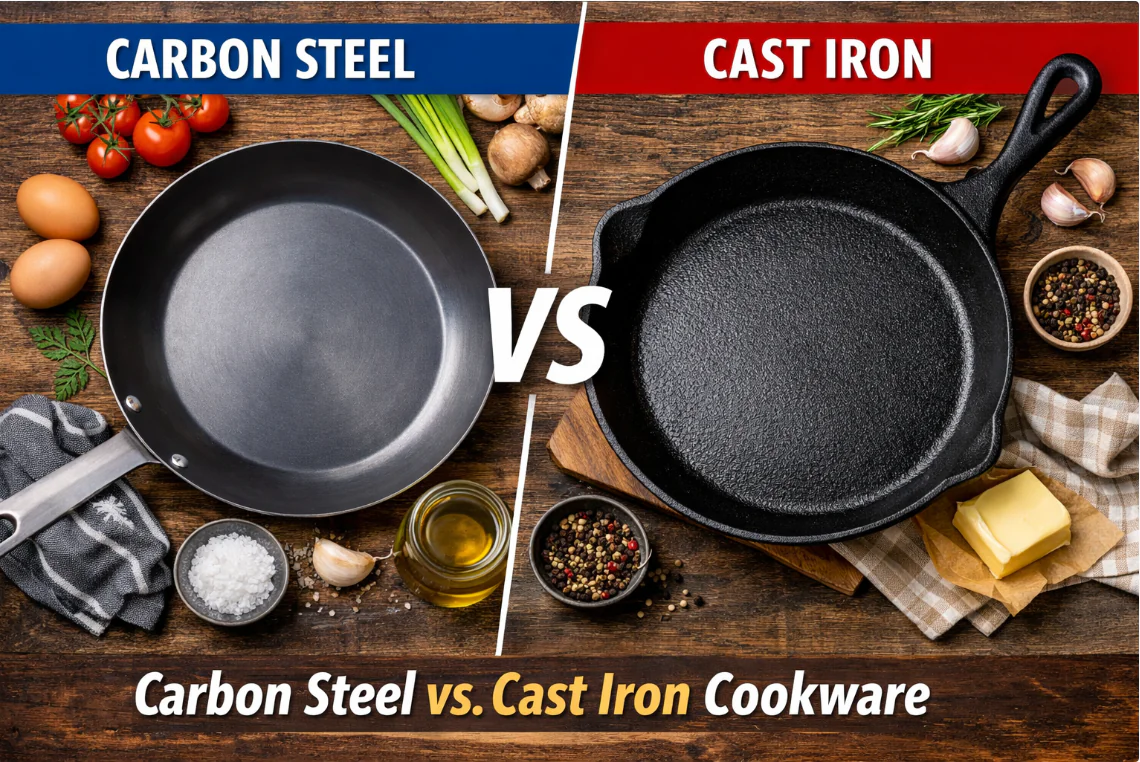
1. What Is the Real Difference Between Carbon Steel vs Cast Iron Cookware?
When buyers compare Carbon Steel vs Cast Iron Cookware, they often start with the wrong question: which one is better? In wholesale, the better question is: which one fits the market, the price point, and the sales channel better? That is where the Carbon Steel vs Cast Iron Cookware comparison becomes useful.
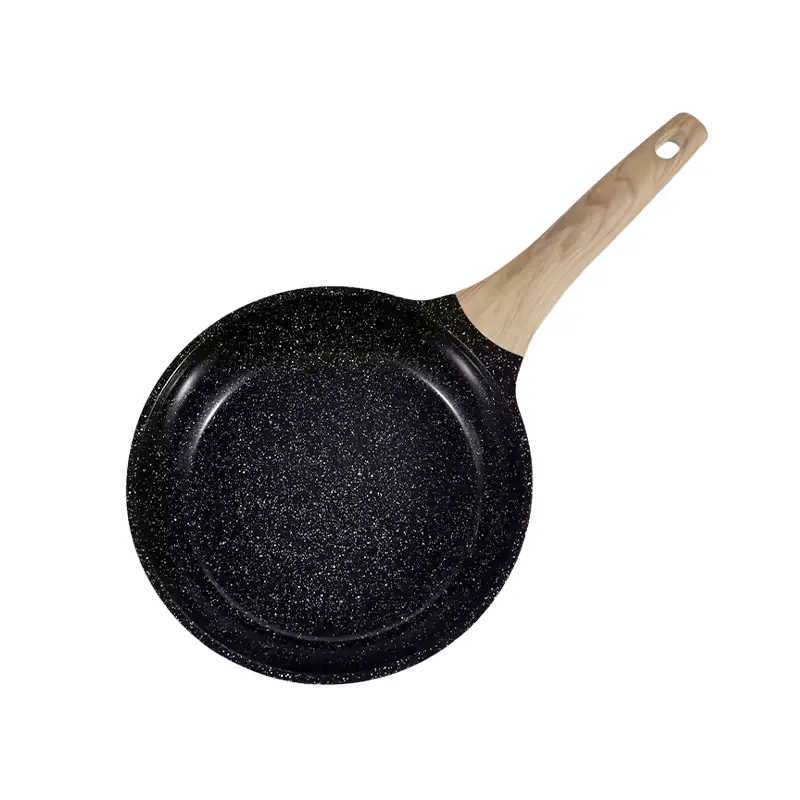
Carbon steel cookware is usually made from steel sheets through stamping, spinning, or pressing. Cast iron cookware is made by pouring molten iron into molds. This manufacturing difference leads to clear commercial differences. Carbon steel is usually lighter, thinner, and faster to heat. Cast iron is heavier, thicker, and stronger in heat retention. A buyer working with a carbon steel pan manufacturer will also notice that carbon steel often allows more flexibility in shape, thickness, and handle design.
1.1 Why the Material Structure Matters to Buyers
The Carbon Steel vs Cast Iron Cookware choice is not just about how the pan cooks. It directly affects container efficiency, retail display, and end-user handling. For example, a 28 cm carbon steel fry pan may weigh around 1.2-1.5 kg, while a similar cast iron skillet may weigh 2.5-3.0 kg or more. That difference can double freight pressure on some orders.
This is why many first-time buyers test lighter items first when working with a carbon steel cookware supplier. A lighter product is easier to ship, easier to handle, and often easier to sell through e-commerce or chain retail.
1.2 The Mistake Many New Buyers Make
In the Carbon Steel vs Cast Iron Cookware discussion, many beginners focus only on the retail look. A black pan is a black pan, so they assume the market will respond the same way. In reality, the Carbon Steel vs Cast Iron Cookware decision changes the full landed-cost model.
A premium kitchen shop may accept a heavier cast iron item because the customer expects a traditional, substantial feel. But an online seller shipping one piece at a time may find that freight cost quickly reduces profit. In that case, a lighter product from a carbon steel pan manufacturer is often the more practical choice.
2. Carbon Steel vs Cast Iron Cookware in Cooking Performance
Cooking performance still matters, because the final user buys results, not raw material. In the Carbon Steel vs Cast Iron Cookware comparison, the biggest performance differences are heat-up speed, heat retention, and handling. Understanding these points helps buyers choose the right story for the right market.
Carbon steel heats faster and reacts faster when the burner is adjusted. Cast iron heats more slowly, but keeps heat for longer. In the Carbon Steel vs Cast Iron Cookware debate, that means carbon steel often works better for quick-response cooking, while cast iron is preferred for searing, baking, and oven-to-table use. A good carbon steel cookware supplier will usually position carbon steel for everyday high-heat use, restaurant cooking, or lighter home cookware ranges.
2.1 Which One Heats Faster?
This is one of the clearest differences in Carbon Steel vs Cast Iron Cookware. Carbon steel usually heats up faster because it is thinner and lighter. That makes it suitable for eggs, stir-fry, sautéing, and dishes where temperature control matters. Buyers comparing Carbon Steel vs Cast Iron Cookware for Horeca or fast home cooking should pay attention to this point.
For professional kitchens, fast response is often more valuable than slow, heavy heat storage. That is one reason restaurant suppliers often speak with a carbon steel pan manufacturer first when building new fry pan or wok lines.
2.2 Which One Holds Heat Longer?
In Carbon Steel vs Cast Iron Cookware, cast iron is stronger in heat retention. Once hot, it stays hot. This can be useful for steak, cornbread, roasting, and slow oven cooking. The surface stays stable even when cold food is placed inside.
That sounds like a clear advantage, but buyers should think commercially. In Carbon Steel vs Cast Iron Cookware, high heat retention only creates value when the customer actually wants it and is willing to accept the extra weight. If the market prioritizes daily convenience, a lighter range from a carbon steel cookware supplier may still sell better.
3. Carbon Steel vs Cast Iron Cookware in Cost, Freight, and Margin
For B2B buyers, this is where the real decision often happens. The Carbon Steel vs Cast Iron Cookware comparison changes once freight, packaging, and return risk are included. Factory price alone is not enough. A pan that looks cheaper at the factory may become more expensive after shipping and warehousing.
The main reason is simple: weight. In Carbon Steel vs Cast Iron Cookware, heavier products mean fewer units per carton, fewer cartons per container, and higher delivery cost for direct-to-consumer channels. That is why a buyer sourcing from a carbon steel cookware supplier may sometimes accept a slightly higher ex-factory price if the lighter unit improves the final margin.
3.1 Why Weight Changes the Landed Cost
A few hundred grams may not sound important, but in wholesale it adds up quickly. In the Carbon Steel vs Cast Iron Cookware comparison, product weight affects container planning, pallet stacking, courier cost, and even labor handling. A heavy item also needs stronger inner protection and stronger cartons.
This is especially important for e-commerce sellers. In many online markets, the cost of shipping one heavy skillet can remove most of the margin. That is why buyers doing parcel shipping often prefer a lighter line from a carbon steel pan manufacturer.
3.2 Which One Is Better for E-commerce and Retail?
For e-commerce, the Carbon Steel vs Cast Iron Cookware balance often favors carbon steel. Lower shipping weight, easier handling, and broader daily-use appeal give it an advantage. For mass retail, carbon steel can also work well when buyers need better freight efficiency and more aggressive shelf pricing.
For premium stores, gift channels, and heritage-style cookware collections, cast iron can still be a strong choice. But in Carbon Steel vs Cast Iron Cookware, the retail price must support the higher logistics cost. Buyers should always compare factory quote plus freight, not factory quote alone. A serious carbon steel cookware supplier should be ready to discuss carton size, master carton weight, and loading quantity early in the conversation.
4. Carbon Steel vs Cast Iron Cookware in Maintenance and After-Sales Risk
Both materials require some user education. In the Carbon Steel vs Cast Iron Cookware comparison, both can rust if stored wet, both benefit from seasoning, and both may confuse end users if instructions are missing. For wholesale buyers, that matters because product complaints are expensive.
This is where Carbon Steel vs Cast Iron Cookware becomes more than a technical topic. It becomes a service topic. If a buyer sells seasoned or natural-finish cookware without clear usage instructions, customers may think discoloration is a defect. A reliable carbon steel cookware supplier should support buyers with care cards, carton marks, or basic user instructions.
4.1 Which One Is Easier to Season?
Carbon steel often develops seasoning a little faster because the surface is smoother. Cast iron can also season well, but the rougher surface may take longer to build a stable cooking layer. In the Carbon Steel vs Cast Iron Cookware comparison, this can influence customer satisfaction in the first weeks of use.
For buyers, the point is not which one is perfect. The point is whether the customer understands the product. A carbon steel pan manufacturer that offers pre-seasoning, nitriding, or clear maintenance guidance can reduce unnecessary complaints.
4.2 Common Complaints Buyers Should Expect
In Carbon Steel vs Cast Iron Cookware, the most common complaints are rust spots, uneven color, sticking during early use, and confusion about seasoning marks. None of these are unusual, but they become a problem when the buyer or seller fails to set expectations.
To reduce after-sales risk, buyers should ask factories to provide:
- simple care instructions
- usage warnings for first-time use
- dry storage guidance
- clear packaging that explains the natural surface behavior
These details are often more useful than aggressive marketing language. A good carbon steel cookware supplier understands that practical support protects reorder business.
5. Which Markets Prefer Carbon Steel vs Cast Iron Cookware?
There is no single winner in Carbon Steel vs Cast Iron Cookware. The right answer depends on the region, retail format, and cooking habits. Buyers should match the material to the channel instead of copying what another market is doing.
In general, Carbon Steel vs Cast Iron Cookware plays out differently across channels. Carbon steel often works better for restaurant supply, modern home cooking, open-flame use, and buyers who care about lighter products. Cast iron usually performs better in premium kitchen retail, baking categories, gift markets, and customers who value a traditional cooking experience. A flexible carbon steel cookware supplier can often help buyers adapt product specs to different regional needs.
5.1 Best Fit for Carbon Steel
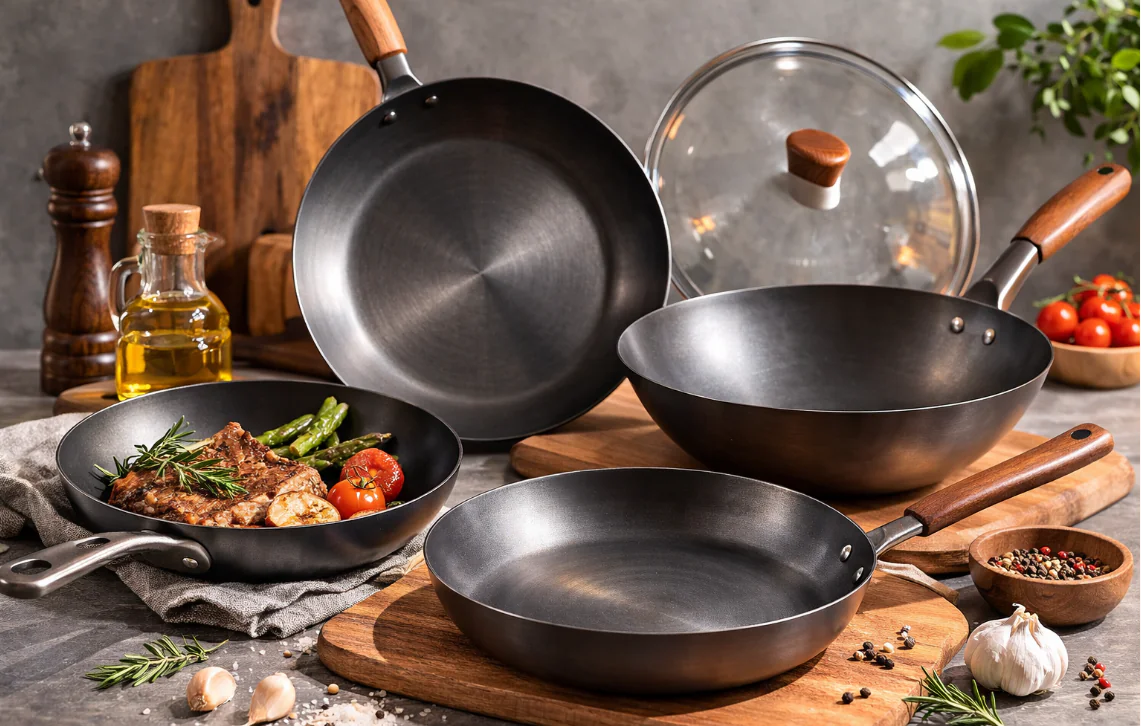
Carbon steel works well for fry pans, omelet pans, crepe pans, paella pans, and woks. In the Carbon Steel vs Cast Iron Cookware comparison, carbon steel is often the stronger choice when the customer wants everyday versatility, faster heat response, and easier lifting.
It is also easier to build a product family around carbon steel. A buyer can develop matching fry pans, woks, and grill pans with similar visual style and more manageable freight. That makes a carbon steel pan manufacturer especially useful for private-label projects.
5.2 Best Fit for Cast Iron
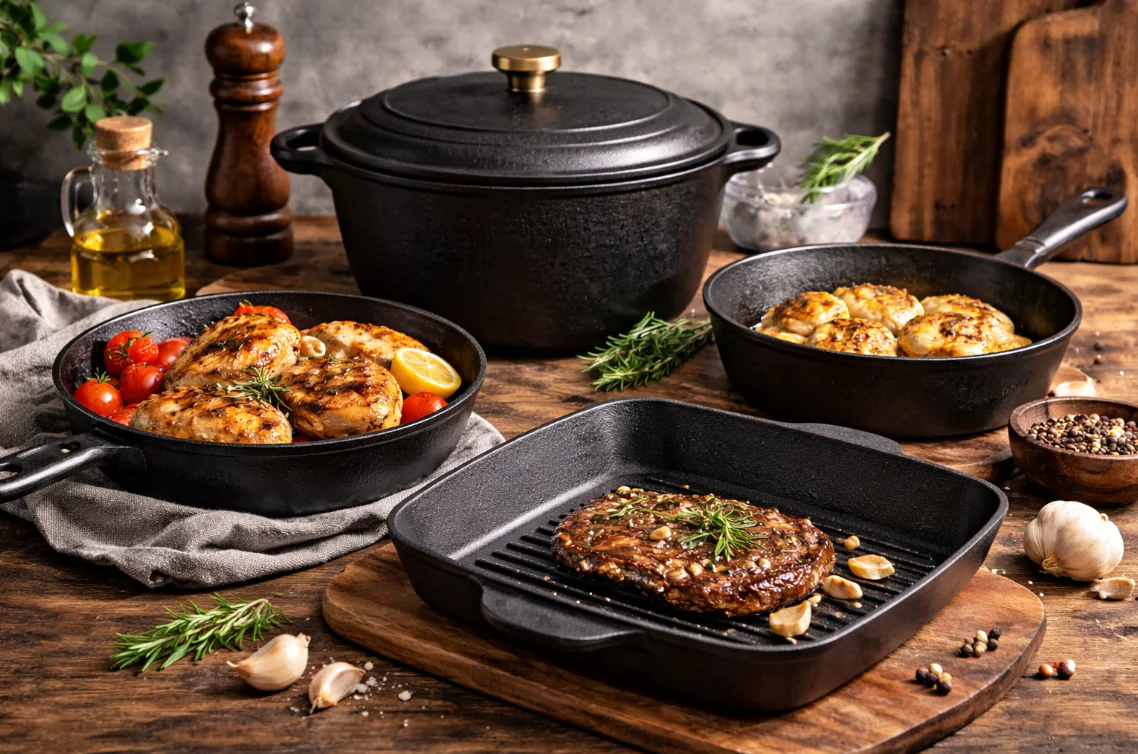
Cast iron is stronger for skillets, Dutch ovens, grill pans, and oven-based products. In Carbon Steel vs Cast Iron Cookware, cast iron often wins when the sales story includes long life, oven use, rustic appearance, or premium weight.
This does not mean it is automatically better for wholesale. It only means it works best when the retail pricing and customer expectation can absorb its heavier profile. Buyers should check whether that market truly wants cast iron, or simply wants dark cookware with a durable image.
6. How to Choose the Right Carbon Steel Cookware Supplier or Manufacturer
The factory matters as much as the material. In the Carbon Steel vs Cast Iron Cookware decision, quality problems often come from production control, not from the material category itself. A weak sample can make a strong category look bad.
When evaluating a carbon steel cookware supplier, buyers should go beyond product photos. Ask about body thickness, raw material grade, flatness control, handle fixing method, surface finish, packaging details, and MOQ. A reliable carbon steel pan manufacturer should answer these questions clearly and consistently.
6.1 What to Check in Samples
Sample review should be practical. In Carbon Steel vs Cast Iron Cookware, three checks are especially important for carbon steel:
- base flatness before and after heating
- handle stability after repeated movement
- surface behavior after washing and seasoning
These simple tests often reveal more than a polished catalog photo. Buyers comparing Carbon Steel vs Cast Iron Cookware should also measure actual weight, because sample weight affects both retail feel and freight planning.
6.2 Questions Every Buyer Should Ask
Before placing an order with a carbon steel cookware supplier, ask:
- What is the actual body thickness at the base and side wall?
- Is the finish natural, pre-seasoned, polished, or nitrided?
- What rust-prevention method is used during packing?
- What is the master carton weight?
- What is the loading quantity per container?
- Can the factory provide use-and-care instructions?
A carbon steel pan manufacturer that can answer these points clearly is usually easier to work with during mass production.
7.FAQ
7.1 Is carbon steel better than cast iron for wholesale buyers?
It depends on the target market and sales channel. Carbon steel is often better for buyers who need lighter cookware, lower freight costs, and easier daily handling. Cast iron is stronger in heat retention and premium positioning.
7.2 Do carbon steel and cast iron cookware both need seasoning?
Yes. Both materials usually benefit from seasoning. Proper seasoning improves cooking performance and helps reduce rust risk.
7.3 Why do importers often choose a carbon steel cookware supplier?
Many importers choose a carbon steel cookware supplier because carbon steel cookware is lighter, easier to ship, and suitable for a wider range of everyday products such as fry pans, woks, and crepe pans.
الخاتمة
For many importers, the strongest strategy is not choosing only one. It is building a focused range. That might mean a core everyday line from a carbon steel cookware supplier, supported by a few high-impact cast iron items for premium positioning. In that sense, the best Carbon Steel vs Cast Iron Cookware decision is the one that matches your channel, your customer, and your cost structure.

سيلفيا هي من كبار الممارسين الذين يركزون على مجال التجارة الخارجية لأدوات المطبخ، وهي متخصصة في توفير الدعم الشامل لمشتريات أدوات المطبخ والدعم التجاري للعملاء العالميين. ويمكنها تغطية الدورة الكاملة لخدمات التعاون الشاملة، بما في ذلك تحليل اتجاهات سوق أدوات المطبخ، واختيار الموردين ذوي الجودة، والرقابة الصارمة على جودة الإنتاج، والترتيبات اللوجستية الفعالة عبر الحدود.
وهي شريك موثوق به للعلامات التجارية وتجار التجزئة والموزعين عند شراء أدوات المطبخ عالية الجودة في الصين.