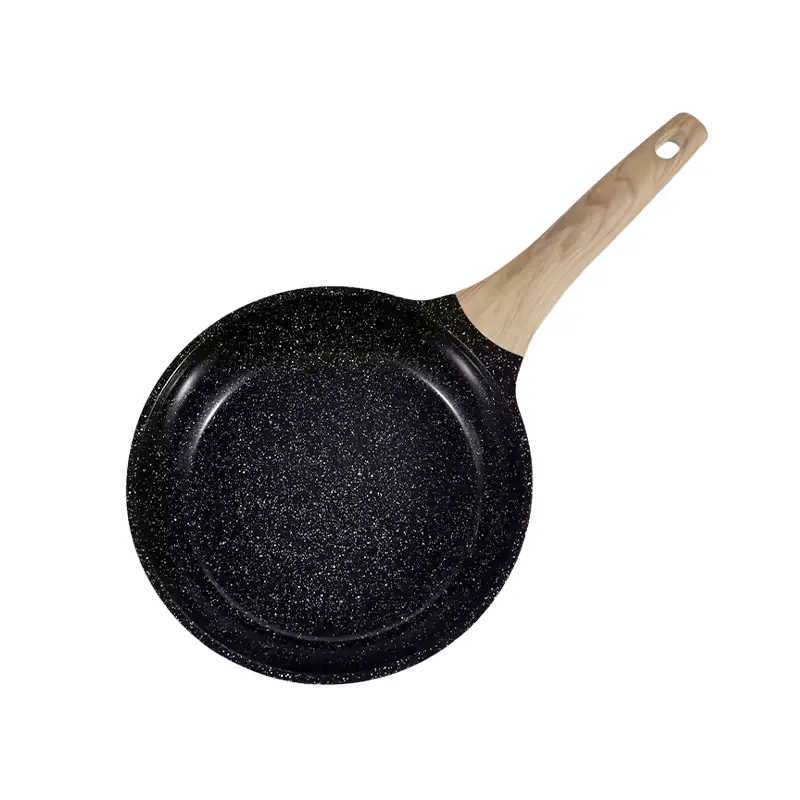
In today’s fast-growing global economy, emerging markets cookware certifications have evolved from optional standards to mandatory pillars of consumer protection and business success. As emerging economies—such as India, South Africa, and Gulf Cooperation Council (GCC) nations—see rising middle-class populations and increased awareness of food safety, emerging markets cookware certifications have become non-negotiable for manufacturers aiming to tap these markets. أواني الطهي, a daily household essential that directly contacts food, poses health risks if substandard; thus, emerging markets cookware certifications ensure products meet strict safety, material, and performance benchmarks, protecting consumers and fostering trust.
1.The Significance of emerging markets cookware certifications in Emerging Economies
Emerging economies are home to over 80% of the world’s population, and their cookware markets are expanding at 7-10% annually—driven by urbanization and rising disposable incomes. However, this growth has also brought challenges: unregulated manufacturers often produce cookware with lead, cadmium, or toxic non-stick coatings, endangering public health. Here, emerging markets cookware certifications play a pivotal role: they establish uniform standards that bridge the gap between varying production quality and consumer expectations.
For consumers, emerging markets cookware certifications act as a “trust mark.” In countries like India, where 60% of consumers lack access to detailed product testing data (per a 2024 FSSAI report), a certified label—such as BIS or SABS—signals that cookware is safe for daily use. For manufacturers, emerging markets cookware certifications are a gateway to market access: 85% of retailers in GCC nations refuse non-certified cookware, and India’s 2023 Consumer Protection Act imposes heavy fines on uncertified products. Moreover, emerging markets cookware certifications drive industrial growth: they push manufacturers to adopt advanced technologies (e.g., lead-free casting for aluminum cookware) and invest in R&D, turning local brands into global competitors.
Without emerging markets cookware certifications, emerging economies risk becoming dumping grounds for substandard products. A 2023 study by the Global Consumer Protection Organization found that uncertified cookware in Southeast Asia had 3x higher levels of toxic metal leaching than certified alternatives. This underscores why emerging markets cookware certifications are not just regulatory tools, but essential for public health and sustainable economic development.
2.Key Country-Specific Certifications: Building the Foundation of emerging markets cookware certifications
Each major emerging market has developed unique certification systems tailored to its consumer needs and regulatory frameworks—all integral to the broader ecosystem of emerging markets cookware certifications. These country-specific standards ensure that cookware aligns with local usage patterns (e.g., high-heat cooking in India) and safety priorities, while also facilitating cross-border trade.
BIS Cookware Certification (India): A Cornerstone of emerging markets cookware certifications
India’s cookware market, valued at $4.2 billion in 2024, is one of the largest in Asia—and BIS (Bureau of Indian Standards) certification is the backbone of emerging markets cookware certifications here. Mandatory for non-stick cookware, stainless steel cookware (diameter >100mm), and cast iron cookware, BIS certification sets rigorous benchmarks for material safety and performance.
The BIS process for cookware involves three key steps: first, manufacturers submit product samples and technical documents (e.g., material composition reports) to BIS-accredited labs. Second, labs test for toxic substances—for example, stainless steel cookware is checked for nickel leaching (limit: 0.1mg/kg) and lead (limit: 0.01mg/kg)—and durability (e.g., 10,000 cycles of scratch testing for non-stick coatings). Third, if samples pass, BIS issues a 2-year license, allowing manufacturers to use the BIS “ISI Mark”—a symbol trusted by 78% of Indian consumers (per a 2024 survey by the Confederation of Indian Industry).
BIS certification’s impact on India’s market is profound: it has reduced substandard cookware sales by 45% since 2019 and boosted domestic manufacturers. Brands like Prestige and Hawkins, which prioritize BIS certification, now hold 60% of India’s cookware market share. For international brands (e.g., Tefal), BIS certification is non-negotiable—without it, they cannot enter India’s retail chains like Big Bazaar or Amazon India. This makes BIS a critical component of emerging markets cookware certifications for any brand targeting South Asia.
GCC Cookware Certification (Gulf Region): Harmonizing Standards in emerging markets cookware certifications
The GCC region—with a cookware market valued at $1.8 billion—relies on GCC Conformity Marking (G-Mark) certification, a cornerstone of emerging markets cookware certifications for the Middle East. Developed by the GCC Standardization Organization (GSO), this certification is mandatory for all cookware sold in Bahrain, Kuwait, Oman, Qatar, Saudi Arabia, and the UAE, and its harmonized standards eliminate the need for separate country-specific tests—simplifying market access for manufacturers.
GCC certification focuses on three core areas: material safety (e.g., no lead or cadmium in aluminum cookware), heat resistance (cookware must withstand 300°C without deformation), and handle stability (handles must support 5x the cookware’s weight without breaking). The process involves submitting applications to GSO-accredited Conformity Assessment Bodies (CABs), lab testing (often at facilities in Dubai or Riyadh), and a factory audit to verify consistent production. Once certified, the G-Mark is applied, and products can be sold across all GCC nations.
For manufacturers, GCC certification is a game-changer: it cuts market entry time from 6 months (pre-harmonization) to 6-8 weeks. Brands like Kitchenaid and Ninja have used GCC certification to capture 35% of the GCC’s premium cookware market. For local manufacturers (e.g., UAE-based Al Safeer), GCC certification has enabled exports to other Middle Eastern countries, growing their revenue by 25% annually. This harmonization makes GCC certification a model for emerging markets cookware certifications in regional trade blocs.
SABS Cookware Certification (South Africa): Elevating Quality in African emerging markets cookware certifications
South Africa, Africa’s largest cookware market ($1.1 billion in 2024), uses SABS (South African Bureau of Standards) certification—a key part of emerging markets cookware certifications for the African continent. While not mandatory for all cookware, SABS certification is required for government procurement and preferred by 90% of major retailers (e.g., Checkers, Pick n Pay), making it essential for market competitiveness.
SABS standards are based on international ISO norms but include African-specific adaptations—for example, cookware must withstand high humidity (common in coastal South Africa) and be compatible with both electric and gas stoves (widely used in rural areas). The certification process involves document review (material specs, manufacturing processes), sample testing (e.g., corrosion resistance for stainless steel), and a post-certification surveillance audit (annual checks to ensure consistency).
SABS certification has transformed South Africa’s cookware industry: it has reduced imports of substandard cookware from China by 30% since 2020 and boosted local brands like BergHOFF South Africa, which now exports SABS-certified cookware to Nigeria and Kenya. For international brands, SABS certification is a stepping stone to other African markets—many African nations recognize SABS as a benchmark, reducing the need for additional testing. This makes SABS a critical link in African emerging markets cookware certifications.
3.Supply Chain Integrity in emerging markets cookware certifications: The Role of SEDEX Certification
While product-specific certifications focus on end products, emerging markets cookware certifications also require supply chain transparency—and SEDEX (Supplier Ethical Data Exchange) certification is the gold standard for ethical supply chains in the cookware industry. SEDEX ensures that every stage of the cookware supply chain—from raw material sourcing (e.g., aluminum mining) to manufacturing (e.g., factory labor practices)—adheres to ethical and sustainable standards.
SEDEX certification, also known as SMETA (SEDEX Members Ethical Trade Audit), assesses four key areas: labor rights (no child labor, fair wages), health and safety (factory ventilation, protective gear), environmental protection (wastewater treatment, carbon emissions), and business ethics (no bribery, transparent contracts). For cookware manufacturers in emerging markets, SEDEX certification involves hiring an accredited auditor to inspect their facilities and suppliers—for example, a Indian cookware brand would need to audit its aluminum suppliers in Odisha and its non-stick coating suppliers in Gujarat.
The benefits of SEDEX certification for emerging markets cookware certifications are clear: 70% of European retailers (e.g., Tesco, Lidl) require SEDEX certification from their cookware suppliers, opening doors to export markets. For local manufacturers, SEDEX certification improves brand reputation—consumers in emerging markets are increasingly choosing “ethical cookware,” with 65% of South African consumers willing to pay 10% more for SEDEX-certified products (per a 2024 SABS survey). However, challenges exist: small manufacturers in India and South Africa often struggle with the
3,000−5,000 audit cost. To address this, governments like India’s Ministry of MSMEs offer 50% subsidies for SEDEX audits, making it more accessible. This support ensures that SEDEX remains an inclusive part of emerging markets cookware certifications.
4.Specialized Certifications Shaping emerging markets cookware certifications: Halal-Compliant and Fairtrade Standards

Beyond safety and supply chains, emerging markets cookware certifications include specialized standards that cater to cultural, religious, and ethical consumer needs. Halal-compliant and Fairtrade certifications are two such standards, each addressing unique market demands and expanding opportunities for manufacturers.
Halal-Compliant Cookware Certification: A Cultural Pillar of emerging markets cookware certifications
Halal-compliant cookware certification is critical for emerging markets with large Muslim populations—including Indonesia (230 million Muslims), Malaysia (33 million), and GCC nations. Halal, meaning “permissible” under Islamic law, requires cookware to be free from pork-derived materials (e.g., certain lubricants used in manufacturing) and processed in facilities that avoid cross-contamination with non-Halal products.
The certification process involves working with Halal bodies like Malaysia’s JAKIM or Indonesia’s MUI: manufacturers submit material lists (e.g., non-stick coating components) for review, and auditors inspect facilities to ensure separate production lines for Halal and non-Halal products. For example, a Malaysian cookware brand must ensure that its aluminum pots are not polished with pork-based wax and that factory equipment is cleaned with Halal-approved detergents.
Halal certification is a major driver of emerging markets cookware certifications: the global Halal cookware market is expected to reach $8.5 billion by 2027, growing at 9% annually. Brands like Malaysia’s Pensonic and Indonesia’s Cosmos have used Halal certification to capture 40% of their domestic markets and export to Turkey and Pakistan. For non-Muslim-majority markets (e.g., India), Halal certification opens doors to Muslim communities (200 million in India), making it a strategic part of emerging markets cookware certifications.
Fairtrade Cookware Certification: Ethical Consumerism in emerging markets cookware certifications
Fairtrade cookware certification focuses on supporting small-scale producers in emerging economies—such as miners of aluminum in Ghana or farmers of cast iron ore in Brazil. Fairtrade standards require manufacturers to pay producers a “fair price” (covering production costs + living wage), provide safe working conditions, and invest in community development (e.g., building schools for miner families).
To obtain certification, manufacturers must source raw materials from Fairtrade-certified suppliers: for example, a South African cookware brand using Fairtrade aluminum must ensure that Ghanaian miners receive
2.50perkg(vs.theglobalaverageof1.80) and have access to healthcare. The process involves audits by Fairtrade International or local bodies like Fairtrade South Africa, which verify supply chain traceability and producer payments.
Fairtrade certification is growing in importance for emerging markets cookware certifications: 55% of European and North American consumers prioritize Fairtrade products, and emerging markets are following suit—30% of urban Indian consumers now seek Fairtrade cookware (per a 2024 survey). Brands like UK-based Tefal Fairtrade have used this certification to enter South African and Brazilian markets, while local brands like Kenya’s Kikapu Cookware have grown their revenue by 30% through Fairtrade sales. This ethical focus makes Fairtrade a key component of emerging markets cookware certifications for socially conscious consumers.
Conclusion: The Future of emerging markets cookware certifications in Global Consumer Safety
Emerging markets cookware certifications have come a long way from being niche standards to becoming global drivers of quality, safety, and ethics. As emerging economies continue to grow—by 2030, they will account for 60% of global cookware sales—emerging markets cookware certifications will play an even more critical role: they will harmonize standards across regions (e.g., aligning BIS and SABS for African-Asian trade), integrate new technologies (e.g., blockchain for supply chain traceability in SEDEX), and adapt to consumer demands (e.g., eco-friendly materials for Fairtrade cookware).
For manufacturers, emerging markets cookware certifications are no longer just a regulatory requirement—they are a competitive advantage. Brands that invest in BIS, GCC, SABS, SEDEX, Halal, or Fairtrade certification can access billions of consumers, build trust, and future-proof their businesses. For consumers, emerging markets cookware certifications are a guarantee of safety and ethics—ensuring that the pots and pans they use daily are free from toxins, made by workers in fair conditions, and supportive of local communities.
In the end, emerging markets cookware certifications are more than just labels: they are a bridge between emerging economies and global markets, between مصنعي أواني الطهي and consumers, and between profit and purpose. As the world’s focus on sustainability and consumer safety grows, emerging markets cookware certifications will remain at the forefront of building a safer, fairer, and more inclusive cookware industry—for emerging markets and beyond.

Iris is a seasoned sourcing expert in the cookware industry with years of experience. She specializes in product development, quality assurance, and international compliance, providing trusted insights and practical solutions for buyers and professionals.