


Whether you’re sourcing cookware for a catering brand, restaurant supply business, or private-label collection, choosing the right stock pot can have a lasting impact on product quality and customer satisfaction. With so many materials and constructions available, finding the best balance of performance, durability, and value isn’t always straightforward. This guide explores everything you need to know about stainless steel tri-ply stock pots—from materials and manufacturing to OEM options and sourcing tips—helping you make confident purchasing decisions for your business.
Why Catering Brands Choose Tri-Ply Stock Pots
In commercial kitchens, cookware is used for hours every day under high temperatures and heavy workloads. A stock pot that heats unevenly, warps over time, or consumes excessive energy can slow kitchen operations and increase costs. That’s why many catering brands and professional chefs prefer stainless steel tri-ply stock pots, which combine excellent thermal performance with long-lasting durability.
Faster and More Even Heat Distribution
The biggest advantage of tri-ply construction is its ability to distribute heat evenly across the entire cooking surface and sidewalls. A layer of aluminum is bonded between two layers of stainless steel, allowing heat to spread quickly instead of concentrating in one area.
This even heat distribution helps:
- Reduce hot spots that can scorch soups, sauces, and stocks.
- Maintain consistent cooking temperatures.
- Improve food quality and repeatable cooking results.
- Shorten cooking times in busy commercial kitchens.
For catering operations preparing large batches of food, consistent heating is essential for both efficiency and product quality.
Outstanding Durability for Daily Commercial Use
Commercial cookware must withstand frequent heating, cooling, cleaning, and heavy handling. Tri-ply stock pots are designed for these demanding conditions.
Compared with thinner single-ply cookware, tri-ply construction offers:
- Better resistance to warping under high temperatures.
- Greater structural strength for long service life.
- Improved resistance to dents and deformation.
- Reliable performance even after years of daily use.
Although the initial investment may be higher, the longer lifespan often results in a lower total cost of ownership.
Excellent Compatibility with Modern Cooktops
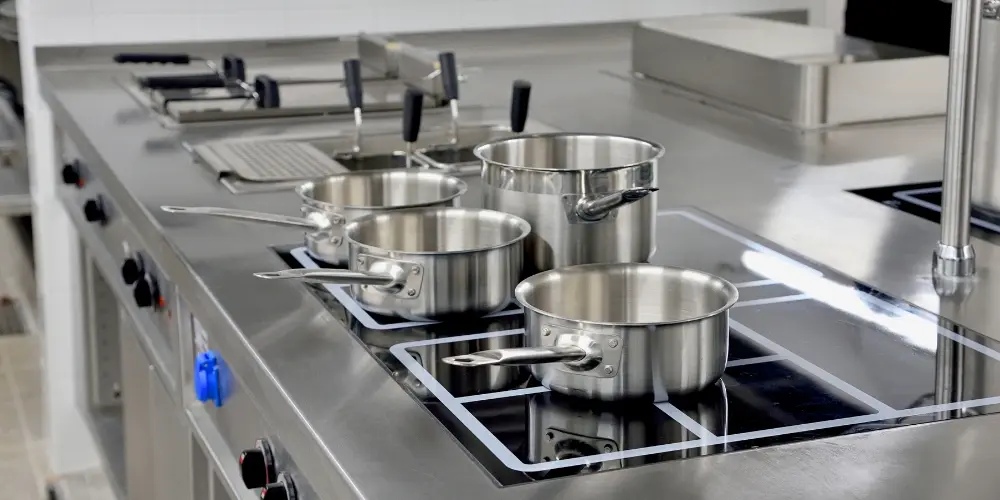
Most professional kitchens use a variety of heat sources, including gas, electric, ceramic, and induction cooktops. High-quality tri-ply stock pots are engineered to work efficiently across all of these cooking systems.
Their magnetic stainless steel exterior ensures induction compatibility while the aluminum core maximizes heat transfer, making them a versatile choice for restaurants, hotels, catering companies, and central kitchens.
Better Energy Efficiency
Because heat spreads quickly and evenly through the entire pot, less energy is wasted during cooking. Food reaches the desired temperature faster, and the cookware retains heat more effectively once it is hot.
Over time, this improved thermal efficiency can help commercial kitchens reduce energy consumption while maintaining high productivity—an important advantage for businesses preparing hundreds of meals each day.
Premium Appearance That Enhances Brand Value
For catering brands, cookware is more than a kitchen tool—it also reflects the quality of the brand. Tri-ply stainless steel stock pots typically feature a polished or satin finish that gives them a clean, professional appearance suitable for both back-of-house kitchens and open cooking environments.
Many manufacturers also offer OEM customization, including laser-etched logos, branded packaging, custom handle designs, and size variations, allowing distributors and private-label brands to differentiate their product lines in competitive markets.
Easy to Clean and Maintain
Food-grade stainless steel is naturally resistant to rust, staining, and corrosion. Its smooth, non-reactive surface makes cleaning easier after cooking acidic ingredients such as tomatoes, vinegar-based broths, or seafood.
For busy commercial kitchens, this means:
- Less time spent cleaning.
- Better hygiene standards.
- Reduced risk of lingering food odors or flavors.
- Long-lasting appearance even with frequent washing.
With proper care, a high-quality tri-ply stock pot can deliver reliable performance for many years, making it a practical investment for catering brands and foodservice professionals.
Tri-Ply vs Single-Ply vs Disc-Bottom Stock Pots
Not all stainless steel stock pots are built the same. While they may look similar on the outside, their construction has a significant impact on cooking performance, durability, and overall value.
| Feature | Tri-Ply Stock Pot | Disc-Bottom Stock Pot | Single-Ply Stock Pot |
| Construction | Stainless steel + aluminum core + stainless steel throughout the body | Stainless steel body with an aluminum or aluminum-steel disc bonded to the base | Single layer of stainless steel |
| Heat Distribution | Excellent across the base and sidewalls | Good at the base only | Limited, with noticeable hot spots |
| Retención del calor | Excellent | Good | Fair |
| Durabilidad | Excellent | Very Good | Good |
| Compatibilidad con la inducción | Yes | Most models | Depends on the material |
| Price | Highest | Mid-range | Most affordable |
| Best For | Premium commercial kitchens, catering brands | Restaurants, hotels, institutional kitchens | Budget cookware, light-duty applications |
Choosing the Right Stainless Steel Grade
The stainless steel grade used in a stock pot directly affects its durability, corrosion resistance, cooking performance, and price. For catering brands, selecting the right material helps ensure the cookware meets the demands of busy commercial kitchens while staying within budget.
304 Stainless Steel: The Best All-Round Choice
304 stainless steel is the industry standard for premium cookware. It offers excellent corrosion resistance, a food-safe surface, and long-lasting durability, making it ideal for restaurants, hotels, and catering businesses.
Best for: Most commercial kitchens and professional cookware.
316 Stainless Steel: For Harsh Cooking Environments
Compared with 304 stainless steel, 316 stainless steel provides even greater resistance to salt, acids, and harsh cleaning chemicals. It is commonly used in seafood processing, coastal kitchens, and other environments where maximum corrosion resistance is essential.
Best for: Specialized foodservice applications requiring superior corrosion protection.
430 Stainless Steel: A Cost-Effective Exterior Material
430 stainless steel is more affordable and naturally magnetic, making it an excellent choice for the exterior layer of induction-compatible cookware. While it offers lower corrosion resistance than 304, it performs well as the outer layer in tri-ply construction.
Best for: Induction-compatible cookware and budget-conscious manufacturing.
Which Stainless Steel Grade Should You Choose?
| Grade | Corrosion Resistance | Costo | Typical Application |
| 304 | Excellent | Medium | Interior cooking surface for most commercial stock pots |
| 316 | Outstanding | High | Seafood, coastal, and specialty kitchens |
| 430 | Good | Low | Exterior layer for induction-compatible cookware |
How to Choose the Right Stock Pot Capacity
Selecting the right stock pot capacity is just as important as choosing the right material. A pot that is too small limits production efficiency, while one that is too large wastes energy and takes longer to heat. Catering brands should offer a range of sizes to meet the needs of different commercial kitchens and foodservice operations.
| Capacidad | Typical Application |
| 8–12 L | Small restaurants, cafés, and home chefs |
| 16–24 L | Medium-sized restaurants and hotel kitchens |
| 30–40 L | Catering services, school cafeterias, and banquet kitchens |
| 50 L+ | Central kitchens, food factories, and large-scale catering operations |
Match Capacity to Kitchen Demand
The ideal stock pot size depends on the volume of food prepared each day. Smaller capacities are suitable for soups, sauces, and side dishes, while larger pots are designed for cooking stocks, stews, pasta, or bulk ingredients in high-volume kitchens.
For catering brands, offering multiple capacity options allows distributors and end users to select cookware that fits their operational needs without compromising efficiency.
Consider Weight and Handling
As capacity increases, so does the weight of the cookware—especially when filled. Large commercial stock pots should feature sturdy riveted handles that provide a secure grip and make lifting safer for kitchen staff. Matching the pot size to daily usage also helps improve safety and workflow.
Build a Complete Product Range
Rather than offering a single size, many commercial cookware brands provide a complete stock pot series. This enables restaurants, hotels, and catering companies to purchase matching cookware in different capacities while maintaining a consistent appearance and performance across their kitchens.
A well-planned size range also strengthens your product portfolio, making it easier to serve customers with diverse cooking requirements.
Essential Features to Look for When Buying Commercial Stock Pots
Beyond material and capacity, the design details of a stock pot can significantly impact its performance and lifespan. For catering brands, selecting cookware with the right features ensures better durability, safety, and user satisfaction.
Riveted Stainless Steel Handles
Strong, riveted handles provide a secure grip and are better suited to the heavy loads common in commercial kitchens. They are more durable than welded handles and can withstand frequent lifting and transport.
Tight-Fitting Lid
A well-designed lid helps retain heat and moisture, reducing cooking time and improving energy efficiency. It also helps preserve the flavor and nutrients of soups, stocks, and stews.
Drip-Free Rolled Rim
A rolled rim makes pouring liquids easier and helps prevent drips, keeping workstations cleaner and reducing food waste—an important advantage in busy kitchens.
Interior Measurement Markings
Built-in capacity markings allow chefs to measure liquids directly inside the pot, saving time and reducing the need for additional measuring tools.
Induction-Compatible Construction
Many commercial kitchens now use induction cooktops because of their speed and energy efficiency. Choosing stock pots with a magnetic stainless steel exterior ensures compatibility with induction, gas, electric, and ceramic cooking surfaces.
Durable Interior and Professional Finish
A smooth food-grade stainless steel interior resists stains, corrosion, and food residue, making the pot easier to clean. On the exterior, brands can choose between a mirror-polished finish for a premium appearance or a satin finish that better hides fingerprints and scratches during daily commercial use.
By combining these practical features with high-quality tri-ply construction, catering brands can offer stock pots that meet the performance expectations of professional chefs while delivering long-term value to customers.
OEM & Private Label Options for Catering Brands
For catering brands, wholesalers, and distributors, OEM and private label services offer an effective way to build a unique product line without investing in their own manufacturing facilities. An experienced cookware manufacturer can customize products to match your brand identity and market requirements.
Custom Branding
Most OEM manufacturers can add your company logo through laser engraving, embossing, or printing on the stock pot, lid, or packaging. Custom branding helps increase brand recognition and creates a more professional product presentation.
Customized Product Specifications
Depending on your target market, you can customize key product details, including:
- Stock pot capacity
- Tri-ply material and thickness
- Handle style
- Lid design
- Interior measurement markings
- Surface finish (mirror or satin)
These options allow you to develop cookware that meets the preferences of different customers and commercial applications.
Private Label Packaging
Packaging is often the first thing customers notice. Manufacturers typically offer customized color boxes, gift boxes, cartons, barcode labels, and instruction manuals that reflect your brand image and retail requirements.
Flexible OEM Solutions
Whether you’re launching a new cookware brand or expanding an existing product range, a reliable OEM partner should provide flexible customization, consistent product quality, and stable production capacity. This enables you to bring products to market faster while maintaining a consistent brand experience.
Quality Standards and Certifications to Check
When sourcing stainless steel tri-ply stock pots, quality should never be judged by appearance alone. Reliable manufacturers follow recognized international standards to ensure their cookware is safe, durable, and suitable for commercial use. Verifying these certifications can help reduce sourcing risks and build customer confidence.
Food Contact Safety Compliance
Commercial stock pots should be manufactured with food-grade stainless steel that complies with the regulations of your target market. Common standards include:
- FDA compliance for the U.S. market.
- LFGB compliance for Germany and many European buyers.
These standards help ensure the cookware is safe for direct food contact.
ISO 9001 Quality Management
Manufacturers certified to ISO 9001 follow standardized quality management systems throughout production. This helps ensure consistent manufacturing processes, better traceability, and reliable product quality across every order.
Third-Party Product Testing
Independent testing organizations, such as SGS, can verify material composition, product performance, and food-contact safety. Third-party test reports provide additional assurance for importers and distributors when evaluating new suppliers.
Factory Compliance Audits
For brands selling to global markets, factory audits such as BSCI demonstrate that a manufacturer follows responsible production practices. While not directly related to product performance, these audits are often required by retailers and international buyers.
Why Source Tri-Ply Stock Pots from China?
China has become one of the world’s leading manufacturers of stainless steel cookware, supplying commercial kitchens, wholesalers, and private-label brands across the globe. For catering brands, sourcing tri-ply stock pots from China offers a combination of quality, customization, and competitive pricing.
Competitive Manufacturing Costs
China’s mature supply chain and large-scale production enable manufacturers to produce high-quality tri-ply cookware at competitive prices. This allows brands to improve profit margins while maintaining reliable product quality.
Strong OEM and Private Label Capabilities
Many Chinese cookware manufacturers specialize in OEM and private-label production. From custom logos and packaging to unique sizes and finishes, they can tailor products to match your brand and target market.
Advanced Manufacturing Technology
Leading manufacturers invest in automated production lines, precision forming equipment, and strict quality control systems. These capabilities help ensure consistent product quality, efficient production, and dependable delivery times.
Wide Range of Product Options
Whether you need small stock pots for restaurants or large-capacity models for catering companies and central kitchens, Chinese manufacturers typically offer a comprehensive product range. This makes it easier to source multiple cookware sizes from a single supplier.
Reliable Export Experience
Experienced exporters understand international standards, packaging requirements, and global shipping procedures. They can also provide the necessary documentation and certifications, helping buyers streamline the import process and reduce sourcing risks.
Tips for Choosing the Right Supplier
Before selecting a manufacturer, consider the following:
- Verify food-grade material certifications.
- Review the factory’s OEM experience and production capacity.
- Request product samples to evaluate workmanship.
- Confirm quality control procedures and inspection standards.
- Assess communication, lead times, and after-sales support.
By partnering with an experienced Chinese cookware manufacturer, catering brands can access high-quality tri-ply stock pots, flexible customization services, and a reliable supply chain that supports long-term business growth.
Frequently Asked Questions
Are tri-ply stock pots worth the higher price?
Yes. Although tri-ply stock pots cost more than single-ply models, they provide faster and more even heat distribution, greater durability, and better energy efficiency. For commercial kitchens that use cookware every day, they often deliver a lower total cost of ownership over time.
What is the best stainless steel grade for commercial stock pots?
For most applications, 304 stainless steel is the preferred choice because it offers an excellent balance of corrosion resistance, durability, and food safety. Premium tri-ply cookware typically combines a 304 stainless steel interior, an aluminum core, and a 430 stainless steel exterior for induction compatibility.
What stock pot size is best for catering businesses?
The ideal size depends on the volume of food being prepared. Smaller kitchens often use 8–24 L stock pots, while catering companies, hotels, and central kitchens typically require 30 L or larger models for high-volume cooking.
Can I customize stock pots with my own brand?
Yes. Many manufacturers offer OEM and private-label services, including custom logos, packaging, finishes, handle designs, and product specifications to help build your own cookware brand.
What should I look for when choosing a cookware manufacturer?
Look for a manufacturer with experience in commercial cookware production, food-grade material certifications, strict quality control, OEM capabilities, and a proven export record. Requesting samples before placing a bulk order is also recommended.
Conclusión
Choosing the right stainless steel tri-ply stock pot is an important investment for catering brands, wholesalers, and commercial kitchen suppliers. By understanding construction types, stainless steel grades, key product features, and quality standards, you can select cookware that delivers reliable performance, long service life, and greater value for your customers.
Whether you’re developing a new private-label collection or expanding an existing product line, partnering with an experienced manufacturer is essential. With advanced tri-ply manufacturing capabilities, flexible OEM and private-label services, and strict quality control, AUSPACE helps catering brands source premium commercial stock pots designed to meet the demands of professional kitchens worldwide.