


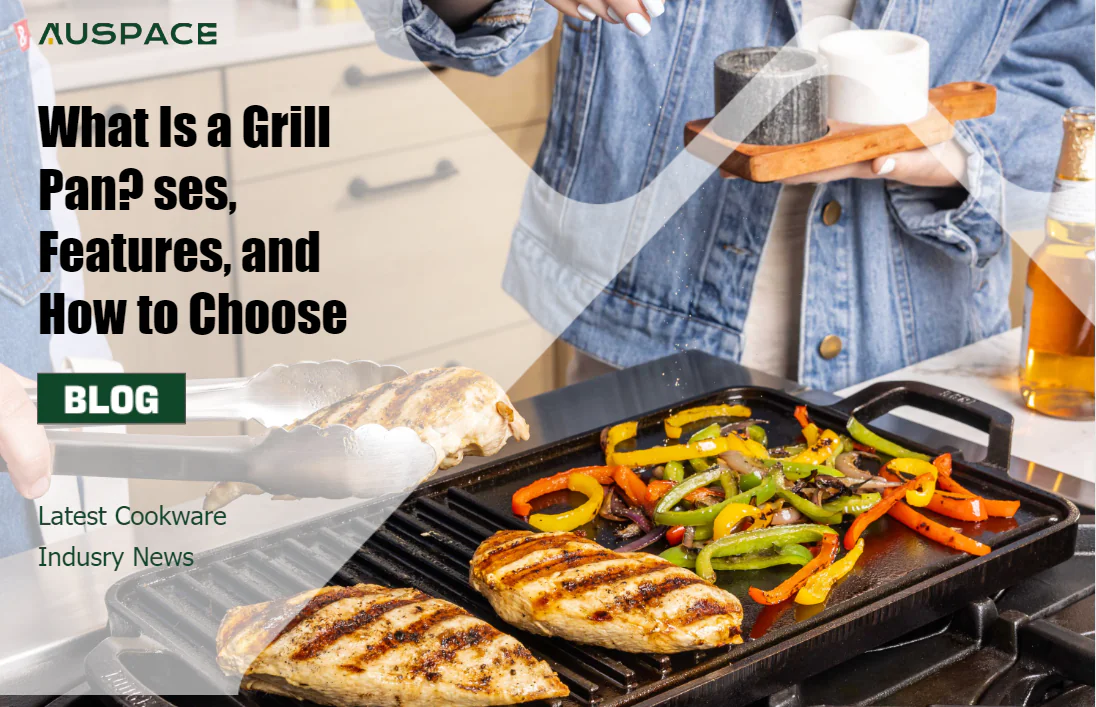
Ever crave those perfect, restaurant-style sear marks on your steak, the smoky flavor of a backyard barbecue, but find yourself limited by your kitchen or the weather? Enter the grill pan: your kitchen’s secret weapon for achieving the look, texture, and a hint of the flavor of outdoor grilling, any day of the year. It’s the tool that bridges the gap between the convenience of your stovetop and the primal appeal of grilling.
In this guide, we’ll uncover everything you need to know about grill pans—from their smart design and how to choose one, to the dishes they excel at and the key differences from your regular pans.
1. What Is a Grill Pan?
A grill pan is a specialized stovetop cooking pan characterized by its ridged cooking surface. Unlike a flat skillet, the bottom of a grill pan features a series of raised, parallel ridges. This fundamental design serves multiple purposes: it creates the iconic char marks associated with grilled food, allows excess fat and juices to drain away from the food into the valleys between the ridges (resulting in less greasy, better-seared results), and mimics the cooking effect of an outdoor grill by elevating food above direct contact with the hottest part of the pan.
A common misconception is that “pan grilling” is the same as outdoor charcoal or gas grilling. In culinary terms, true grilling involves cooking with radiant heat from a source below the food, often with an open flame. What a grill pan does is more accurately described as a ridged sear or “pan-grill.” It uses conductive heat from your cooktop transferred through the solid ridges to sear the food, offering a convenient and controlled indoor alternative.
2. Key Features and Design
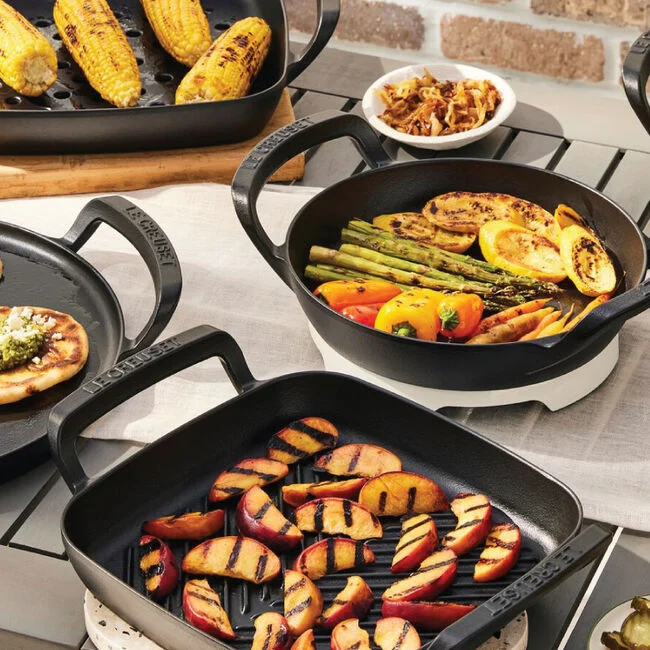
The functionality of a grill pan revolves around a few intelligent design elements:
- Raised Ridges (Grill Grates): These are the pan’s defining feature. They create direct, high-heat contact points for searing and marking while providing channels for draining oils and marinades away from the food, promoting a healthier cook and reducing splatter.
- Material and Heat Retention: A good grill pan is made from a material with excellent heat retention and distribution, like cast iron or thick-gauge aluminum. This ensures the ridges get and stay hot enough to create a proper sear without cold spots.
- Size and Cooking Surface: Grill pans come in various diameters, but the usable ridged area is always smaller than a flat pan of the same size. Consider how much food you typically cook at once.
- Handles and Pour Spouts: A sturdy, often longer, heat-resistant handle is crucial for safety and maneuverability. Some models feature a helper handle or small pour spouts at the corners for draining collected grease easily.
3. Common Materials and Performance
The material of your grill pan is the biggest factor in its performance, maintenance, and lifespan. Here’s a comparison:
| Материал | Primary Advantages | Primary Disadvantages | Ideal Use Case |
|---|---|---|---|
| Cast Iron | Superior heat retention & sear, incredibly durable, naturally non-stick when seasoned, oven-safe. | Very heavy, requires regular seasoning, reacts to acidic foods, slow to heat and cool. | The purist’s choice for the ultimate sear on steaks, chops, and vegetables. |
| Enameled Cast Iron | All heat retention of cast iron, non-reactive surface, no seasoning required, vibrant colors. | Heavy, enamel can chip if struck, often the most expensive option. | A low-maintenance powerhouse for those who want cast iron performance without the upkeep. |
| Hard-Anodized Aluminum | Excellent, rapid heat conductivity, lightweight, very durable and scratch-resistant. | Typically has a non-stick coating which can degrade over time, not metal-utensil safe. | Everyday convenience. Heats quickly and evenly, perfect for chicken, fish, and vegetables. |
| Stainless Steel (with aluminum/clad core) | Durable, non-reactive, professional look, metal-utensil safe, often dishwasher safe. | Food can stick more readily without proper preheating and oil, heat distribution depends on core quality. | A versatile, low-fuss option for cooks who prioritize durability and easy cleaning. |
| Non-Stick Coated (Aluminum body) | Extremely easy food release and cleaning, requires little to no oil, very affordable. | Coating has a finite lifespan, can be damaged by high heat or metal tools, not for oven broiling. | Quick, healthy weekday meals with minimal clean-up effort. |
4. What Is It Used For?
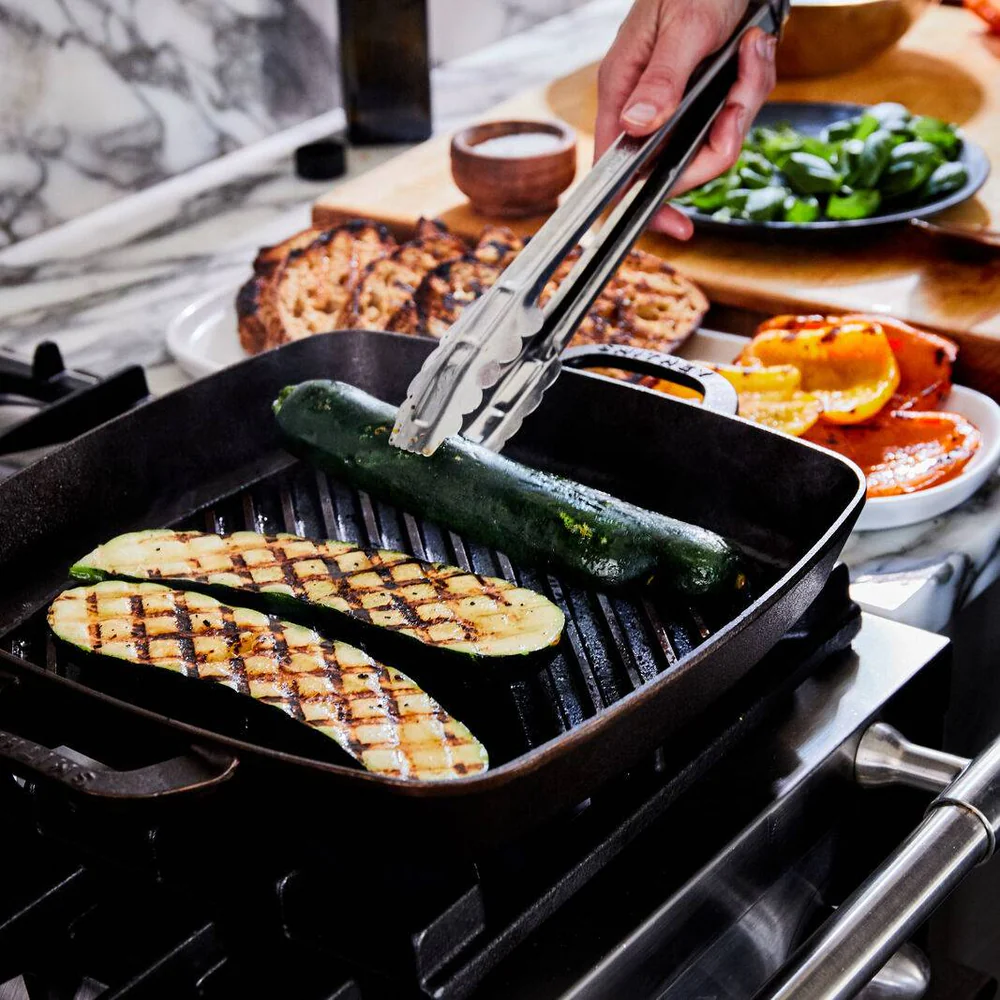
A grill pan excels at any cooking task where you want dry, high-heat searing with visual grill marks:
- Proteins: Steaks, pork chops, chicken breasts, fish fillets, burgers, and sausages.
- Vegetables: Asparagus, zucchini, bell peppers, onions, and halved romaine for Caesar salad.
- Fruits: Pineapple slices, peach halves, and watermelon steaks.
- Bread & Sandwiches: Giving panini, ciabatta, or even sliced halloumi a perfect char.
In home kitchens, it’s a versatile tool for healthy, flavorful cooking. In professional or commercial settings, a large, heavy-duty grill pan (often called a griddle pan) is indispensable in kitchens without access to a charbroiler, providing consistent “grilled” results for sandwiches, appetizers, and proteins.
5. How It Differs from a Regular Pan (Skillet)
This is the most crucial comparison for understanding a grill pan’s role.
| Feature | Grill Pan | Regular Skillet (Frying Pan) |
|---|---|---|
| Cooking Surface | Ridged, raised grates. | Flat, smooth surface. |
| Primary Function | Searing & Marking: Creates dry, high-heat char marks. Drains away fat. | Searing & Cooking: Provides full, even contact for browning and cooking through sauces, stir-fries, or eggs. |
| Fat Management | Drains fat away into channels, leading to less greasy food. | Fat pools on the surface, which can be used for cooking or basting. |
| Best For | Mimicking grilled textures and looks (steaks, vegetables). | Pan sauces, sautéing, frying, omelets, and general-purpose cooking. |
In short: Use a grill pan when you want the look and drier texture of grill marks. Use a regular skillet when you need full-surface contact for even browning or cooking with liquids.
6. Pros and Cons
Advantages:
- Year-Round “Grilling”: Enjoy grilled flavors and aesthetics indoors, regardless of weather.
- Healthier Cooking: Drains excess fats and oils away from food.
- Superior Searing: Creates excellent crust and caramelization on meats and vegetables.
- Versatility: Suitable for a wide range of foods beyond just meat.
- Easy Stovetop Control: Offers more precise temperature management than an open grill.
Limitations:
- Smoke & Splatter: Can generate significant smoke from dripping fats, requiring good ventilation.
- Uneven Cooking: Only the ridges make contact, which can lead to slower or less even cooking for thicker items.
- Cleaning Difficulty: The ridges and grooves can be challenging to clean thoroughly.
- Limited Surface Area: Less actual cooking space compared to a flat pan of the same diameter.
7. Who Should Buy a Grill Pan?
A grill pan is a fantastic addition to many kitchens, but it’s not a universal must-have.
- Urban Dwellers & Apartment Cooks: For those without access to outdoor space, it’s a game-changer.
- Health-Conscious Cooks: Ideal for those looking to reduce fat intake without sacrificing flavor.
- Grilling Enthusiasts: The perfect tool to satisfy a grill craving in minutes during the week.
- Beginner Cooks: A simple way to elevate the presentation and taste of simple proteins and veggies.
Professional chefs, restaurants, and catering services also rely on commercial-grade grill pans and griddles for consistent, high-volume searing. For bulk procurement of durable, performance-driven equipment, manufacturers like AUSPACE provide tailored solutions for the demands of a professional kitchen.
8. Buying Tips for Beginners
- Choose Your Material Wisely: Consider your lifestyle. Want low maintenance? Go for hard-anodized non-stick. Want the best sear and don’t mind care? Choose cast iron.
- Prioritize Weight & Handle: A heavier pan retains heat better but ensure the handle is secure and comfortable to lift.
- Check for Even Heating: Look for pans with a thick base or a clad construction (like stainless steel with an aluminum core) to prevent hot spots.
- Size Matters: A 10-12 inch diameter is the most versatile for home use, fitting 2-3 steaks or a large batch of vegetables.
- Consider a Press: A grill press (or bacon press) can be a useful accessory to ensure even contact between food and the hot ridges.
9. How to Care for Your Grill Pan
Care varies drastically by material:
- Cast Iron: Clean while warm (not hot) with hot water and a brush. Never use soap on seasoned iron. Dry completely on the stove and apply a thin layer of oil to maintain the seasoning.
- Enameled Cast Iron: Let cool, wash with warm soapy water. Avoid abrasive scouring pads that can scratch the enamel.
- Non-Stick & Hard-Anodized: Let cool completely, wash with a soft sponge and mild detergent. Never use metal utensils or abrasive cleaners.
- Stainless Steel: Soak if food is stuck, then use a non-abrasive scrubber. Barkeeper’s Friend works well for discoloration.
- Universal Tip: Always let the pan cool before cleaning to avoid warping. For stubborn residue in the grooves, use a stiff-bristled brush (like a grill brush) designed for the purpose.
10. FAQ About Grill Pan
What can I use instead of a grill pan?
If you don’t have a grill pan, you can achieve a similar (but not identical) result with a regular heavy-bottomed skillet or cast iron pan. You’ll get a good sear and browning, but not the distinct raised grill marks. For an outdoor grill flavor, a stovetop smoker box or a drop of liquid smoke in your marinade can add a smoky note.
What is the difference between a grill pan and a regular pan?
The core difference is the cooking surface. A grill pan has raised ridges that sear marks into food and drain fat away, mimicking an outdoor grill. A regular pan (skillet) has a flat surface that provides full contact for even browning, making it better for cooking with sauces, frying eggs, or general sautéing.
How to grill without a grill pan?
You can ‘pan-grill’ effectively with a heavy cast iron or stainless steel skillet. Get it very hot, pat your food dry, and avoid overcrowding to ensure a good sear. While you won’t get ridge marks, you’ll achieve excellent caramelization and flavor. For a true grilled texture outdoors, consider a compact stovetop grill or an electric grill/griddle appliance.
11. Summary
Сайт grill pan is a clever, purpose-built tool that brings the spirit of the barbecue into your kitchen. Its ridged design is engineered for one thing: creating a beautiful, flavorful sear while managing grease intelligently. While it won’t fully replicate the complex smoke of a charcoal gril, it delivers on convenience, control, and culinary presentation.
Choosing the right one comes down to balancing your desire for the perfect sear (favors cast iron) with your need for easy cleaning (favors non-stick). When used for its intended purpose, a quality grill pan can become a beloved staple, turning everyday ingredients into visually impressive, healthier, and delicious meals.
About AUSPACE: With deep expertise in professional-grade cookware manufacturing and supply, we at AUSPACE understand the precise engineering and robust construction required for a grill pan to perform exceptionally. Our designs are born from a knowledge of how heat, material, and form interact, creating tools that deliver reliable results for both home cooks and culinary professionals seeking restaurant-quality sear at their fingertips.

Хейзел - специалист по экспорту посуды для напитков и кухонной утвари в компании Auspace, специализирующейся на поддержке цепочек поставок на мировом рынке и разработке индивидуальных решений. Она оказывает комплексную помощь международным покупателям, включая подбор поставщиков, контроль производства и координацию логистики. Благодаря глубокому знанию отрасли и связям с фабриками она помогает клиентам эффективно поставлять высококачественную, экологически чистую посуду и кухонную утварь из Китая. Ее практический подход снижает риски при поиске поставщиков и упрощает трансграничную торговлю, что делает ее надежным партнером для брендов и ритейлеров, ищущих надежное OEM/ODM-производство в Китае.