

I work for a cookware manufacturer that has been in the kitchenware import and export business for many years. People in this industry ask me questions like this all the time — and so do home cooks who want to make sure they’re spending their money wisely. So let me give you the honest breakdown on where Staub cookware actually comes from.
The short answer? It depends on which Staub product you’re buying. The brand makes two very different categories of cookware, and they come from two very different places.
Staub Cast Iron Is Made in France
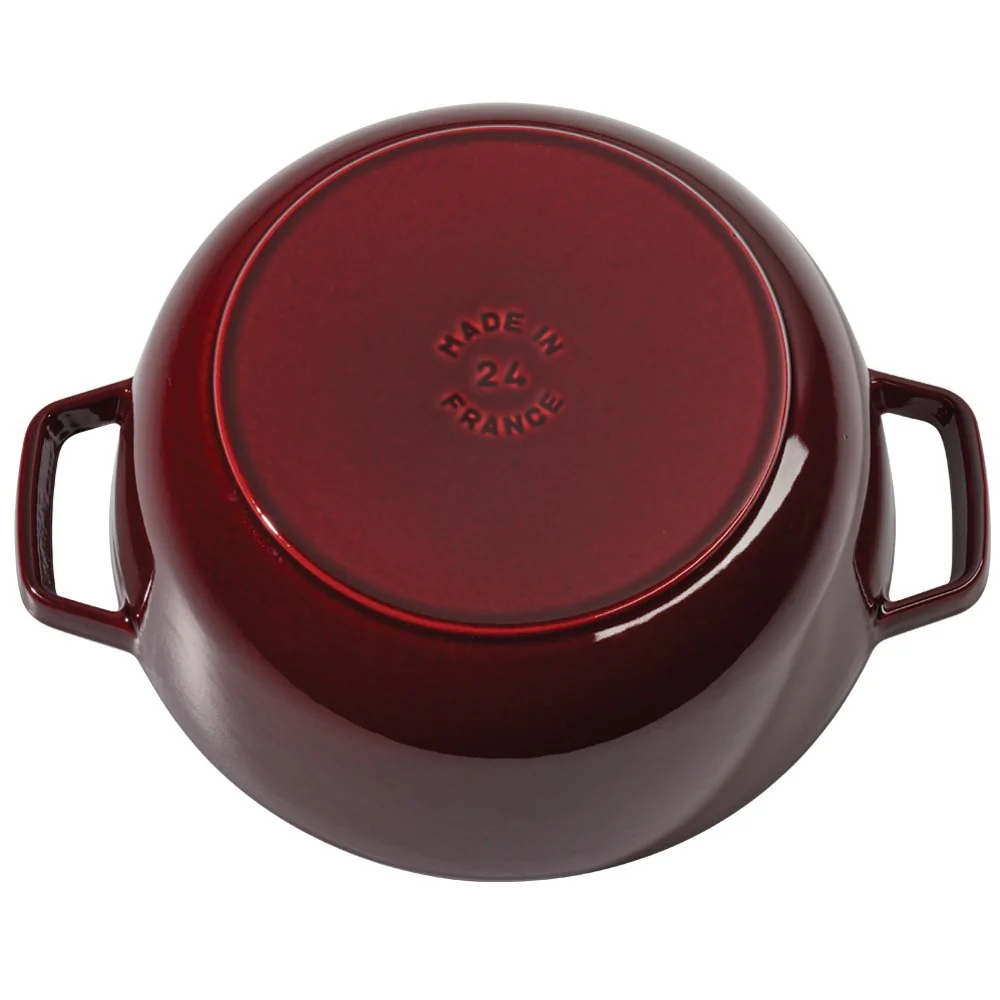
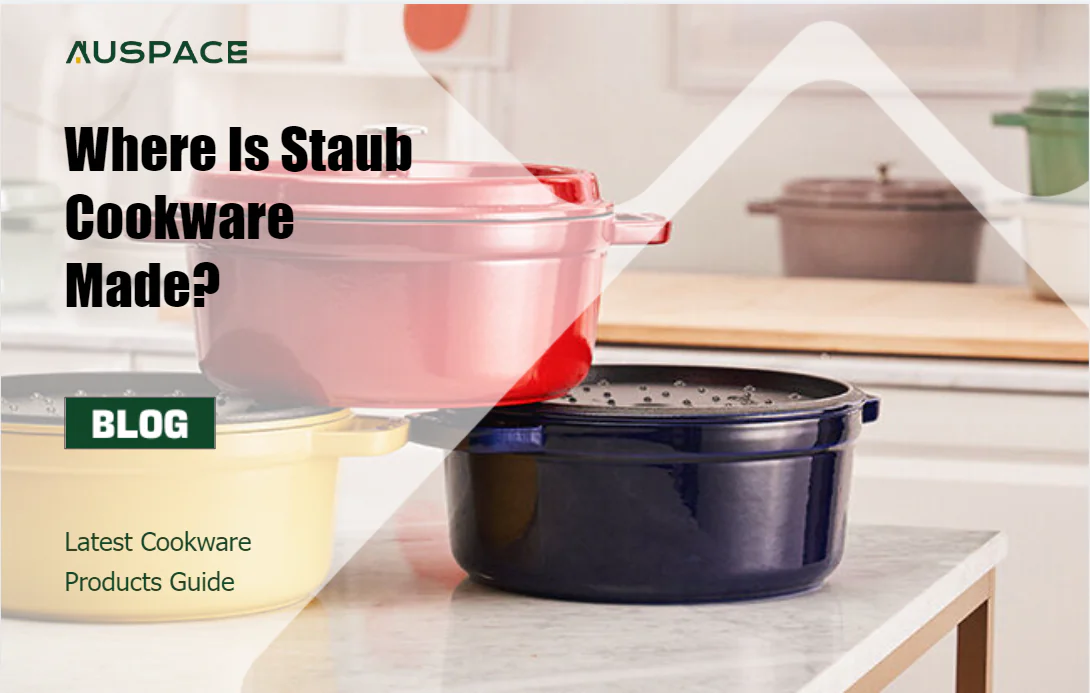
If you’re looking at a Staub cocotte, a cast iron skillet, or any of their signature cast iron pieces — those are genuinely made in France. Specifically, they’re manufactured in Merville, in northern France, where the brand has kept its production facility for decades.
Staub was founded in Alsace, France in 1974 by Francis Staub. That French heritage is real, and it shows. The company is now owned by Zwilling J.A. Henckels, the German kitchenware group, but they’ve kept the cast iron production in France. If you flip a Staub cast iron piece over, you’ll see “Made in France” stamped right into the base.
This matters to a lot of buyers, and rightfully so. French-made cast iron carries serious credibility in the cooking world. Staub competes directly with Le Creuset — which, for the record, is made in South Africa — and part of what sets Staub apart is that authentic French manufacturing story. The matte black enamel interior, the signature self-basting lids, the knob designs — all of that craftsmanship happens in France.
So if you’re buying Staub specifically because you want French-made cast iron, you’re good. That part is true.
Staub Ceramic Pieces Are Made in China
Here’s where I’ve seen a lot of confusion — including in cookware forums and Facebook groups where real buyers share their experiences.
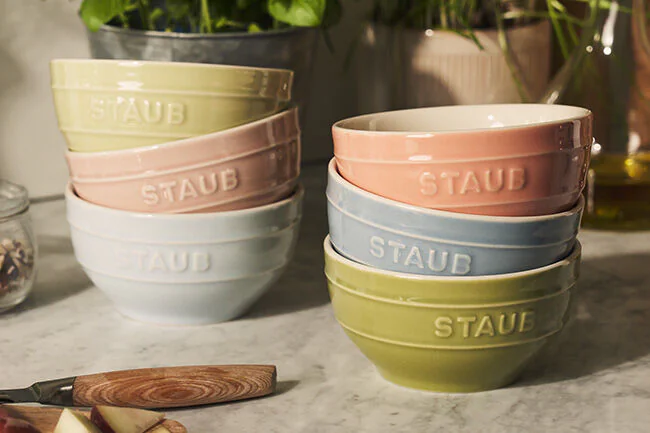
Staub’s ceramic products are made in China. That includes their ceramic cocottes, baking dishes, ramekins, and other stoneware pieces. This isn’t a secret, but Staub doesn’t exactly advertise it front and center either. A lot of customers assume everything with the Staub name on it comes from France, and that’s simply not the case.
Is that a problem? Not necessarily. Chinese ceramic manufacturing has come a long way, and plenty of high-quality ceramic cookware and bakeware is produced there. But you should know what you’re buying. If the “Made in France” story is a big part of why you’re considering Staub, just be aware that it only applies to their cast iron line.
A good rule of thumb: check the bottom of the piece before you buy, or ask the seller directly. Cast iron will say France. Ceramic will say China.
Why Do Brands Split Production Like This?
This is actually very common in the cookware industry, and I see it all the time from the inside. Cast iron production is a specialized, heavy industrial process. France has a long history of doing it well, and certain factories have decades of experience and infrastructure built around it. Moving that production would be expensive, complicated, and risky for a brand’s reputation.
Ceramic and stoneware, on the other hand, is a different story. China has enormous capacity for ceramic manufacturing, competitive pricing, and consistent quality at scale. For a global brand looking to expand its product line into bakeware and tableware, sourcing ceramics from China is a practical and common decision.
It’s not about cutting corners — it’s about matching production to where the expertise and infrastructure actually exist.
Does “Made in China” Mean Lower Quality?
This is the question I hear most often, and I want to give you a straight answer: not automatically, no.
Quality depends on the factory, the brand’s standards, and the quality control process — not just the country of origin. There are exceptional ceramic manufacturers in China producing goods that meet strict international standards. There are also low-quality factories. The country label alone doesn’t tell you which one you’re dealing with.
For Staub specifically, the ceramic pieces generally get decent reviews. They’re not perfect, and some users have reported chips or glazing inconsistencies, but that’s not unique to Chinese-made ceramics. The cast iron line, made in France, has a stronger overall reputation for durability and consistency.
A Note From Our Side of the Industry
Since I work in this space, I’ll mention something that might be useful if you’re a retailer, a restaurant buyer, or someone who needs cookware in larger quantities.
China absolutely has the capability to produce high-quality cast iron cookware — not just ceramic. Our factory has years of experience manufacturing enameled cast iron that meets the standards of international markets. The craftsmanship, the enamel finishing, the tolerances — it’s all there.
If you’re looking to source cast iron cookware at wholesale prices, whether for private label, retail, or foodservice, feel free to reach out to us. We work with buyers around the world and can walk you through what’s possible.
The Bottom Line
Here’s the simple summary if you just want the facts:
- Staub cast iron cookware → Made in France (Merville)
- Staub ceramic cookware → Made in China
If you’re a home cook shopping for a cocotte or a braiser, and the French origin is important to you, the cast iron line delivers on that. Just don’t assume it applies to everything in the Staub catalog.
And if you’ve ever wondered whether the “Made in France” premium is always worth it — that’s a whole other conversation. But at least now you know exactly what you’re paying for.
Have questions about cookware sourcing or manufacturing? Feel free to reach out directly.

Berry Bian es especialista en abastecimiento de menaje de cocina y asistencia al comprador en Auspace Kitchenware, con años de experiencia en el abastecimiento mayorista de menaje de cocina en China. Ayuda a los compradores internacionales con el seguimiento de pedidos, la comunicación con las fábricas y la selección de productos a medida.
Con su experiencia práctica en el sector, ofrece consejos útiles para agilizar los procesos de abastecimiento y resolver los puntos débiles de la cadena de suministro. Su apoyo conecta a los compradores extranjeros con fabricantes chinos de confianza, lo que la convierte en la persona ideal para abastecerse de menaje de cocina sin complicaciones.