Introducción
In today’s global kitchenware market, cookware certification by material is more important than ever. Whether you are an importer, distributor, or consumer, ensuring that cookware is both safe and compliant is essential. Certified cookware protects health, guarantees durability, and meets international standards for quality and performance.
From stainless steel to aluminum and ceramic-coated cookware, every material comes with its own requirements. For example, stainless steel cookware certification (such as 304 stainless steel food contact certification) ensures corrosion resistance and safety from harmful metals. Aluminum cookware must comply with anodized aluminum standards to prevent reactivity, while ceramic cookware requires lead-free ceramic cookware certification to confirm non-toxicity and durability under high heat.
This guide breaks down the essentials of cookware certification by material, explains how to identify certified products both online and in stores, and offers practical tips for sourcing safe, high-quality cookware in the international trade sector. By the end, you’ll have a clear roadmap for choosing cookware that meets global safety standards and consumer expectations.
1. Why Cookware Certification by Material Matters
1.1 What Is Cookware Certification?
Cookware certification is the official validation that a cookware item meets regulatory and safety standards for composition, durability, and food contact safety. Each certification protects consumers and ensures that international trade runs smoothly.
- Stainless steel cookware certification (e.g., 304 stainless steel) guarantees corrosion resistance and safety under acidic conditions.
- Anodized aluminum cookware certification ensures the material is non-reactive, durable, and scratch-resistant.
- Lead-free ceramic cookware certification protects consumers from harmful substances like lead or cadmium during high-temperature cooking.
For importers and exporters, understanding cookware certification by material prevents costly recalls, shipment rejections, and reputational damage. Certified cookware also reassures consumers, strengthens brand trust, and often includes performance testing such as resistance to heat, corrosion, and food acidity.
1.2 Health and Safety Risks of Uncertified Cookware
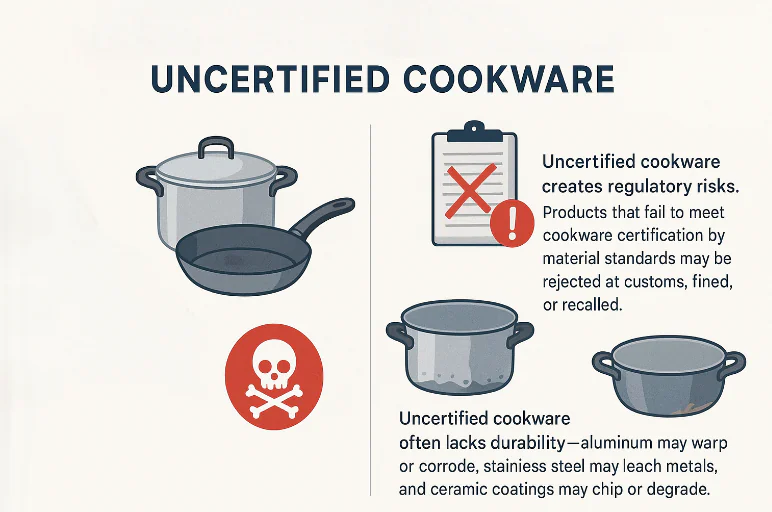
Choosing cookware without proper certification introduces serious risks. Uncertified stainless steel, aluminum, or ceramic cookware may leach harmful metals like nickel, lead, or aluminum ions into food. Over time, these contaminants can pose long-term health hazards, particularly when cooking acidic foods.
From a trade perspective, uncertified cookware creates regulatory risks. Products that fail to meet cookware certification by material standards may be rejected at customs, fined, or recalled. In addition, uncertified cookware often lacks durability—aluminum may warp or corrode, stainless steel may leach metals, and ceramic coatings may chip or degrade.
By prioritizing cookware certification, businesses safeguard consumer health, ensure compliance with regulations, and strengthen product reliability in the global market.
Health and Safety Risks of Uncertified Cookware
2. Stainless Steel Cookware Certification: What to Look For
2.1 Common Certifications for Stainless Steel Cookware
Stainless steel cookware is one of the most popular choices in global markets due to its strength, corrosion resistance, and premium appearance. However, not all products are equal, making cookware certification by material especially important.
A key benchmark is the stainless steel food contact certification, which validates the correct chromium and nickel composition. This ensures corrosion resistance and minimizes the risk of metal leaching into food. Some cookware also carries NSF certification or compliance with EN 1811 nickel release standards, offering extra assurance of safety.
High-quality stainless steel cookware must also pass tests for thermal shock, abrasion resistance, and chemical durability. These performance standards are part of cookware certification by material, ensuring the cookware withstands long-term daily use without compromising safety.
For businesses, certified stainless steel cookware differentiates a brand in competitive markets. Highlighting cookware certification by material in catalogs, trade shows, and online listings builds trust with both distributors and consumers.
2.2 Ensuring Lead and Nickel-Free Cooking
One of the main purposes of cookware certification by material for stainless steel is to eliminate risks of lead and nickel exposure. Even trace leaching can accumulate in the human body, creating long-term health issues, particularly for children and individuals with sensitivities.
Certified stainless steel cookware undergoes tests under acidic and high-heat conditions to confirm its stability. With 304 stainless steel food contact certification, importers and consumers can be confident that cookware is safe for daily use.
From a market perspective, retailers and e-commerce platforms often require proof of compliance before listing products. By sourcing products with recognized cookware certification by material, businesses streamline approvals, reduce liabilities, and appeal to safety-conscious buyers.
In addition, certified stainless steel cookware usually demonstrates superior build quality, polished finishes, and multi-layer reinforcement. This means safer cooking, longer product lifespan, and a stronger brand reputation in the global trade sector.

Stainless Steel Cookware Certification
3. Aluminum Cookware Safety Standards Explained
Aluminum cookware is widely used because it is lightweight, affordable, and an excellent heat conductor. However, without proper cookware certification by material, aluminum cookware can react with acidic foods, releasing harmful ions that compromise both taste and safety. For importers and distributors, understanding aluminum cookware safety standards is essential for compliance and brand credibility.
Cookware certification for aluminum emphasizes food contact safety, corrosion resistance, and structural durability. Certified aluminum cookware undergoes leaching tests to ensure it does not release unsafe levels of aluminum. Anodized aluminum cookware certification is particularly important, as the anodization process creates a hard, non-reactive surface that prevents leaching and enhances scratch resistance.
For international traders, sourcing aluminum cookware that meets global standards—such as FDA, EU, or Japanese food contact regulations—is a must. Products with recognized cookware certification by material simplify customs clearance, reduce the risk of recalls, and offer a competitive advantage in highly regulated markets.
3.1 FDA and Other Global Aluminum Certifications
In the United States, the FDA regulates all food contact materials, including aluminum cookware. FDA compliance testing includes exposure to acidic foods, prolonged cooking simulations, and high-temperature resistance. Aluminum cookware with FDA certification has been proven safe for daily use.
In the EU, aluminum cookware must comply with EU food contact material regulations, which set migration limits for metals. Other regions, such as Japan and Australia, enforce their own standards. Importers who want to access multiple markets should prioritize cookware that meets both FDA and EU requirements.
Products that carry cookware certification for aluminum—especially anodized aluminum cookware with dual FDA and EU compliance—demonstrate superior safety, corrosion resistance, and performance. These certifications not only reassure consumers but also serve as strong marketing assets.
Anodized Aluminum Cookware with FDA & EU Compliance Certifications
3.2 Benefits of Certified Aluminum Cookware
Cookware certification by material-aluminum offers numerous advantages for importers, distributors, and end consumers. First, it ensures that cooking surfaces remain non-reactive with acidic or alkaline foods, preserving both flavor and nutritional value. This reliability is particularly important for international markets, where consumers are increasingly health-conscious and demand food-safe kitchenware.
Durability is another key benefit. Anodized aluminum cookware certification, for instance, guarantees a reinforced surface resistant to scratching, warping, or corrosion. This reduces returns and enhances brand reputation, particularly for retailers and distributors managing large-scale operations. Moreover, certified cookware meets the performance expectations of professional chefs and home cooks alike, offering even heat distribution, consistent results, and long-lasting usability.
For importers, certified aluminum cookware with cookware certification by material simplifies compliance management. Products with recognized certifications can be confidently shipped to multiple markets, meeting both aluminum cookware safety standards and broader international food contact regulations. Combined with complementary certifications—such as stainless steel cookware certification and lead-free ceramic cookware certification—businesses can build diverse, safe, and market-ready kitchenware portfolios.
Overall, the strategic investment in certified aluminum cookware enhances safety, durability, and marketability, providing a competitive edge in the global kitchenware industry.
4. Ceramic-Coated Cookware Certification Requirements
Ceramic-coated cookware is increasingly popular due to its non-stick properties, aesthetic appeal, and perceived health benefits. However, the safety of ceramic coatings largely depends on adherence to ceramic cookware certification requirements. Coatings that are not certified can contain lead, cadmium, or other harmful substances that leach into food during high-temperature cooking, posing serious health risks. This is why cookware certification by material plays a vital role in the ceramic category.
Certified ceramic cookware must meet stringent standards for chemical stability, temperature resistance, and lead-free composition. Regulatory bodies in the US, EU, and Asia enforce rigorous testing to verify that coatings remain inert under typical cooking conditions. Products carrying lead-free ceramic cookware certification are tested to ensure compliance with food contact material regulations, providing importers and consumers with peace of mind. Importers and distributors engaged in international trade benefit significantly when their ceramic cookware has proper cookware certification by material, as it avoids rejection at customs and boosts product credibility.
Ceramic cookware certification also addresses durability concerns. High-quality certified coatings resist chipping, scratching, and thermal degradation, prolonging product life. In the international trade context, adhering to certification requirements simplifies customs clearance, reduces liability, and enhances product credibility in competitive markets. In fact, ceramic products with proper cookware certification by material are more likely to be accepted in global e-commerce platforms and premium retail chains.
By understanding and applying cookware certification by material, businesses can confidently source ceramic-coated cookware that meets global safety and performance standards, ensuring that both health-conscious consumers and regulatory authorities are satisfied.
4.1 Key EU vs. US Certifications for Ceramic Cookware
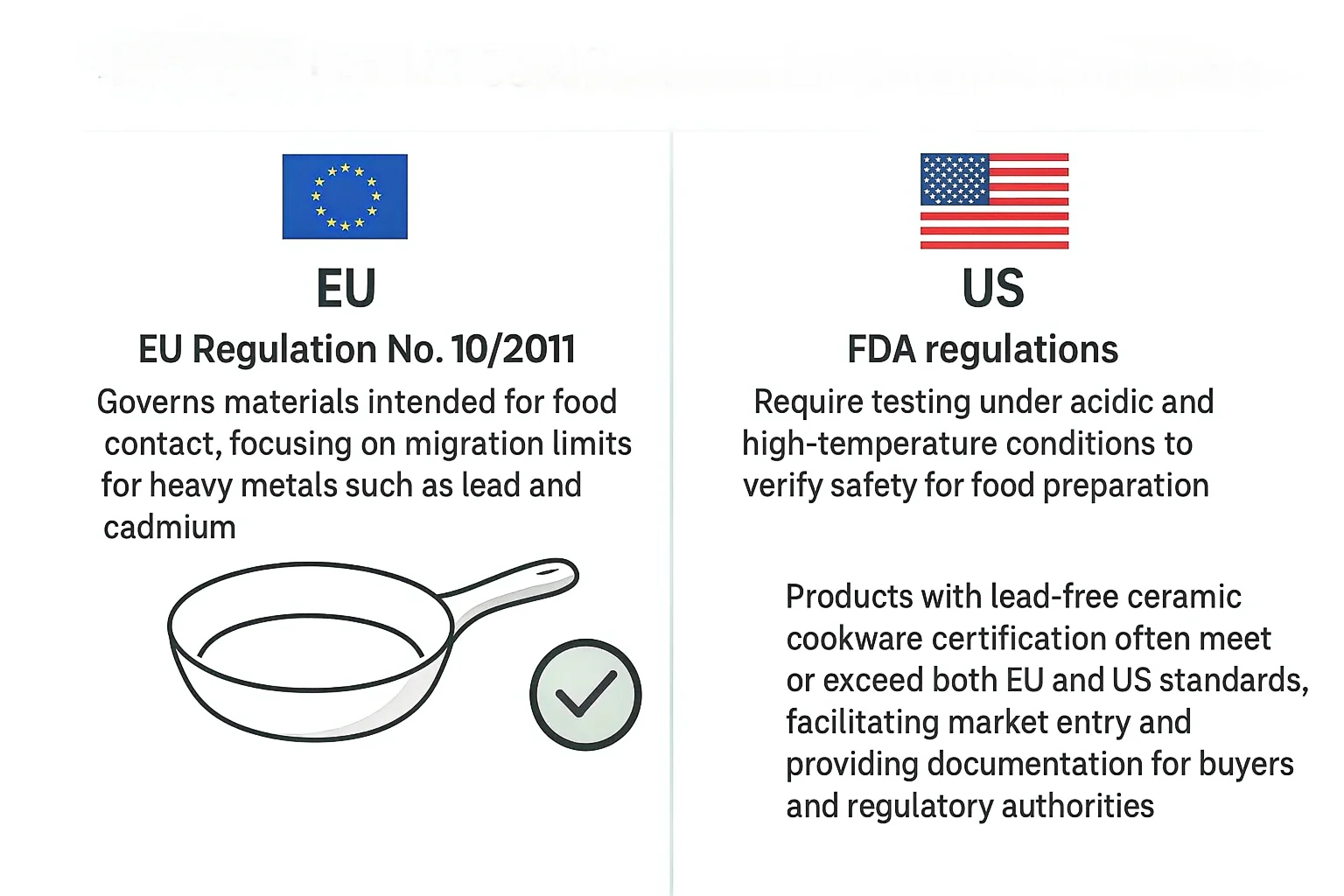
EU and US regulations for ceramic cookware differ in testing methods, allowable limits, and labeling requirements. In the EU, ceramic cookware must comply with EU Regulation No. 10/2011, which governs materials intended for food contact, focusing on migration limits for heavy metals such as lead and cadmium. In the US, FDA regulations require testing under acidic and high-temperature conditions to verify safety for food preparation. These regulatory frameworks highlight the importance of cookware certification by material for global trade.
Importers targeting multiple markets must ensure that ceramic cookware carries certification for both regions. Products with lead-free ceramic certification often meet or exceed both EU and US standards, facilitating market entry and providing documentation for buyers and regulatory authorities. For distributors, highlighting compliance with cookware certification by material in both US and EU markets becomes a strong selling point in competitive trade channels.
Key EU vs. US Certifications for Ceramic Cookware
4.2 Lead-Free and Food-Safe Labels
Lead-free labels are a critical indicator of safe ceramic cookware. Products bearing lead-free ceramic cookware certification ensure that coatings are inert, non-toxic, and durable under typical cooking conditions. Food-safe labels provide additional reassurance that cookware is suitable for repeated use, high temperatures, and contact with acidic foods. These marks are among the most visible aspects of cookware certification by material, making it easier for buyers to identify safe ceramic cookware at a glance.
For businesses involved in foreign trade, clearly marked labels and certificates enhance credibility, simplify compliance, and reassure buyers. Displaying these certifications in catalogs, online stores, and promotional materials helps differentiate products from uncertified alternatives, boosting market appeal and consumer trust. In this sense, leveraging cookware certification by material is not just a compliance strategy but also a branding tool that positions products as premium, safe, and consumer-friendly.
5. How to Identify Certified Cookware in Stores
Identifying certified cookware in stores is a critical skill for importers, distributors, and end consumers seeking safe and reliable kitchenware. With global trade and cross-border e-commerce expanding rapidly, buyers need to differentiate between uncertified and certified products to ensure compliance with international regulations. Prioritizing cookware certification by material can prevent safety risks, support regulatory compliance, and enhance market credibility.
In retail environments, certified cookware often carries visible labels or stamps indicating compliance with recognized standards. For example, stainless steel cookware certification may be displayed with a “304 stainless steel food contact certification” mark, confirming the alloy’s suitability for repeated food contact. Similarly, certified anodized aluminum cookware will include information regarding anodization and safety standards, aligning with aluminum cookware safety standards globally. For ceramic cookware, lead-free ceramic cookware certification or EU/FDA food contact compliance labels demonstrate that the coating is safe, non-toxic, and durable under high-temperature cooking conditions. These marks are all part of cookware certification by material that buyers should actively look for.
Besides labels, buyers should request supporting documentation such as certificates of conformity or test reports from the manufacturer. These documents verify that the cookware has undergone formal testing for leaching, corrosion resistance, and thermal stability. Importers and distributors sourcing cookware for multiple regions will find that maintaining a record of certifications not only ensures compliance but also simplifies customs clearance and reduces liability risk. By carefully checking cookware certification by material, businesses minimize the risk of counterfeit or uncertified goods entering their supply chains.
5.1 Reading Labels and Certificates
When examining cookware in stores, reading labels and certificates carefully is essential. Labels typically include the material type, certification body, and compliance marks. For instance, a package of stainless steel cookware might display the 304 stainless steel food contact certification logo alongside symbols indicating NSF or EU compliance. Likewise, anodized aluminum cookware certification ensures that the product meets global safety benchmarks, confirming durability and non-reactivity with foods. These identifiers all connect back to cookware certification by material, making it easier to verify authenticity.
Certificates provided by manufacturers or distributors provide additional assurance. These documents often detail testing methods, compliance with local regulations, and batch-specific certification data. For ceramic cookware, looking for lead-free ceramic cookware certification is particularly important to guarantee food safety. By cross-checking labels with official certificates, buyers can confidently identify certified cookware and avoid uncertified or counterfeit products that may pose health risks. This verification process strengthens the role of cookware certification by material in protecting both businesses and consumers.
5.2 Online Shopping Tips for Certified Cookware
When purchasing cookware online, verifying certification requires extra diligence. Reputable sellers often provide scanned certificates, detailed product descriptions, and images of certification marks. Importers should ensure that the cookware aligns with the stated certifications—whether stainless steel cookware certification, anodized aluminum cookware certification, or lead-free ceramic cookware certification. Careful checking of cookware certification by material helps reduce the risk of false claims or misleading product descriptions.
Additionally, international buyers should check whether the certifications meet both local and target market requirements. For example, aluminum cookware safety standards may differ between the US and EU; selecting products that meet multiple regional requirements ensures compliance and facilitates smoother trade. Customer reviews and third-party validation sites can also help confirm product authenticity. By prioritizing cookware certification by material, online buyers mitigate risks, maintain compliance, and secure reliable kitchenware for resale or personal use.
Tips For Cookware Online Shopping
6. Comparing Certifications Across Materials
Understanding the differences between certifications for steel, aluminum, and ceramic cookware is crucial for importers, distributors, and consumers seeking safe, high-quality kitchenware. Cookware certification by material provides a framework to assess product safety, durability, and regulatory compliance. By comparing certifications across materials, businesses can make informed sourcing decisions and offer a portfolio of compliant cookware that appeals to diverse markets.
Each material has unique certification requirements. Stainless steel cookware certification focuses on corrosion resistance, nickel and lead leaching, and alloy composition. Aluminum cookware safety standards emphasize anodization quality, chemical reactivity, and structural integrity. Ceramic cookware certification requirements primarily address coating safety, lead-free compliance, and durability under high temperatures. By understanding these differences, buyers can ensure that every product in their inventory meets relevant health and safety benchmarks. In every case, cookware certification by material acts as the key assurance of compliance.
6.1 Steel vs. Aluminum vs. Ceramic
Cookware materials offer different strengths:
| Material | Key Certification | Advantages | Best Use Cases |
| Stainless Steel 304 | 304 Stainless Steel Food Contact Certification | – Long lifespan – Corrosion resistant – Minimal leaching | Premium cookware, durability-focused products |
| Aluminio | Anodized Aluminum Cookware Certification | – Excellent heat conductivity – Lightweight – Non-reactive and durable | Fast heating, lightweight cookware |
| Ceramic Coating | Lead-Free Ceramic Cookware Certification | – Non-stick performance – Safe and eco-friendly – Easy to clean | Health-conscious cooking, low-oil/non-stick needs |
Comparing these materials allows buyers to select cookware based on market demands, cooking preferences, and regulatory requirements. For example, premium kitchenware collections may combine stainless steel and ceramic items to satisfy both durability and safety expectations. Importers who understand the nuances of cookware certification by material can confidently communicate product benefits and maintain compliance across multiple international markets.
6.2 Understanding Certification Symbols and Marks
Certification symbols and marks serve as quick visual indicators of compliance and safety. Recognizing these symbols helps buyers identify certified cookware without reviewing extensive documentation. For instance, 304 stainless steel food contact certification marks, FDA-compliant logos, and lead-free ceramic cookware certification symbols signal that products meet international safety and performance standards. Anodized aluminum cookware certification symbols indicate that the cookware has passed anodization tests and complies with global aluminum cookware safety standards. All these marks are visible evidence of cookware certification by material.
For importers and distributors in the foreign trade sector, understanding certification marks simplifies sourcing decisions and supports marketing strategies. Displaying these certifications in product listings, catalogs, and packaging enhances buyer confidence, differentiates the product line from competitors, and ensures adherence to legal and market-specific requirements. Leveraging cookware certification by material symbols is not only about compliance—it is also a powerful way to promote credibility and consumer trust in highly competitive marketplaces.
Certification Symbols and Marks
7. Final Tips: Choosing Safe and Certified Cookware
Selecting cookware that is both safe and compliant with global regulations requires attention to certification details. Whether sourcing for international trade, stocking retail shelves, or purchasing for personal use, prioritizing cookware certification by material ensures product safety, durability, and market acceptance. By following practical tips, buyers can avoid the risks of uncertified cookware and confidently offer products that meet global standards.
7.1 For Importers and Distributors
Importers and distributors play a crucial role in ensuring that products entering the market are safe and certified. Always verify that suppliers provide valid certifications, such as 304 stainless steel cookware certification, anodized aluminum cookware certification, or lead-free ceramic cookware certification. Request official documents like certificates of conformity, lab testing results, or EU/FDA compliance statements. Ensuring cookware certification by material reduces liability, prevents customs rejection, and strengthens brand reputation in international markets.
Additionally, consider certifications that align with target market regulations. For example, cookware destined for the EU must meet European food contact material requirements, while US-bound products should comply with FDA standards. Importers who confirm compliance for multiple regions streamline their operations and expand their reach. Leveraging cookware certification by material in sales materials and product listings also reassures B2B buyers and strengthens trust with long-term partners.
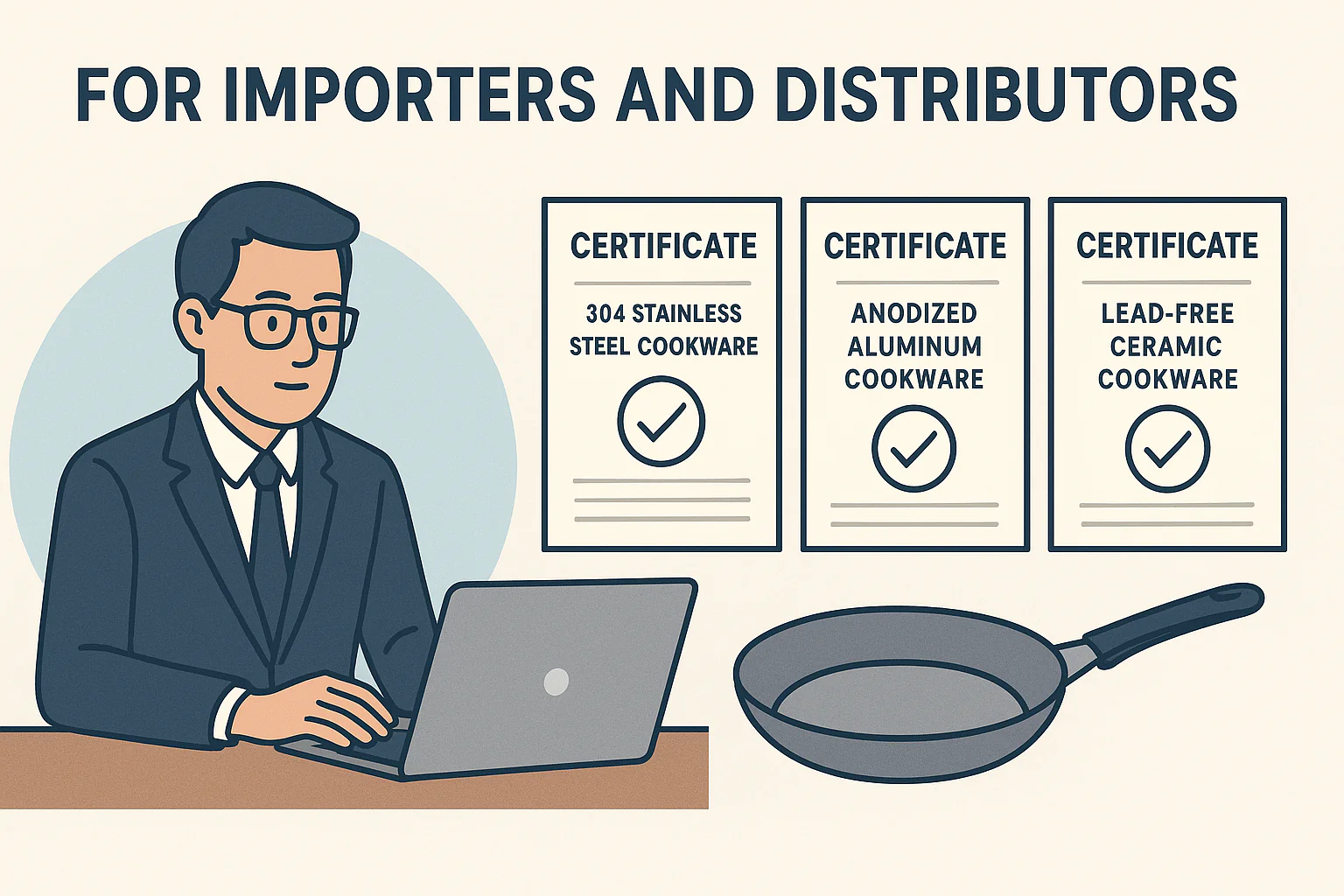
Prioritizing Material and Certification
7.2 For Retailers and Online Sellers
Retailers and online sellers benefit from promoting certification details to build consumer trust. Clearly display stainless steel, aluminum, and ceramic cookware certifications on packaging, e-commerce platforms, and marketing campaigns. Highlighting cookware certification by material in product descriptions communicates safety, quality, and compliance, differentiating certified cookware from uncertified alternatives.
Online sellers should also provide digital copies of certificates or official compliance statements to verify claims. Transparency not only boosts consumer confidence but also reduces return rates and enhances customer loyalty. By emphasizing cookware certification by material, sellers can position their products as safe, premium, and trustworthy in a highly competitive market.
7.3 For Consumers
Consumers should actively look for certification marks and labels when buying cookware in stores or online. Checking for stainless steel cookware certification, anodized aluminum cookware certification, or lead-free ceramic cookware certification helps ensure that products are safe for everyday cooking. Always verify that cookware is free from harmful substances such as lead, cadmium, or excess nickel. By choosing products backed by cookware certification by material, consumers safeguard their health, avoid toxic exposure, and invest in long-lasting kitchenware.
For online purchases, carefully review product descriptions, images, and certificates provided by sellers. When in doubt, request verification documents before purchasing. Certified cookware may come at a slightly higher cost, but the added safety, durability, and performance make it a worthwhile investment. Ultimately, prioritizing cookware certification by material ensures peace of mind and supports healthier, safer cooking experiences.
Conclusión
Ensuring that your kitchenware meets recognized cookware certification by material standards is not just a regulatory requirement—it’s a commitment to consumer safety, product quality, and market credibility. From stainless steel cookware certification and anodized aluminum cookware certification to lead-free ceramic cookware certification, certified products offer peace of mind for both buyers and end users, reduce risks in international trade, and elevate the reputation of your brand.
Whether you are sourcing cookware for retail, wholesale, or e-commerce, prioritizing certified materials allows you to provide safe, durable, and high-performing products that meet global market demands. Remember, understanding certification marks, reading labels carefully, and verifying documentation are essential steps in maintaining compliance and building trust with your clients.
If you are looking to source high-quality, cookware certification by material that meets global standards, contact us today. Our team of experts can guide you through selecting the right stainless steel, aluminum, or ceramic cookware to meet your market needs, ensuring both compliance and customer satisfaction.

Janice cuenta con años de experiencia dedicada al sector de los utensilios de cocina, centrándose en resolver los retos de adquisición de los compradores. También gestiona el cumplimiento normativo de principio a fin para que los compradores puedan evitar retrasos. Su objetivo es ser su aliada de confianza en materia de utensilios de cocina, entregando productos de calidad a tiempo y sin complicaciones.