Navigating the cookware certification process can seem daunting for manufacturers, entrepreneurs, and retailers alike. Not only is it critical for ensuring the safety and quality of products, but it also builds consumer trust and brand reputation. This comprehensive guide will walk you through the essential steps involved in the certification process, highlighting how to effectively save time and avoid costly mistakes.
1.Understanding the Cookware Certification Process-Why Certification Matters
Before diving into the specifics, it’s useful to understand the overall cookware certification process. This process encompasses all the necessary steps a manufacturer must follow to ensure their products comply with safety standards and regulations. Certification verifies that cookware is safe for consumer use, meets quality requirements, and is made from approved materials. The major certifications include FDA, LFGB, NSF, and others, each tailored to the specific needs of various markets.
Certification is crucial for several reasons:
1.1Safety Assurance
It certifies that the cookware does not leach toxic substances into food.
1.2Market Access
Many retailers and distributors require proof of certification before stocking products.
1.3Consumer Confidence
Certifications build trust among consumers, assuring them that the product meets health and safety standards.
1.4Legal Compliance
Failure to comply with regulations can lead to legal repercussions, product recalls, and damage to brand reputation.
In essence, understanding the cookware certification process not only protects consumers but also benefits manufacturers by opening doors to new markets.
2.How to Get Cookware Certified: A Step-by-Step Guide
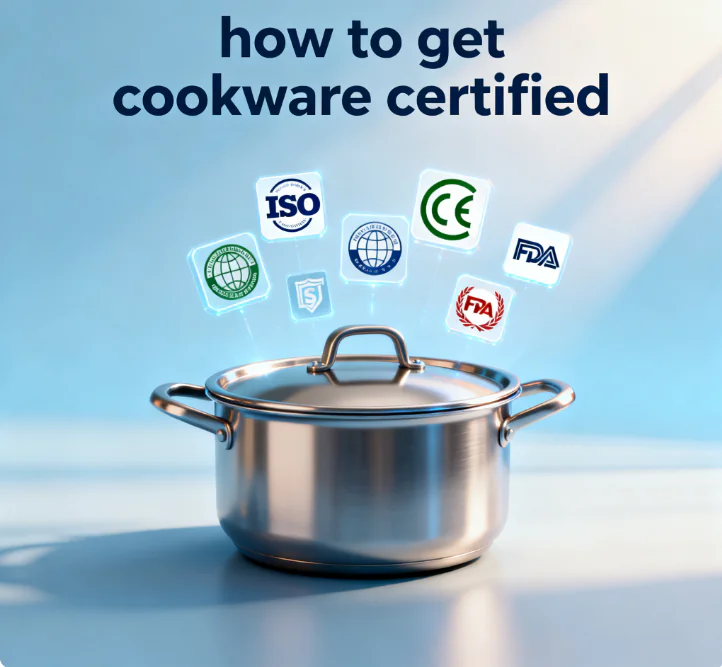
To start your journey through the cookware certification process, follow this step-by-step guide to getting your cookware certified efficiently:
2.1Identify Applicable Certifications
The first step is determining which certifications apply to your cookware. Generally, manufacturers should focus on:
- FDA (Food and Drug Administration) certification for products sold in the United States.
- LFGB (Lebensmittel- und Futtermittelgesetzbuch) certification for products intended for the European market.
- NSF (National Sanitation Foundation) certification for achieving safe food contact standards.
Understanding which certifications are relevant to your target market will guide the rest of the process.
2.2Gather Required Documentation
Once you know which certifications apply, the next step is to gather necessary documentation. Documentation typically includes:
- Product specifications (material composition, usage).
- Testing results from accredited laboratories.
- Manufacturing process details (quality control measures).
Having accurate and comprehensive documentation ready can significantly reduce delays later in the certification process.
2.3Choose an Accredited Testing Facility
Select a laboratory accredited to conduct the necessary tests for your chosen certifications. Research and vet potential labs to ensure they have a solid reputation and experience with cookware testing. Testing requirements can vary, but having your product assessed by a qualified laboratory is crucial for successful certification.
2.4Submit Your Product for Testing
After selecting an accredited laboratory, submit your cookware for testing. Testing may include a range of criteria:
- Chemical leaching assessments.
- Heat resistance and durability evaluations.
- Performance metrics regarding heat distribution, handling, and cleaning.
It’s important to maintain open communication with the testing facility during this phase to address any potential issues promptly.
2.5Compile Test Results and Submit for Certification
Once your cookware has been tested, compile the results along with all relevant documentation and submit them to the certification body. Be thorough in your calculations; any discrepancies or missing information can lead to delays or rejection of your application.
2.6Await Certification Approval
After submission, there will be a review period. Approval time can vary, so patience is essential. Ensure you are available to address any questions or requests for additional documentation from the certifying body.
3.FDA Cookware Certification Steps
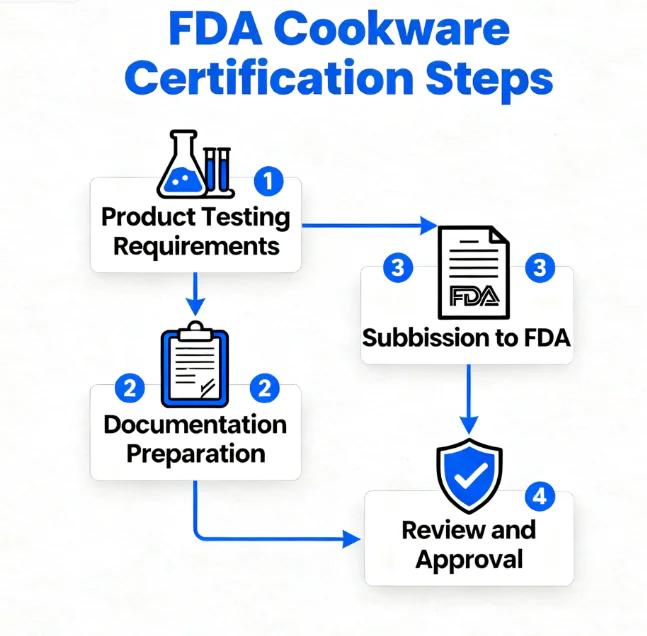
If your target market is the United States, understanding the FDA cookware certification steps is crucial.
Step 1: Familiarization with FDA Regulations
The FDA sets safety standards for materials coming into contact with food. Familiarizing yourself with these regulations is the first step toward compliance.
Step 2: Material Selection
Cookware must be made from materials recognized as safe by the FDA. This can include stainless steel, cast iron, or certain types of non-stick coatings. Ensure that all components of your cookware meet FDA guidelines.
Step 3: Testing for Compliance
Your cookware must undergo rigorous testing for compliance with FDA regulations. This typically includes:
- Chemical migration tests to measure leaching substance levels.
- Performance tests under various conditions (heat resistance, impact resistance).
Step 4: Documentation Submission
Compile all test results, along with documentation detailing materials, intended use, and manufacturing processes, and submit this to the FDA.
Step 5: Receive Approval
Once your submission has been reviewed and approved by the FDA, you will receive certification to market your product in the U.S. This certification is crucial for ensuring compliance and for consumer trust.
4.LFGB Certification Process for Cookware
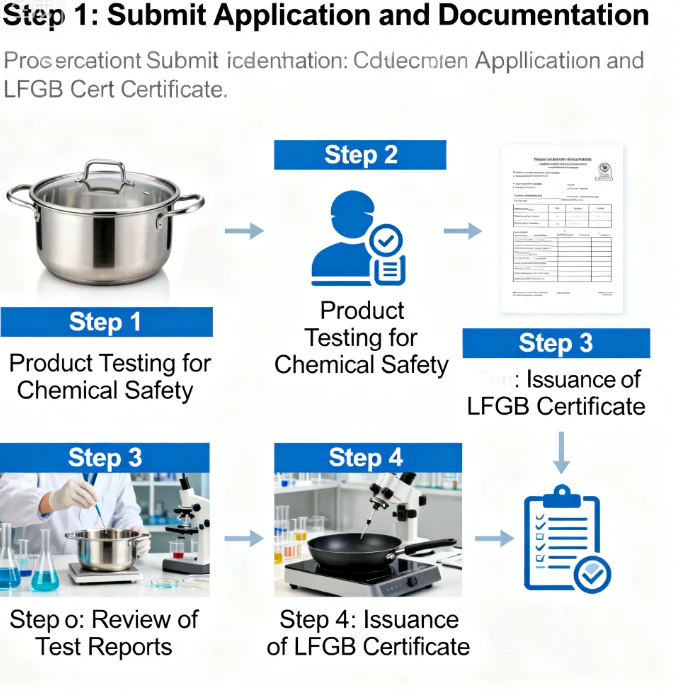
For those looking to distribute cookware in Europe, understanding the LFGB certification process is essential.
Step 1: Understanding LFGB Requirements
The LFGB outlines specific safety standards for food-contact materials. Familiarize yourself with these requirements as they dictate the testing and manufacturing processes.
Step 2: Preparation for Testing
Ensure that your cookware meets LFGB standards in terms of material composition and safety. This can involve selecting substances that do not present any health risks.
Step 3: Conduct Required Testing
Send your cookware to a laboratory that can conduct LFGB-required tests. Common tests include:
- Migration tests: examining if harmful substances migrate from the cookware to food.
- Robustness assessments: determining how your cookware performs under pressure or heat.
Step 4: Documentation and Submission
Just like with the FDA process, compile all documentation and test results and submit them to the relevant authority in the EU.
Step 5: Certification Receipt
After successful review, you will receive LFGB certification, which allows you to market your cookware across Europe confidently.
5.NSF Cookware Certification Application
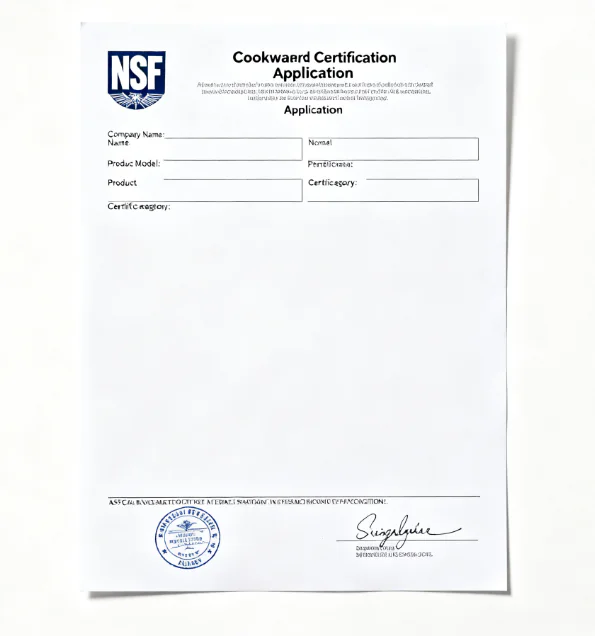
The NSF certification is recognized globally and focuses on safety and sanitation. Here’s how to navigate the NSF cookware certification application:
Step 1: Understand NSF Standards
The NSF has specific standards for cookware involving material integrity, safety, and the ability to undergo sanitation processes.
Step 2: Prepare Your Products
Ensure your cookware adheres to NSF standards during the design and manufacturing phases. This ensures that your products are ready for certification when you apply.
Step 3: Application Submission
Fill out the NSF application form, including details about materials, intended use, and any prior test results.
Step 4: Testing Phase
Your cookware will undergo comprehensive testing to verify compliance with NSF standards. This might involve checking for chemical safety and the ability to withstand critical operational conditions.
Step 5: Factory Inspection
An NSF auditor will perform a factory inspection to verify safety and compliance.
Step 6: Certification Approval
After successfully passing inspections and testing, you will receive your NSF certification, enhancing your products’ marketability.
6.Essential Cookware Certification Requirements
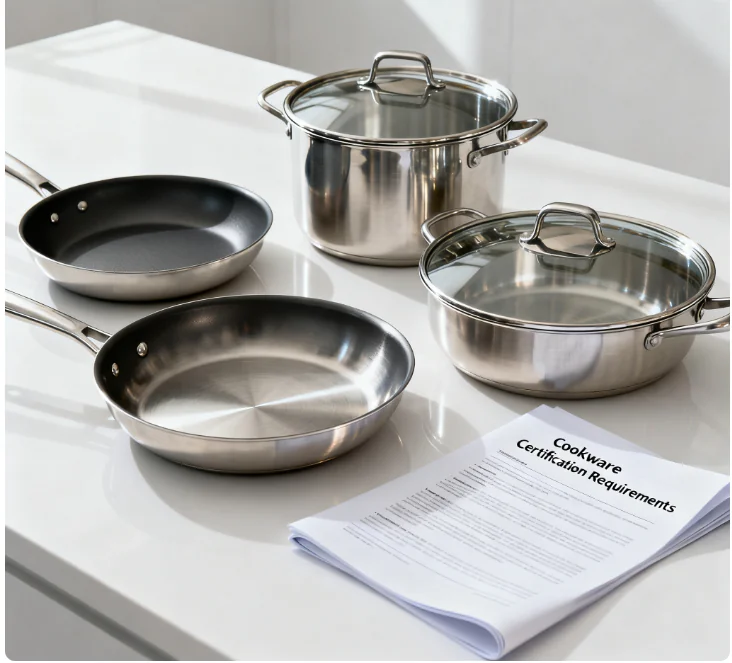
Comprensión cookware certification requirements will make the manufacturing process smoother. Here are the essential ones:
6.1Material Safety
Cookware must be made from non-toxic materials and must not leach harmful substances into food.
6.2Performance Testing
Cookware must undergo performance testing to ensure it can withstand cooking conditions without degradation.
6.3Label Compliance
Accurate labeling is essential. It should provide necessary information including material composition, cooking instructions, and safety warnings to consumers.
6.4Cleanability Standards
Cookware must be designed to be easy to clean and maintain hygiene standards.
6.5Durability Assessments
Products need to meet durability standards to ensure they can withstand regular cooking use without significant wear and tear.
By adhering to these essential cookware certification requirements, manufacturers can position themselves better for successful certification.
7.Cookware Testing for Certification
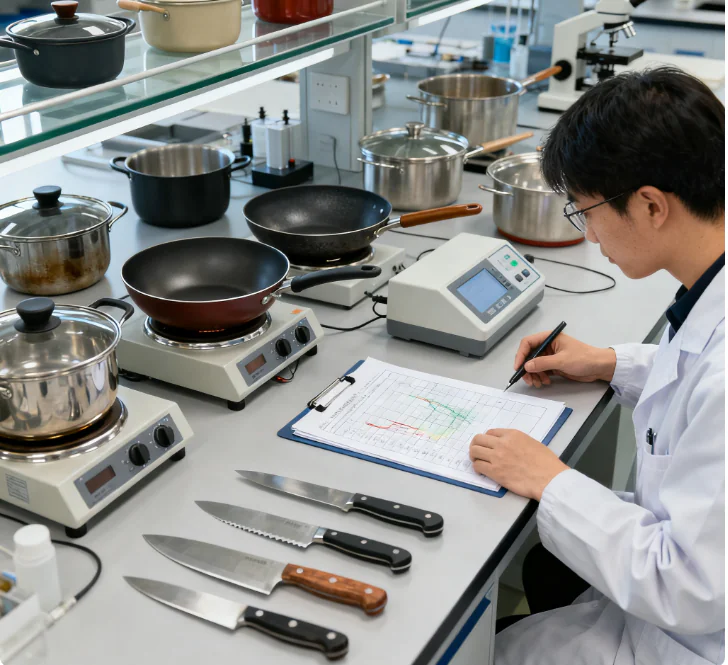
Testing is a critical component of the cookware certification process. Here’s what to expect during the cookware testing for certification phase:
7.1Chemical Migration Testing
This test evaluates whether any harmful chemicals migrate from the cookware into food during cooking, which is essential for ensuring consumer safety.
7.2Heat Resistance Testing
Cookware must be assessed for its ability to maintain structural integrity under high temperatures. This testing ensures that the cookware does not warp or discolor with use.
7.3Durability Testing
Tests assess the cookware for scratches, dents, and other wear and tear, ensuring that it meets longevity expectations.
7.4Performance Testing
Cookware is evaluated for even heat distribution, handling, and general cooking performance to ensure that it meets consumer expectations.
7.5Cleaning Efficacy
A crucial aspect of cookware testing is examining how easily the product can be cleaned without damaging its surface or compromising safety.
These tests provide crucial information to ensure a safe and marketable product.
8.Cookware Certification Timeline: What to Expect
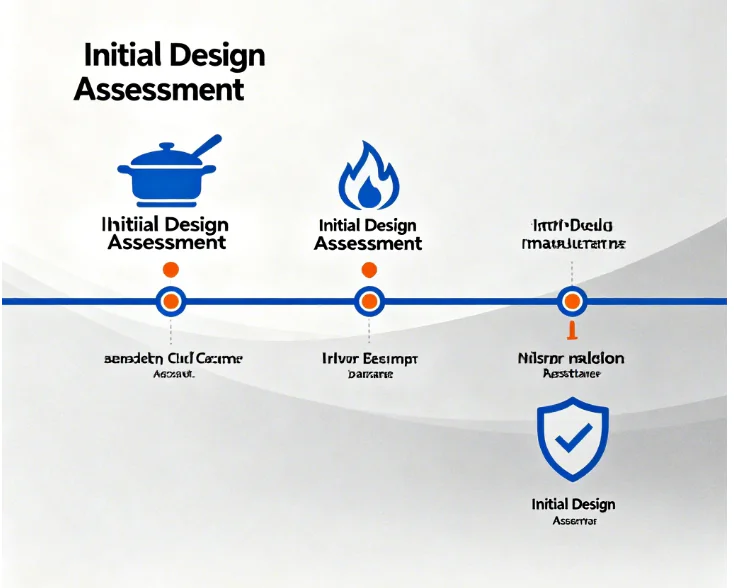
Understanding the cookware certification timeline can help manage expectations and plan accordingly. Here’s a typical timeline you might face during the certification process:
8.1Preparation Phase
The preparation phase typically lasts 1-4 weeks, depending on your readiness with documentation and test samples. The more organized you are, the quicker this phase can be completed.
8.2Testing Phase
This can take anywhere from 2-8 weeks, depending on the complexity of the testing procedures and the availability of the testing laboratory. Remaining in communication with the laboratory can help expedite this timeline.
8.3Documentation Review
After testing, expect 2 weeks for documentation review and feedback from the certifying body. This time is spent ensuring that all provided information aligns with standards.
8.4Certification Approval
Once approval is granted, certification might take up to 2 weeks to be processed and issued officially.
Overall, the entire cookware certification timeline could range anywhere from 6 weeks to several months. Planning ahead of time and ensuring all required documentation is in order can significantly reduce delays.
9.Navigating the Cookware Factory Certification Process
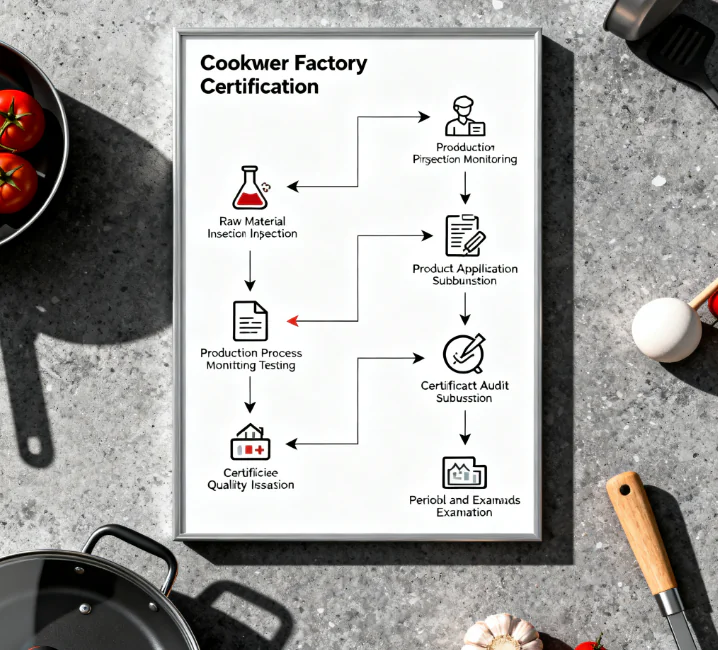
Finally, understanding the cookware factory certification process is critical for manufacturers. This process ensures that your production facility aligns with safety standards and maintains quality control. Here’s a breakdown:
Step 1: Factory Assessment
A comprehensive evaluation of your production facility is needed to ensure compliance with safety standards. This involves inspecting operations, equipment, and health protocols.
Step 2: Quality Control Measures
Establish strict quality control measures throughout your manufacturing processes. This not only aids in compliance but also ensures product quality.
Step 3: Employee Training
Ensure that all employees involved in the manufacturing process are well-trained in safety and quality protocols. This is often assessed during factory certification audits.
Step 4: Continuous Improvement
Establish processes that allow for ongoing assessment and enhancement of your manufacturing methods to comply with industry standards continually.
Step 5: Final Factory Audit
An accredited auditor will inspect your facility to ensure compliance with relevant safety and quality standards before issuing your factory certification.
Navigating the cookware factory certification process effectively is essential to guarantee that your operations meet necessary safety, health, and quality standards.
Conclusión
The cookware certification process can be complex, but understanding the steps involved can save manufacturers time and avoid costly mistakes. From identifying relevant certifications, gathering documentation, and selecting accredited testing facilities, to ensuring compliance with FDA, LFGB, and NSF regulations, having a complete grasp of the process is essential for success.
By implementing best practices and prioritizing quality and safety, manufacturers can not only achieve certification but also build consumer trust and loyalty. Investing time in understanding the regulatory landscape will result in safer and more reputable cookware products, ultimately benefiting both manufacturers and consumers alike. With this comprehensive guide as your resource, you’re well on your way to navigating the cookware certification process efficiently and effectively, ensuring that your products meet the highest standards of safety and quality.

Nathan is a Kitchenware Compliance & Sourcing Advisor at Auspace Kitchenware, with years in China’s kitchenware sourcing and global market fit. He works with Chinese factories to ensure quality, FDA/CE compliance, and alignment with buyers’ needs.With cross-border trade background, he guides on certification, quality checks, and cost-optimized sourcing. His expertise connects buyers to China’s manufacturers, making him a trusted resource for compliant kitchenware.