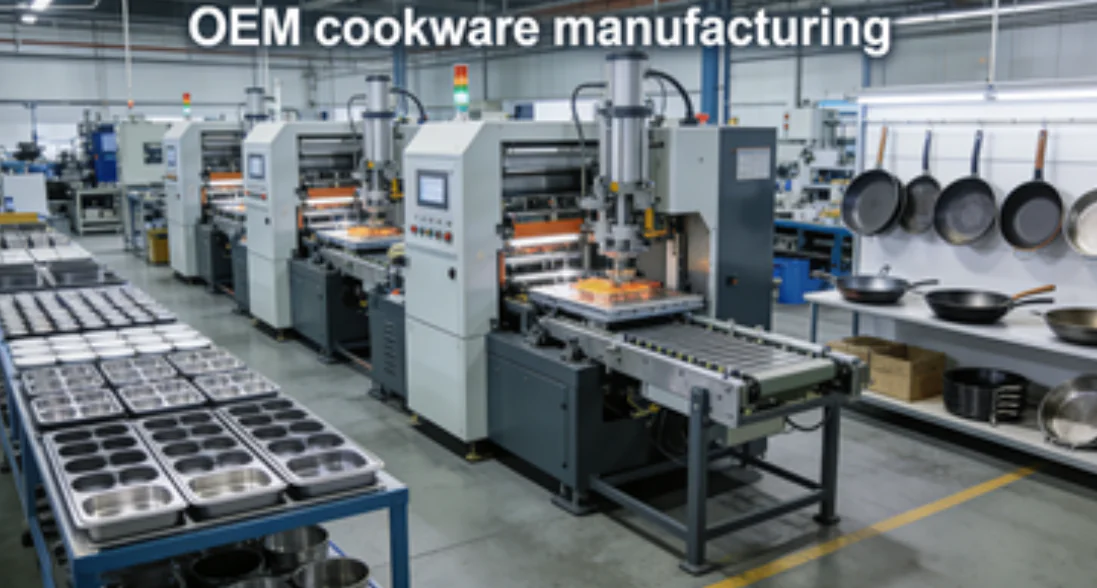
Cookware is an essential part of both home and commercial kitchens, with its quality directly impacting food safety, user experience, and long-term health. For consumers, retailers, and distributors, understanding cookware quality control and manufacturer responsibilities is key to making informed decisions. Cookware quality control is not a single final check but a systematic process throughout the entire manufacturing cycle—from raw material procurement to finished product delivery. This article explores core aspects of cookware quality control, addressing factory inspection processes, manufacturing quality control, testing standards, certifications, checklists, third-party inspections, and defect rate standards.
At its core, cookware quality control ensures products meet predefined safety, performance, and durability standards. Manufacturers bear primary responsibility for rigorous QC measures, as oversights can result in harmful substance leaching, premature failure, or poor performance. Global food safety attention has tightened standards worldwide; for example, the U.S. FDA has warned against imported cookware with excessive lead leaching. Different materials (stainless steel, aluminum, ceramic, non-stick) require specialized QC protocols, and below is a detailed breakdown of key components.
Quality Control in Cookware Manufacturing: A Full-Cycle Approach

Reliable manufacturers implement full-cycle QC, integrating checks into three key phases: raw material, in-process, and finished product control—avoiding over-reliance on end-of-line testing to reduce waste and ensure consistency.
Raw material QC is the most critical phase, as material quality determines final product safety and durability. Cookware materials must meet strict food contact standards, requiring rigorous supplier vetting and certification verification. Stainless steel is typically 304 or 316 grade (Cr≥18%, Ni≥8%) for corrosion resistance; regenerated stainless steel (if used) must be labeled. Aluminum cookware needs anodization (oxide film ≥10μm) to limit aluminum leaching to ≤0.1mg/L, while ceramic glazes must have lead leaching ≤0.01mg/L (tested in 4% acetic acid).
Incoming raw material inspections use specialized equipment: spectrometers for metal composition, neutral salt spray tests (48 hours) for corrosion resistance, and phthalate testing for plastic handles (per standards like China’s GB4806.7). Failed materials are rejected, and batch records ensure traceability.
In-process QC monitors production processes (forming, welding, coating, assembly) using Statistical Process Control (SPC) to track key parameters (stamping pressure, welding current, coating temperature/thickness). Stamping die gaps (0.05~0.1mm) and non-stick coating specs (280~320℃ curing, 25~35μm thickness) are critical to avoid defects. Dimensional tests (every 20 units) and CPK monitoring (≥1.33) ensure consistency.
In-process QC also includes equipment maintenance (daily cleaning, weekly calibration, monthly preventive checks) and operator certification (pre-employment training, quarterly re-evaluations). Worn molds (>0.1mm) are replaced to prevent batch defects.
Finished product QC is the final check, covering physical, chemical, and functional testing. Physical tests include handle strength (≥500N), impact resistance (500g steel ball from 1m), and heat resistance (200℃ without deformation). Chemical tests (ICP-MS) check heavy metals (lead ≤0.01mg/L) and comply with EU REACH. Functional tests verify thermal conductivity (wok temperature difference ≤10℃) and oven accuracy (±5℃ at 200℃). Visual inspections ensure no scratches, bubbles, or welding flaws (surface roughness Ra ≤0.8μm).
Cookware Factory Inspection Process: Ensuring Compliance at Every Stage

Factory inspections follow three stages—pre-production, in-production, post-production—to monitor compliance and consistency throughout manufacturing.
Pre-production inspection (PMI) verifies raw material certificates, equipment calibration, and process documentation (production plans, QC procedures). A small trial batch may be tested to confirm process capability before mass production.
In-production inspection (IPI) occurs at regular intervals (every 2 hours or 50 units), monitoring process parameters and sampling semi-finished products for defects (welding cracks, coating bubbles). Production pauses for root cause resolution if defects arise.
Post-production inspection (PPI) is a comprehensive final check: 100% visual inspection, random physical/chemical/functional testing, and packaging verification (sturdiness, accurate labeling, certification marks). Failed products are reworked or discarded, with detailed defect records.
Digital traceability (unique product codes + MES) enhances inspections, enabling defective batch recall and process optimization by tracking raw materials, production lines, and workstations.
Cookware Testing Standards: Global Benchmarks for Safety and Quality

Global testing standards define methods, requirements, and safety limits for cookware, with manufacturers needing compliance for target markets. Key standards include:
U.S.: FDA regulates cookware as food contact substances (FCS), limiting heavy metal leaching (lead, cadmium, arsenic) and providing testing protocols. ANSI/ASTM sets performance standards for durability, heat distribution, and handles.
EU: Framework Regulation (EC) 1935/2004 governs food contact materials, with CEN standards (EN 12983 for aluminum, EN 13887 for stainless steel). Germany’s LFGB is rigorous, including migration and sensory tests (no odor/color transfer).
China: GB 4806 series covers food contact materials—GB 4806.9 (metal), GB 4806.10 (non-stick coatings), GB 4806.7 (plastics)—aligning with international benchmarks.
International: ISO 9001 (QMS framework) is widely adopted, while ISO 15730 specifies aluminum cookware testing. Standards vary by material/type (e.g., non-stick needs coating adhesion/heat resistance tests; ceramic focuses on glaze safety).
Cookware Manufacturer Certifications: Proof of Quality Commitment

Third-party certifications verify manufacturer QC processes, products, and management systems, building stakeholder trust and enabling market access. Key certifications include:
ISO 9001: Foundational QMS certification, demonstrating continuous improvement, customer focus, and consistent quality via third-party audits.
Food Contact Safety: FDA (U.S.) and LFGB (EU/Germany) certifications, mandatory for exports, verifying no harmful leaching and meeting sensory/durability requirements.
Social Responsibility: BSCI certification (ethical labor practices) is often required by global retailers, complementing product quality commitments.
Material-Specific: NSF (commercial cookware safety) and AISI (stainless steel grade verification) certifications ensure material compliance.
Stakeholders should prioritize market-relevant, accredited certifications, with manufacturers providing transparent documentation.
Cookware QC Checklist: A Tool for Consistent Quality

A QC checklist ensures consistent, thorough checks at every stage, reducing human error. Core components include:
Raw Material Checklist: Supplier certifications, material grade verification, harmful substance testing, and condition checks (no rust/contamination).
In-Process Checklist: Process parameter verification, dimensional accuracy, defect inspections, and equipment calibration—completed every 2 hours with defect documentation.
Finished Product Checklist: Visual, physical, chemical, and functional tests; packaging inspection—with material-specific add-ons (e.g., non-stick scratch resistance).
Checklists include documentation requirements and are regularly updated. Digital checklists (mobile-integrated with MES) streamline efficiency.
Third Party Cookware Inspection: An Independent Verification of Quality

Third-party inspections provide unbiased verification, critical for retailers/importers to ensure compliance and quality. Inspections occur pre-production, in-production, or pre-shipment (most common).
Inspectors follow agreed plans (criteria, sampling per ANSI/ASQ Z1.4, testing methods), conduct comprehensive checks, and review manufacturer QC documentation.
A detailed report summarizes results, defects, and compliance conclusions, guiding client decisions (accept/reject/rework) and helping manufacturers identify QC gaps.
Benefits include reduced defective shipments, regulatory compliance, trust building, and cost savings via process optimization.
Cookware Defect Rate Standards: Minimizing Errors and Ensuring Consistency
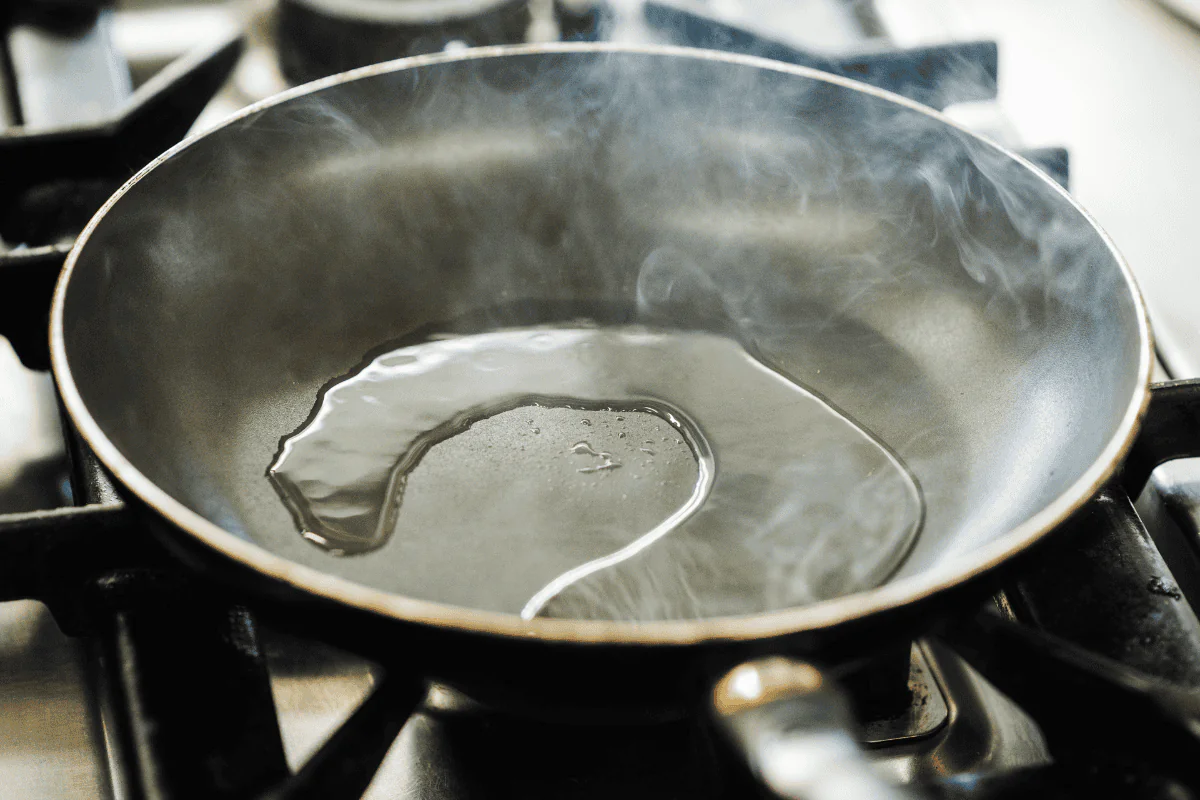
Defect rate standards define acceptable defective product percentages, with defects classified as minor (cosmetic, non-harmful) or major (safety/performance-impacting, e.g., heavy metal leaching, coating peeling).
Reliable manufacturers target ≤0.5% major defects and ≤3% minor defects (high-end brands ≤0.1% major defects). Client-specific standards may be stricter.
To meet standards, manufacturers use robust QC, employee training, equipment maintenance, and defect analysis/corrective actions. Defect rates evolve with materials, processes, and regulations.
Conclusion: What to Expect from a Reliable Cookware Manufacturer
Reliable cookware manufacturers prioritize full-cycle QC, global standard compliance, recognized certifications, structured checklists, strict defect rates, and continuous improvement.
Stakeholders should expect transparent QC processes, documentation, third-party inspection willingness, and adherence to safety/performance benchmarks. For manufacturers, robust QC is a legal requirement and strategic advantage, building trust and driving global success.

Iris es una experta en abastecimiento con muchos años de experiencia en la industria de los utensilios de cocina. Se especializa en desarrollo de productos, control de calidad y cumplimiento normativo internacional, y ofrece información fiable y soluciones prácticas a compradores y profesionales.