Hi there! I’m Kelsey from Auspace Kitchenware, and while I spend my days helping businesses source quality cookware wholesale, I’m also someone who loves a well-organized kitchen at home. After years of wrestling with clanging pots and missing lids, I’ve learned that smart storage isn’t about having a huge kitchen—it’s about making the most of what you’ve got.
Why Pot and Pan Storage Matters More Than You Think
Let me be honest: a messy pot cabinet used to drive me crazy. I’d pull out one pan and three others would come tumbling down. Sound familiar? Beyond the frustration, poor storage can actually scratch your cookware, waste precious minutes during meal prep, and make your kitchen feel more chaotic than it needs to be.
The good news? With the right approach, even the smallest kitchen can feel spacious and functional.
Essential Storage Methods for Every Kitchen
1. The Vertical Stack: Best for Deep Cabinets
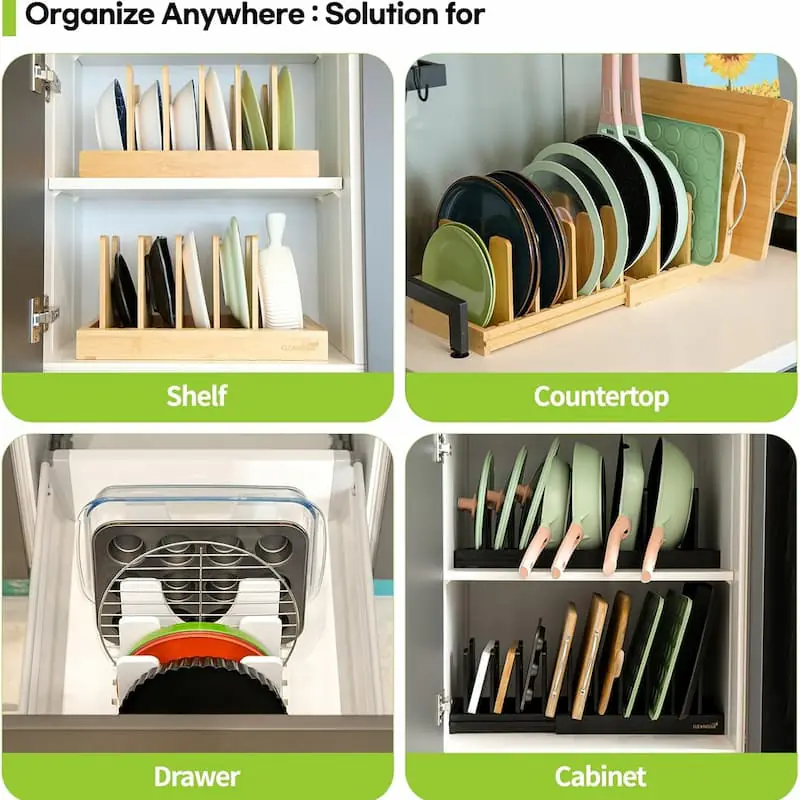
If you have deep lower cabinets, vertical storage is your friend. Here’s what works:
- Use adjustable pan organizers that let you slide pots in upright, like files in a cabinet
- This method prevents scratching since pans aren’t stacked directly on top of each other
- Perfect for storing multiple cookware sets when you have different sizes and materials
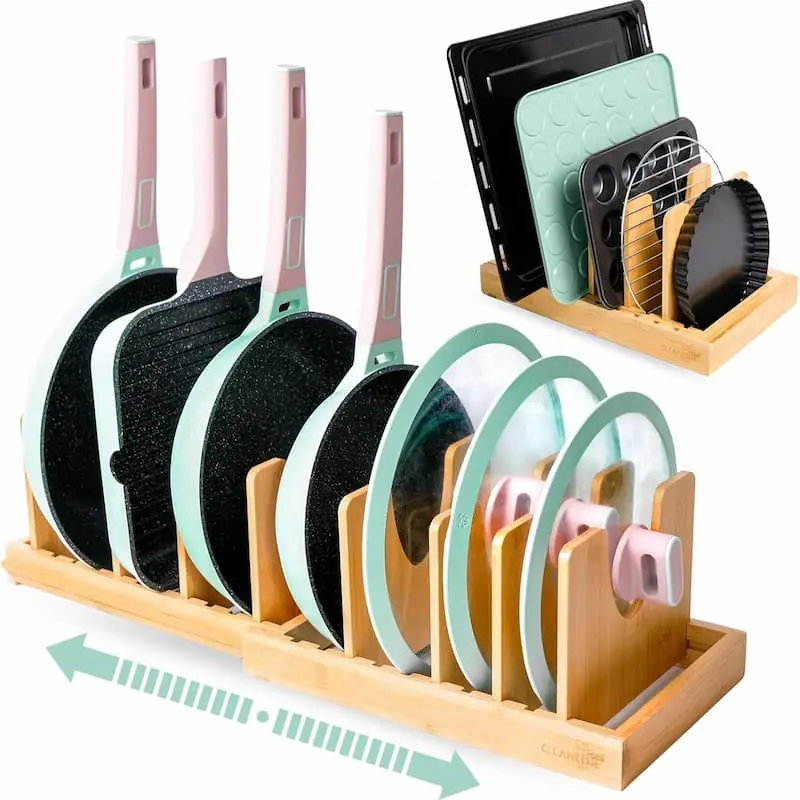
I personally keep my stainless steel and cast iron cookware separated this way. Cast iron especially benefits from vertical storage since it’s heavy—you don’t want to be lifting three pans just to get to the one at the bottom.
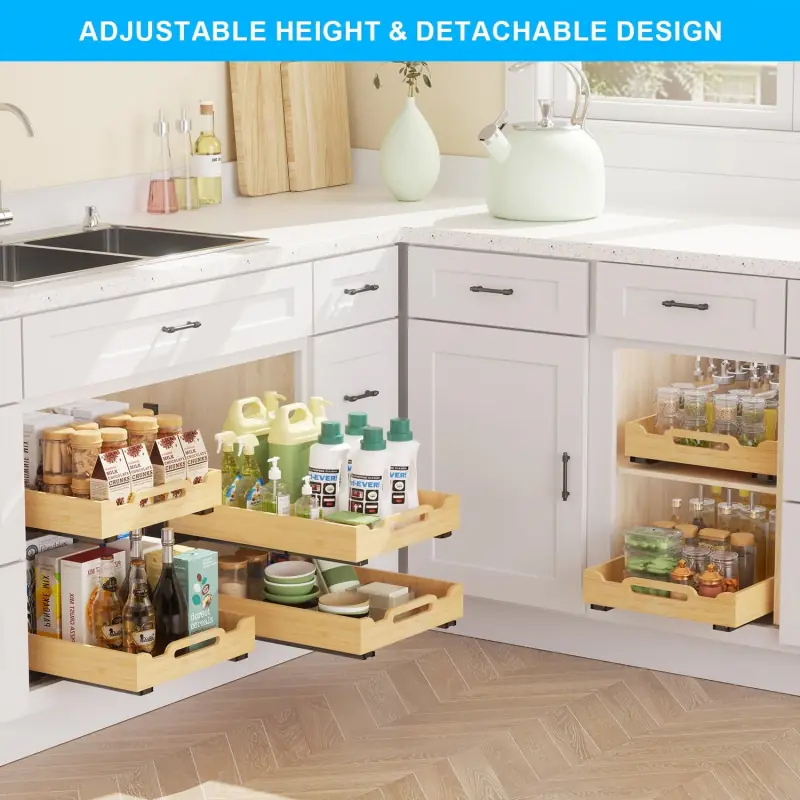
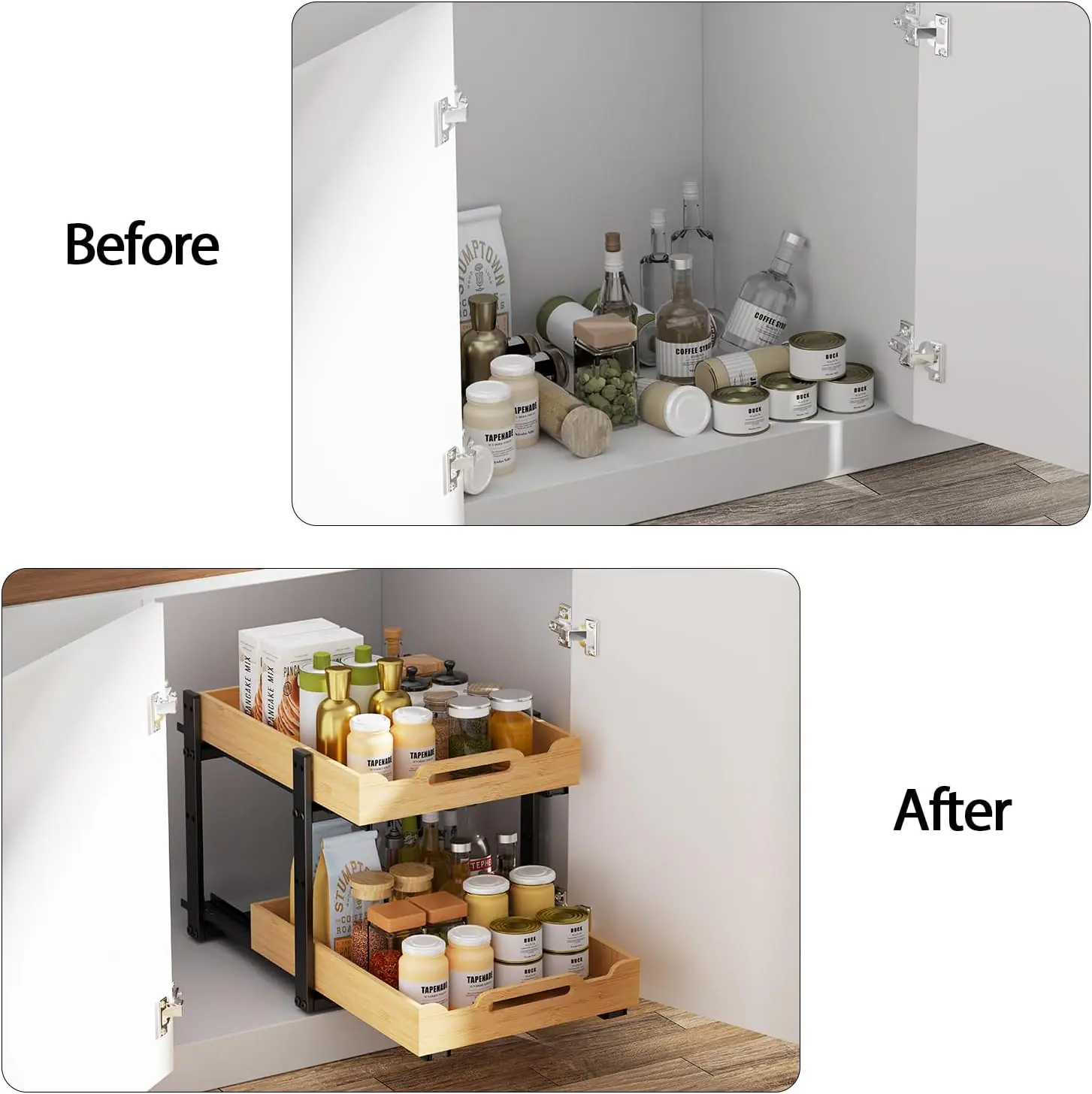
2. Pull-Out Drawers: The Game-Changer
If you’re renovating or can add hardware, deep pull-out drawers transformed my kitchen. Here’s why they work:
- You can see everything at a glance—no more digging
- Ideal for storing pots and pans flat without stacking
- Makes accessing heavy items much easier on your back
For those who can’t install new drawers, rolling under-cabinet organizers create a similar effect.
3. Hanging Solutions: Free Up Cabinet Space
Wall-mounted pot racks or ceiling-hung racks aren’t just for restaurant kitchens. In small kitchens, hanging storage is a lifesaver:
- Keeps your most-used pans within arm’s reach
- Adds a professional, intentional look to your space
- Frees up entire cabinets for other items
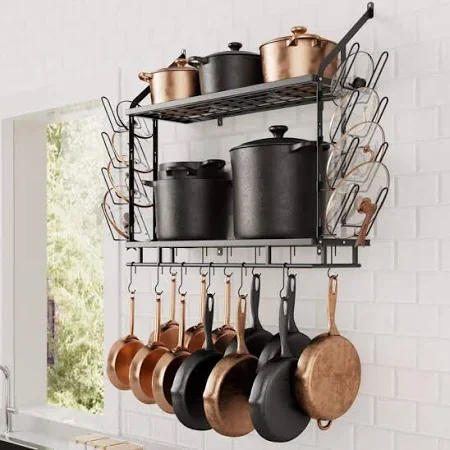
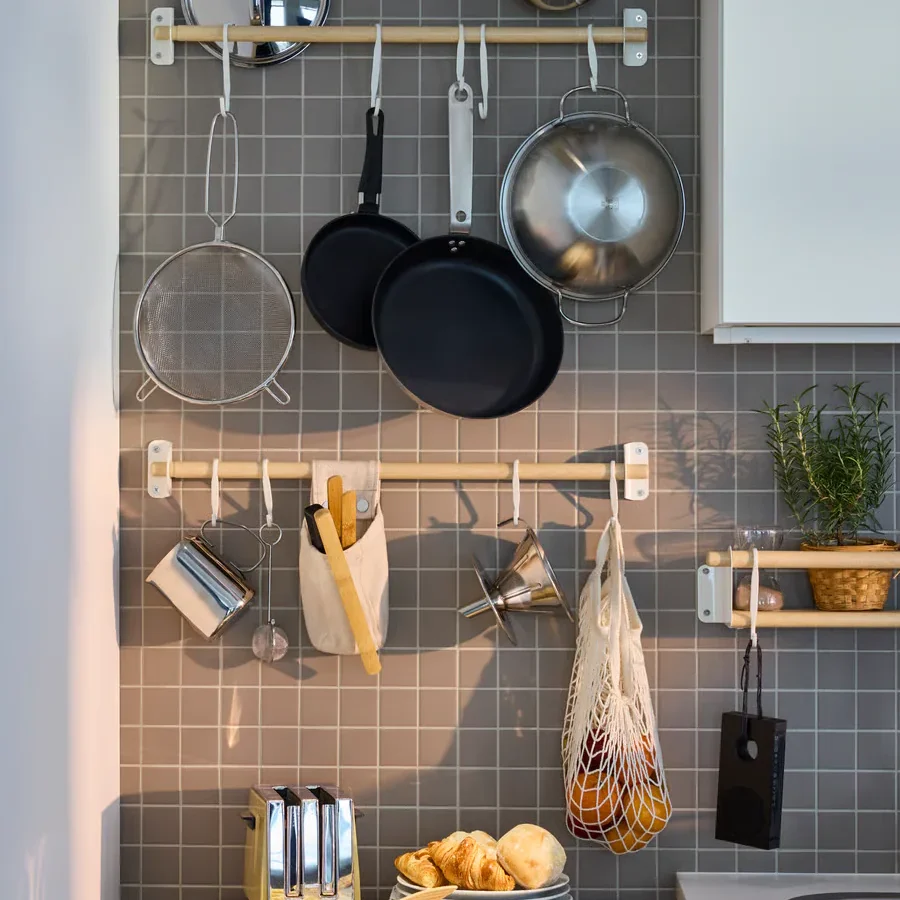
I hang my everyday skillets and leave specialty pieces in cabinets. Just make sure whatever you hang can handle the weight—some of my heavier grill pans need sturdy hooks.
4. Cabinet Door Organizers: The Forgotten Space
The inside of cabinet doors is prime real estate that most people ignore. Use it for:
- Mounting lid holders
- Hanging measuring cups or pot holders
- Installing small wire baskets for miscellaneous items
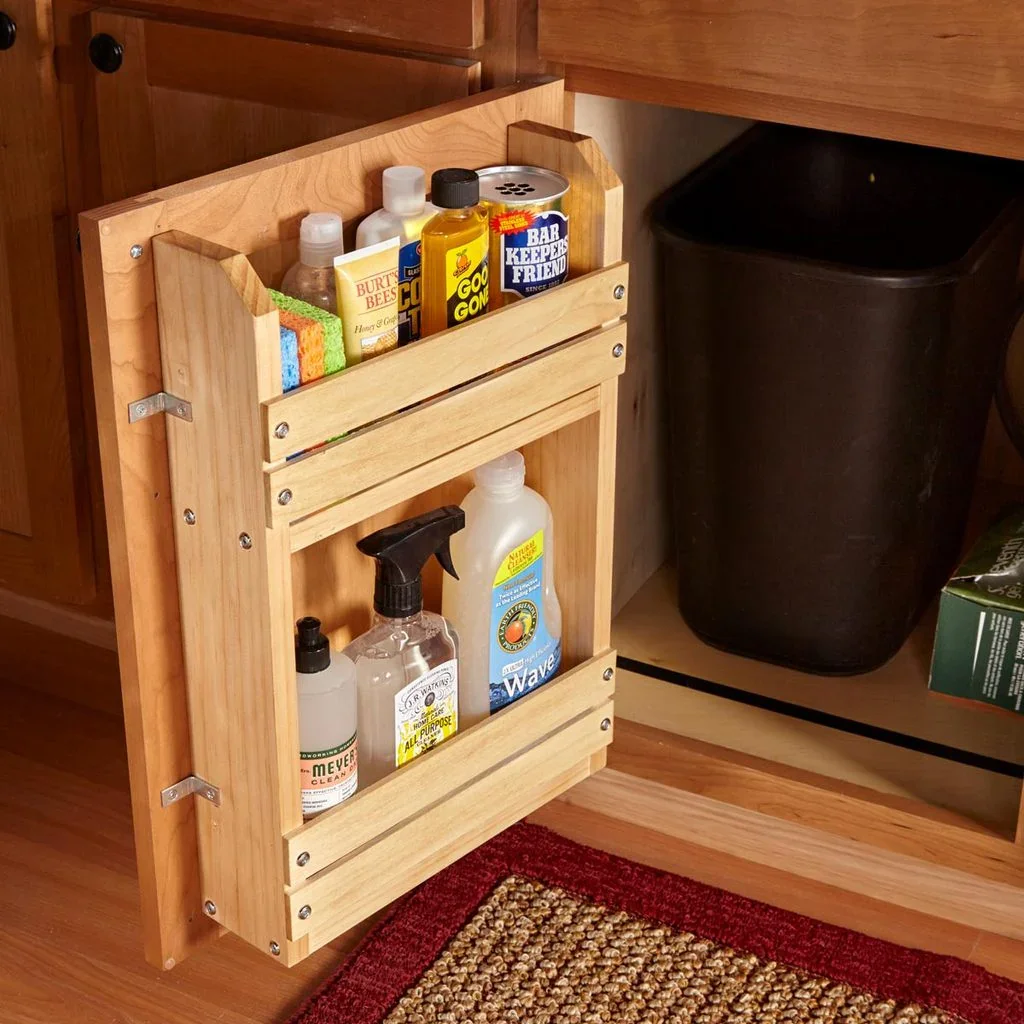
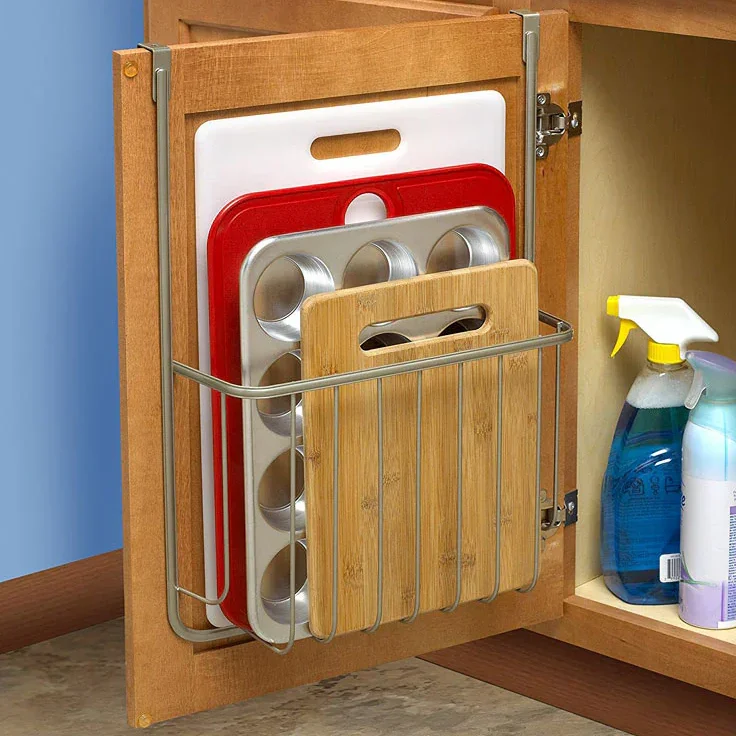
This single trick freed up so much space in my kitchen that I wondered why I hadn’t done it years earlier.
The Lid Problem: Solved
Let’s talk about lids—possibly the most annoying thing to store in any kitchen. Here’s what actually works:
Store Lids Separately
Trying to keep lids with their matching pots sounds logical, but it’s usually impractical. Instead:
- Use a vertical lid organizer (like a dish rack designed for lids)
- Mount a lid rack inside a cabinet door
- Store lids in a shallow drawer where they can lay flat
I keep all my lids in one designated spot. Yes, it takes an extra second to match them to pots, but it beats the avalanche that used to happen when I opened my cabinet.
The Lid-Pot Matching System
If you insist on keeping lids with pots, nest them intelligently:
- Store smaller pots inside larger ones with lids in between as buffers
- Use felt liner pads to prevent scratching, especially with non-stick cookware
- Group by material type—stainless with stainless, cast iron separate
Small Kitchen Storage Strategies
Limited space doesn’t mean limited options. When I was in a tiny apartment, these tricks saved me:
Maximize Vertical Height
- Install shelf risers to create two levels in one cabinet
- Use hanging hooks under shelves for mugs, freeing up space for pots
- Stack pots by size with protective padding between each piece
Multi-Functional Storage
Consider storage solutions that do double duty:
- Rolling carts can store cookware and provide extra counter space
- Oven drawers (if you don’t use them for broiling) make excellent pot storage
- Ottoman storage benches in eat-in kitchens can hold lesser-used items
The “One In, One Out” Rule
In small kitchens, I live by this rule: if I buy a new pan, an old one has to go. It’s helped me maintain a curated collection of cookware I actually use rather than a cluttered cabinet of “maybe someday” pieces.
Special Considerations for Cast Iron
Cast iron needs special attention because of its weight and care requirements:
- Never stack cast iron directly—the weight can damage other pieces
- Store in a dry location to prevent rust
- Consider keeping your most-used cast iron on the stovetop if space allows
- Slip paper towels or cloth between stacked pieces to absorb any residual moisture
Setting Up Your System: Step by Step
Ready to organize? Here’s my process:
Step 1: Empty Everything
Take every pot, pan, and lid out. Yes, all of it.
Step 2: Assess and Purge
Be honest about what you actually use. That warped pan or the pot missing its lid? Let it go.
Step 3: Group by Frequency
Separate daily-use items from occasional pieces. Your everyday skillet should be more accessible than that specialty paella pan.
Step 4: Choose Your Storage Method
Based on your cabinet depth and height, pick the approach that fits your space: vertical racks, stacking, hanging, or a combination.
Step 5: Implement and Adjust
Set everything up, use your kitchen for a week, and tweak as needed. The best system is the one you’ll actually maintain.
Maintenance Tips
Once organized, keep it that way:
- Return items to their designated spots immediately after washing
- Do a quick reorganization every few months
- Replace damaged organizers before they fail completely
- Wipe down storage racks periodically to prevent grease buildup
Frequently Asked Questions
Q: What’s the best way to store pots and pans if I have a very small kitchen?
Vertical storage with wall-mounted racks or under-cabinet pull-out organizers works best. Prioritize keeping only what you use regularly and consider hanging your most-used pieces to free up cabinet space.
Q: How do I prevent my non-stick pans from getting scratched in storage?
Use felt or silicone dividers between stacked pans, store them vertically if possible, or hang them individually. Never stack pans directly on top of each other without protection.
Q: Should I store lids with their matching pots or separately?
Separately is usually more practical. A dedicated lid organizer (vertical rack or door-mounted holder) makes them easier to access and prevents the cabinet chaos that comes from trying to match lids to pots each time.
Q: What’s the best way to organize a deep lower cabinet for pots and pans?
Install pull-out drawers or use vertical pan organizers. Deep cabinets work best when items are stored upright rather than stacked, making everything visible and accessible without having to move multiple pieces.
Q: How do I store cast iron cookware properly?
Keep cast iron in a dry location, never stack it directly on other cookware due to its weight, and place paper towels or cloth between pieces if stacking is necessary. Some people prefer keeping their most-used cast iron on the stovetop.
Q: Can I store pots and pans in the oven?
While you can use the oven drawer for storage, avoid storing items in the oven itself—it’s a safety hazard if you preheat and forget what’s inside. Many oven drawers are specifically designed for pot storage.
Q: What’s the most space-efficient way to organize pot and pan lids?
A vertical lid organizer inside a cabinet or mounted on a door uses the least space. Alternatively, store them flat in a shallow drawer, organized by size.
Final Thoughts
Organizing pots and pans isn’t about achieving Instagram-perfect cabinets—it’s about creating a system that works for tu cooking style and kitchen layout. What I’ve learned through my work at Auspace and in my own kitchen is that the best storage solution is one you’ll actually maintain.
Start with one cabinet or area, try a method that appeals to you, and adjust as you go. Your future self will thank you every time you reach for a pan and find it immediately instead of triggering a kitchen avalanche.
Happy organizing!

Kelsey Sun is a product specialist at Auspace Kitchenware, experienced in both cookware and drinkware manufacturing. With a strong background in foreign trade and sourcing, she guides global buyers on product selection, certification requirements, and private-label customization. Kelsey writes practical insights on wholesale trends and manufacturing processes for importers and distributors worldwide.