

Введение
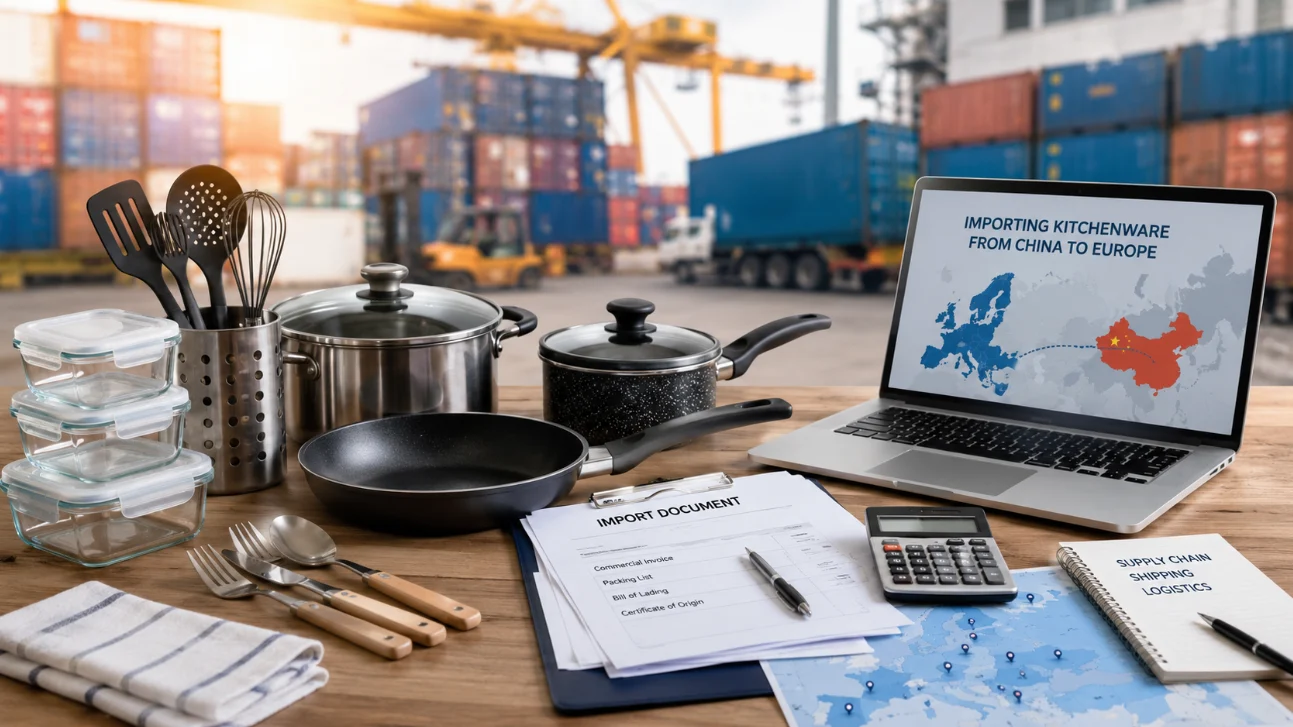
Importing kitchenware is not just about finding a factory and booking a container. A smooth Kitchenware Import from China project needs the right supplier, correct documents, product compliance, freight planning, and a realistic landed cost calculation. For European buyers, the process is even more detail-driven because kitchenware often touches food, uses mixed materials, and may fall under different customs codes.
This guide explains the full import process from Europe to China step by step. It is written for new importers, Amazon sellers, retail buyers, private-label brands, and wholesalers who want a practical view of how Kitchenware Import from China works in 2026.
1. Define the Product Before You Contact Suppliers
The first step in Kitchenware Import from China is not searching for the cheapest quote. It is defining what you are importing. “Kitchenware” is a broad category. It can include stainless steel cookware, aluminum pans, plastic lunch boxes, silicone utensils, glass storage jars, ceramic mugs, bamboo cutting boards, electric kettles, and mixed-material kitchen gadgets.
Each product may have a different HS code, testing requirement, packaging rule, and import duty. For example, a stainless steel pot, a ceramic bowl, and a plastic food container may look like simple household goods, but customs and compliance teams will not treat them the same way.
Before asking for prices, prepare a simple product brief. It should include product name, material, size, capacity, surface treatment, food-contact parts, packaging method, expected quantity, destination country, and sales channel. If you sell to supermarkets, you may also need barcode rules, carton drop test requirements, shelf-ready packaging, or customer-specific labeling.
For Kitchenware Import from China, this product brief saves time. A supplier can only quote accurately when the details are clear. A freight forwarder can only estimate cost when carton size and gross weight are available. A customs broker can only check the import process Europe China when the product description and material are specific.
Checklist: product type, material, and target market
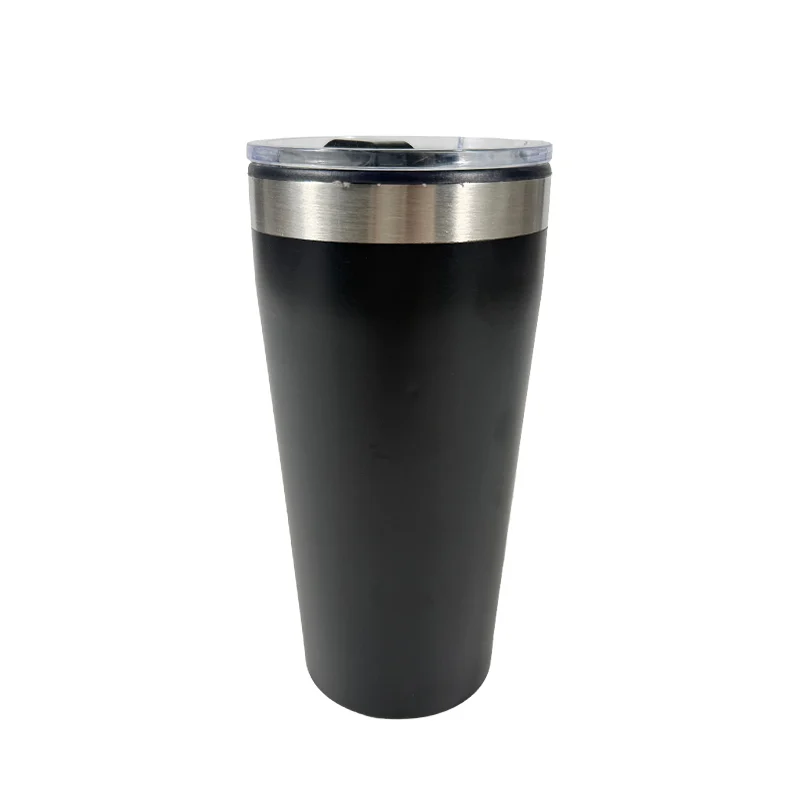
For Kitchenware Import from China, write down the product type in plain language first. Do not only say “cookware set.” Say “7-piece aluminum non-stick cookware set with glass lids and Bakelite handles.” Do not only say “food container.” Say “PP plastic lunch box with silicone sealing ring, direct food contact, microwave use.”
Then list the materials by part. A pan may include aluminum body, stainless steel base, non-stick coating, stainless steel handle rivets, glass lid, silicone knob, and printed color sleeve. This matters because import compliance documentation is usually checked by material and function.
Also confirm the target market. Germany, France, Italy, Spain, the Netherlands, and Poland are all in the EU customs territory, but buyers may still have different document preferences, packaging waste systems, language requirements, and retail standards. If the product is sold in both the EU and the UK, do not assume one test report is enough for both markets.
A useful rule is simple: if a part touches food, touches the mouth, touches heat, or carries a safety warning, treat it as important from the beginning.
2. Check EU Compliance Before Pricing
Many importers make the same mistake. They negotiate price first and check compliance later. For Kitchenware Import from China, this can create serious problems. A product that is cheap but cannot pass EU food-contact testing is not cheap. It is unsellable.
Most non-electric kitchenware is mainly checked under food contact material rules. In simple terms, food contact materials should not transfer harmful substances to food in unsafe amounts. For plastic kitchenware, buyers often ask for migration testing under EU food-contact rules. For ceramic tableware, lead and cadmium migration can be a key issue. For stainless steel cookware, buyers may request metal release testing, material declarations, and proof that the grade matches the order.
If the kitchenware is electric, such as an electric kettle, food chopper, rice cooker, or hot plate, CE-related rules may apply. That means the product may need technical documentation, electrical safety testing, EMC testing, RoHS documentation, and a Declaration of Conformity. Normal stainless steel pots do not automatically need CE marking, but electric appliances usually do.
Packaging is also becoming more important in Europe. In 2026, importers should pay closer attention to packaging waste rules, recyclable packaging design, labeling, and Extended Producer Responsibility in the destination country. Even if the supplier provides the carton, the European importer may still carry responsibility when placing packaged goods on the EU market.
Compliance: food contact, packaging, and CE marking
For Kitchenware Import from China, ask for compliance documents before confirming the order. A basic file may include test reports, food contact declaration, material list, coating information, packaging specification, product label artwork, and user instructions.
Do not accept vague statements such as “EU standard passed” or “food grade material.” Ask which regulation or test method was used, which product was tested, which material was tested, and when the test was issued. A test report for a different lid, different coating, or different color may not be enough.
For private-label kitchenware, also check whether the factory can print the correct importer name, address, SKU, barcode, recycling marks, safety warnings, and country-of-origin information. If the product uses bamboo, wood, paper, or recycled material, ask your compliance consultant or importer team whether extra checks are needed.
A good supplier will not be surprised by these questions. In fact, professional factories usually prefer clear compliance requests because it helps them avoid disputes after shipment.
3. Find and Verify the Right Supplier
Supplier selection is the part most beginners focus on, but it should not be based on price alone. For Kitchenware Import from China, the best supplier is the one that matches your product type, order size, compliance level, and communication style.
China has many kitchenware production areas. Stainless steel bottles and vacuum flasks are often linked with Zhejiang production clusters. Cookware factories can be found in Zhejiang, Guangdong, and other industrial regions. Plastic kitchenware suppliers may focus on injection molding, while ceramic suppliers may focus on tableware, mugs, or decorative finishes.
When you contact suppliers, ask focused questions. What products do they mainly produce? What materials do they use? Do they have experience with EU buyers? Can they provide recent test reports? What is their normal MOQ? Can they support custom packaging? Do they accept third-party inspection? What is the sample lead time and mass production lead time?
A trading company is not always bad, and a factory is not always better. A good trading company may manage several factories, help with mixed product categories, and handle documentation more professionally. A factory may offer better control for one product line. The key is transparency.
Kitchenware Import from China sourcing process step by step
For Kitchenware Import from China, follow a practical sourcing process step by step. First, shortlist 10 to 15 suppliers. Second, send the same product brief to each supplier. Third, compare not only FOB price but also material, thickness, coating brand, packaging, MOQ, sample cost, and testing support.
Next, ask for photos or videos of similar production. If the order is important, arrange a factory audit or a video call. Then order samples from two or three suppliers. Compare weight, finishing, handle strength, coating appearance, lid fit, packaging quality, and smell. For food-contact products, smell and surface feel are not formal tests, but they can reveal quality issues early.
Finally, keep one backup supplier. In kitchenware projects, delays often happen because of coating, mold modification, packaging artwork, or seasonal factory capacity. A backup supplier gives you more control when the first option becomes risky.
4. Calculate Duty, VAT, and Landed Cost
A low FOB price does not mean a low final cost. For Kitchenware Import from China, European buyers should calculate landed cost before placing the order. Landed cost means the full cost when goods arrive at your warehouse or are ready for sale.
A basic landed cost includes product cost, mold or tooling cost, sample cost, testing cost, inland freight in China, export charges, ocean or rail freight, insurance, destination port charges, customs clearance fee, duty, import VAT, warehouse delivery, and possible inspection or demurrage fees.
Duty depends on product classification, customs value, origin, and trade measures. Kitchenware can fall under many HS/CN codes. Stainless steel table or kitchen articles, aluminum cookware, plastic household articles, glassware, and ceramic tableware are classified differently. For ceramic tableware and kitchenware from China, anti-dumping duty can be a major cost factor in 2026, so buyers should check this before confirming price.
VAT is different from customs duty. VAT is usually charged on imports into the EU, and the rate depends on the destination country and product category. Many VAT-registered businesses can reclaim import VAT, but cash flow still matters. Ask your accountant whether postponed VAT accounting or other import VAT arrangements are available in your country.
Kitchenware Import from China duty tax cookware import calculation
For Kitchenware Import from China, use a simple landed cost template. For example, suppose you import 5,000 stainless steel pots at USD 4.20 FOB each. Product cost is USD 21,000. Add USD 2,200 for ocean freight and origin/destination logistics, USD 500 for testing and inspection, and then estimate duty and VAT based on the correct customs code and customs value.
Do not use this example as the actual duty rate. It is only a structure. The real duty tax cookware import calculation must be checked by your customs broker through TARIC or Access2Markets.
Also be careful with DDP prices. DDP may look easy because the seller handles freight, duty, and delivery. But for European importers, unclear DDP can create compliance and tax risks. If you are the brand owner or official importer, you need to know who is the declarant, whose EORI is used, how import VAT is handled, and whether the customs value is correct.
For beginners, FOB plus your own freight forwarder is often easier to control. CIF may be acceptable, but check destination charges in advance. DDP can work for small trial orders, but it should not hide the real import process.
5.Confirm Samples, Contracts, and Production Terms
Once supplier, price, and compliance direction are clear, the next step in Kitchenware Import from China is sample confirmation. Do not treat samples as a formality. The approved sample is the quality reference for mass production.
For kitchenware, sample checking should include size, weight, material, color, surface finish, coating, logo, handle installation, lid fitting, capacity, packaging, barcode, and carton mark. If the product has a coating, ask whether the sample coating is the same as mass production. If the product has color printing, confirm Pantone or physical color sample. If the product is a cookware set, check each piece, not only one pan.
A written purchase order should match the approved sample. Include item number, product description, material, size, quantity, unit price, Incoterms, port of loading, delivery date, packaging, inspection standard, payment terms, and required documents. If the order needs EU testing, state who pays for testing and what happens if the product fails.
Order control before mass production
For Kitchenware Import from China, the best time to control risk is before mass production. Ask the supplier for a pre-production sample if the product is customized. Confirm packaging artwork before printing. Check carton size and gross weight before booking freight.
You can also use a production timeline. For example: deposit paid on March 1, artwork confirmed on March 5, pre-production sample ready on March 15, mass production starts on March 20, inline inspection on April 5, final inspection on April 20, cargo ready on April 25, vessel departure in early May.
This type of timeline is simple, but it helps every party see the same plan. It also gives you time to solve problems before the container loading date.
6. Prepare Shipping Documents Correctly
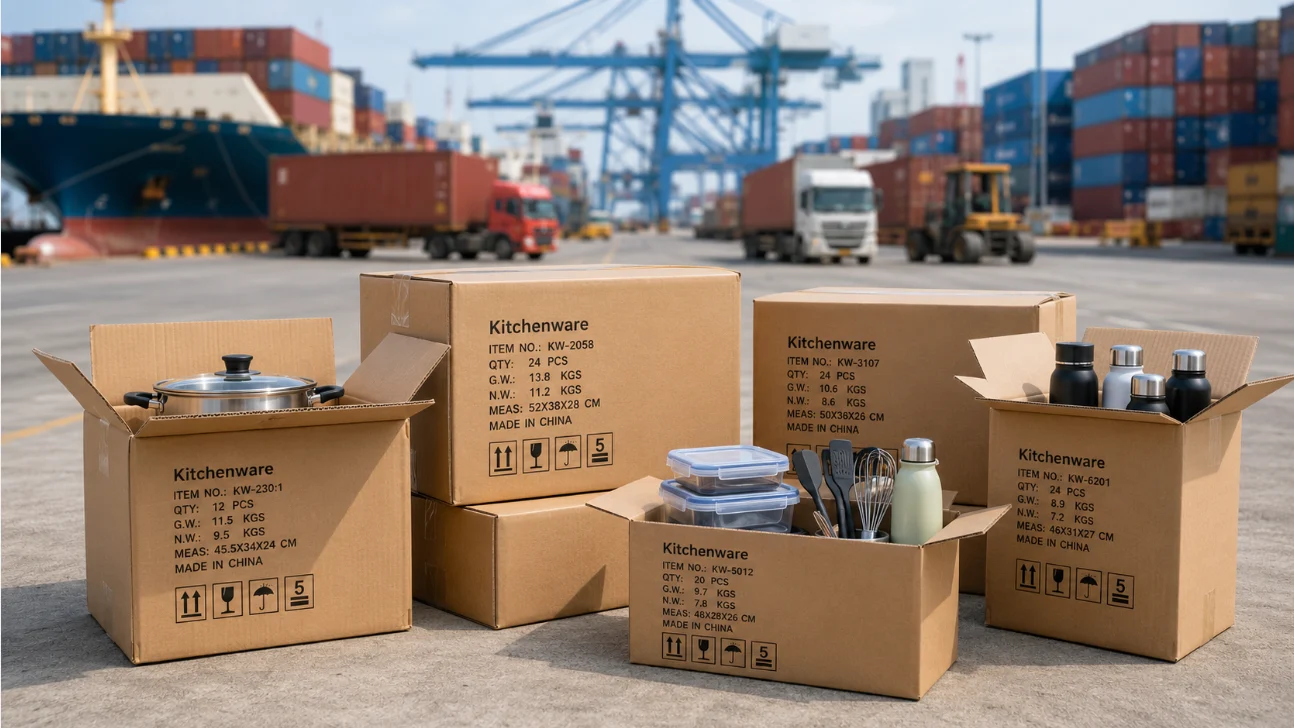
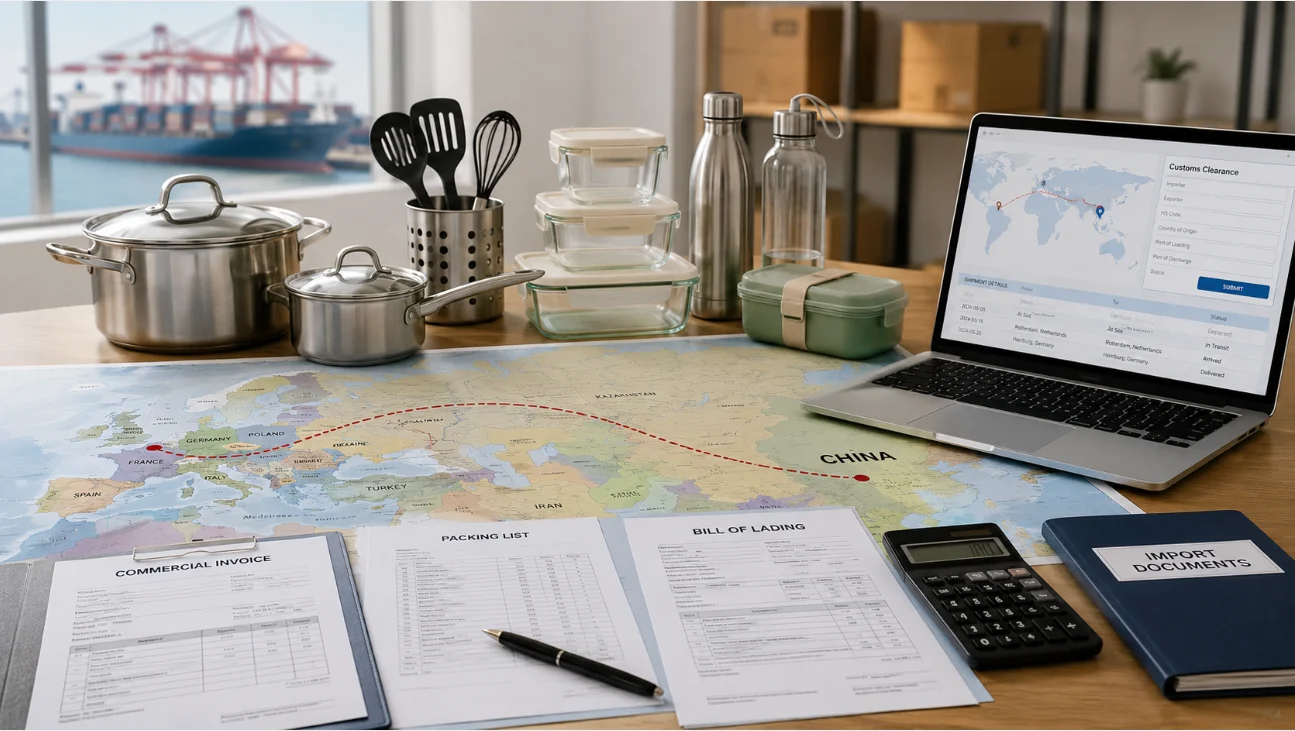
Documentation is where many import delays begin. For Kitchenware Import from China, common shipping documents include commercial invoice, packing list, bill of lading, certificate of origin when needed, export declaration, test reports, food contact declaration, product specification, and insurance document if applicable.
The commercial invoice should show seller, buyer, invoice number, product description, HS code if agreed, quantity, unit price, total value, currency, Incoterms, country of origin, and payment terms. The packing list should show carton quantity, net weight, gross weight, carton dimensions, total CBM, and container number after loading.
The bill of lading must match the shipment. Check shipper, consignee, notify party, vessel, voyage, port of loading, port of discharge, marks, package quantity, gross weight, and goods description. Small errors can delay customs clearance kitchenware at the destination port.
Shipping documents China import checklist
For Kitchenware Import from China, prepare the shipping documents China import checklist before the cargo leaves the factory. Do not wait until the vessel is close to Europe.
Ask your supplier to send draft commercial invoice and packing list before export declaration. Ask your freight forwarder to send the draft bill of lading for checking before release. Ask your customs broker whether extra documents are needed for your product, such as a food contact declaration, CE Declaration of Conformity, test report, or import license.
The product name should be consistent across all documents. If the commercial invoice says “stainless steel pot,” the packing list says “cookware,” and the bill of lading says “household goods,” customs may ask questions. Use a clear description, such as “stainless steel cookware set, non-electric, for household kitchen use.”
7. Manage Container Shipping Procedure
Shipping is not only about choosing the cheapest rate. For Kitchenware Import from China, the container shipping procedure should match the production date, buyer warehouse schedule, and customs clearance plan.
First, confirm cargo ready date with the supplier. Then ask the freight forwarder for sailing schedules from the China loading port to the European destination port. Common China ports include Ningbo, Shanghai, Shenzhen, Xiamen, Qingdao, and Guangzhou/Nansha. European destination ports may include Rotterdam, Hamburg, Antwerp, Felixstowe, Gdansk, Valencia, Genoa, or Le Havre.
For a full container load, your freight forwarder books the container, arranges trucking, confirms loading time, and submits shipping instructions. The supplier loads the container, takes loading photos, and provides final packing data. The forwarder handles VGM submission and export customs coordination. After vessel departure, the carrier issues the bill of lading.
For small orders, LCL shipping may be better. But LCL has extra handling, more touchpoints, and sometimes higher per-CBM local charges. For heavy kitchenware such as cookware, compare both LCL and FCL if your volume is close to a 20-foot container.
Kitchenware Import from China freight forwarder China Europe workflow
For Kitchenware Import from China, a reliable freight forwarder China Europe partner should do more than quote a rate. They should explain origin charges, destination charges, transit time, free time, customs clearance options, insurance, and delivery to your warehouse.
Ask the forwarder for a full quotation. It should separate ocean freight, origin local charges, destination local charges, customs clearance fee, document fee, trucking, and possible storage or demurrage. Also ask what is included and what is not included.
In 2026, EU pre-arrival data requirements are important. Carriers and logistics operators may need accurate shipment data before goods arrive. This means the product description, HS code, shipper, consignee, and packing details must be accurate early in the shipping process.
8. Handle Customs Clearance in Europe
When the goods arrive in Europe, customs clearance begins. For Kitchenware Import from China, your customs broker usually needs EORI number, commercial invoice, packing list, bill of lading or sea waybill, HS/CN code, customs value, origin information, and any product compliance documents required for the goods.
The customs declaration is used to calculate duty, VAT, and other measures. Customs may release the goods quickly, or they may request a document check, scan, or physical inspection. If the product is food-contact kitchenware, authorities may ask for test reports or declarations. If the shipment is ceramic tableware from China, anti-dumping measures may be checked carefully.
After the goods are released for free circulation, they can move within the EU like EU goods. But release does not mean the importer can ignore product safety. Market surveillance authorities can still check products after they are sold.
Kitchenware Import from China customs clearance kitchenware steps
For Kitchenware Import from China, the customs clearance kitchenware steps are usually as follows. First, your broker receives arrival notice and documents. Second, they check the HS code, customs value, origin, and import requirements. Third, they submit the import declaration. Fourth, duty and VAT are paid or accounted for. Fifth, customs releases the shipment. Sixth, the container or pallets are delivered to your warehouse.
The most common delays come from missing EORI, wrong HS code, unclear product description, invoice value mismatch, missing food contact document, unpaid destination charges, or customs inspection.
To avoid these issues, send documents to the customs broker before arrival. Ask them to review the file while the goods are still on the water. This gives you time to fix invoice wording, request missing documents, or prepare explanations.
9. Avoid Common Import Mistakes
Beginners often think importing is difficult because of shipping. In reality, many problems in Kitchenware Import from China start much earlier. The wrong supplier, unclear product specification, missing compliance documents, or unrealistic landed cost can cause more damage than a delayed vessel.
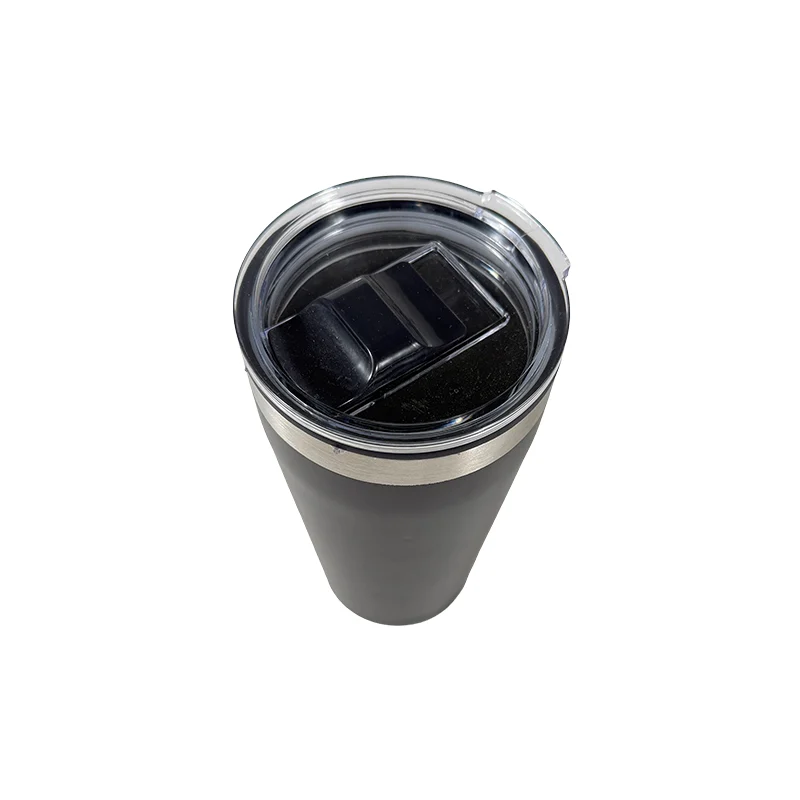
One common mistake is using a generic HS code without checking the product details. Kitchenware classification depends on material, use, and product structure. Another mistake is assuming that one test report covers all product variations. A stainless steel bottle with a plastic lid, silicone ring, painted surface, and printed logo may need several checks.
A third mistake is ignoring packaging. European buyers increasingly care about recyclable packaging, carton strength, language, barcode accuracy, and local packaging waste responsibilities. Poor packaging can also cause dents, scratches, broken handles, or crushed retail boxes.
A fourth mistake is agreeing to production before confirming the final artwork. Once color boxes, labels, or instruction manuals are printed, changes can be expensive.
Kitchenware Import from China import compliance documentation review
For Kitchenware Import from China, build a small import compliance documentation review before every shipment. It does not need to be complicated. Create a folder for each order. Save the quotation, purchase order, approved sample photos, test reports, declarations, commercial invoice, packing list, bill of lading, inspection report, and customs declaration.
This folder is useful for customs, customer complaints, repeat orders, and internal review. If a buyer asks why the product is compliant, you can answer quickly. If a shipment is inspected, you can provide documents without panic. If you reorder after six months, you can compare whether the factory changed material, packaging, or process.
Good documentation is not just paperwork. It is a risk-control system.
10. Final Checklist for European Buyers
A successful Kitchenware Import from China project is built step by step. Start with a clear product brief. Check compliance before price negotiation. Verify suppliers. Confirm samples carefully. Calculate landed cost. Prepare documents early. Use a reliable freight forwarder and customs broker. Review customs and tax details before the shipment arrives.
For a first order, keep the project simple. Choose a limited number of SKUs. Avoid too many colors, too many packaging versions, or complex mixed materials. A 1,000-piece trial order with clean documentation is often better than a large order with unclear responsibilities.
If you are importing cookware, tableware, lunch boxes, bottles, utensils, or storage containers, always remember that kitchenware is not only a lifestyle product. It is often a food-contact product. That means compliance should be part of sourcing, not an afterthought.
Kitchenware Import from China practical 2026 buyer checklist
For Kitchenware Import from China, use this 2026 buyer checklist before confirming shipment:
- Product description is clear and specific.
- Materials are listed by product part.
- HS/CN code has been checked by broker or tariff database.
- Duty, VAT, and possible anti-dumping risks are reviewed.
- Food-contact test reports and declarations are collected.
- CE documents are checked if the product is electric.
- Packaging and labeling are reviewed for the destination market.
- EORI and VAT setup are ready.
- Commercial invoice, packing list, and bill of lading are consistent.
- Freight forwarder has confirmed all origin and destination charges.
- Customs broker has reviewed documents before arrival.
- Final inspection is completed before container loading.
Заключение
Kitchenware Import from China can be a profitable and stable sourcing strategy for European buyers, but it works best when each step is controlled. The real process is not only “find supplier, pay deposit, ship goods.” It includes product definition, compliance review, supplier verification, landed cost calculation, document preparation, container shipping procedure, and customs clearance.
In 2026, European importers should pay special attention to food-contact compliance, packaging rules, customs data accuracy, EORI/VAT setup, and trade measures such as anti-dumping duties. These details may look small at the beginning, but they decide whether the shipment arrives smoothly or becomes a costly problem.
The safest approach is practical: start with a clear product brief, work with experienced partners, confirm documents early, and check every cost before placing the order. With the right process, Kitchenware Import from China becomes much easier to manage, even for first-time importers.

Сильвия - старший специалист-практик, специализирующийся в области внешней торговли кухонной утварью и предоставляющий глобальным клиентам услуги по закупкам и торговле кухонной утварью по принципу "одного окна". Она может охватить весь цикл сотрудничества комплексными услугами, включая анализ тенденций рынка кухонной утвари, выбор качественного поставщика, строгий контроль качества производства и эффективную трансграничную логистику.
Она является надежным партнером для брендов, ритейлеров и дистрибьюторов при покупке высококачественной кухонной утвари в Китае.