


Introduction
As the cookware industry continues to evolve, the importance of certification becomes increasingly paramount. Cookware certification not only ensures compliance with safety standards but also serves as a testament to the quality and reliability of products in a competitive marketplace. With rising consumer awareness regarding health, safety, and sustainability, cookware manufacturers are now more than ever challenged to meet diverse certification requirements. This article explores future trends in cookware certification, including emerging certifications and the evolving landscape of consumer expectations, providing valuable insights for manufacturers aiming to stay ahead in this dynamic sector.
1. What Are the Key Cookware Certifications Manufacturers Should Know?
The landscape of cookware manufacturing is continuously evolving, with standards and certifications at the forefront of ensuring safety and quality in products. Manufacturers aiming to succeed in global markets must be informed about essential cookware certifications that validate their products’ compliance with safety and performance benchmarks.
1.1 Understanding FDA Certification Standards
The U.S. Food and Drug Administration (FDA) plays a critical role in regulating food contact substances, including cookware. FDA-approved cookware signifies that materials used in the cookware have been tested and verified to meet safety standards. This certification is crucial as it assures consumers and wholesalers alike that the cookware will not leach harmful substances into food during cooking.
FDA regulations dictate that any cookware coming into contact with food must be made from materials that are non-toxic, durable, and non-reactive. This includes testing non-stick coatings, such as FDA Teflon pans, which must meet specific requirements to ensure they do not release harmful chemicals when heated. Manufacturers must keep abreast of the latest FDA cookware regulations, as compliance is not just a legal requirement; it’s essential for maintaining consumer trust.
In addition to safety, FDA certification can enhance a manufacturer’s marketability. Retailers and distributors often prefer products that possess this certification, as it simplifies the procurement process and mitigates liability risks. Thus, for cookware manufacturers looking to penetrate the U.S. market, understanding and obtaining FDA approval becomes imperative.
1.2 The Role of NSF Certification in Cookware Safety
The National Sanitation Foundation (NSF) certification is another key standard in cookware safety that manufacturers should be aware of. Regarded as a hallmark of quality, NSF-certified cookware undergoes rigorous testing for safety and performance. This is particularly relevant in the food service industry, where cookware is used in commercial kitchens that require high health and safety standards.
Products that carry the NSF mark guarantee that they have met applicable hygiene and safety standards. This certification covers various attributes such as material safety, cleanability, and longevity, ensuring that cookware withstands the rigors of daily use in professional settings. For pots and pans manufacturers, obtaining NSF certification is a strategic move that opens doors to partnerships with restaurants, catering companies, and kitchen supply stores.
Moreover, NSF certification not only helps in global trade but also reassures consumers about the safety and quality of the cookware they are purchasing. When consumers see the NSF mark, it signifies that they are choosing products that adhere to stringent safety criteria, preventing contaminants that could compromise food quality.
1.3 Introduction to LFGB: Germany’s Cookware Certification
As global trade expands, understanding international certifications like LFGB (Lebensmittel-, Bedarfsgegenstände- und Futtermittelgesetzbuch) becomes crucial for cookware manufacturers. The LFGB is a prominent set of regulations in Germany that governs food contact materials, making it a respected standard across Europe and beyond. Cookware that is compliant with LFGB provides additional assurance against potential hazards associated with the use of cooking materials.
The LFGB certification process involves comprehensive testing of materials to ensure they are safe for consumer use. Manufacturers must work with accredited laboratories to conduct these tests, which assess factors such as leachability of substances, migration limits, and overall texture and durability. As such, manufacturers focusing on products aimed at the European market must be well-versed in LFGB compliance to avoid market entry barriers and ensure product acceptability.
For manufacturers of stainless steel pots, the LFGB standard is particularly relevant. Stainless steel cookware must demonstrate resistance to corrosion and leaching, verifying that cooking does not transform into a health risk. Thus, for companies looking to sell internationally, LFGB offers a competitive advantage that can significantly elevate product credibility and consumer assurance.
2. How Does Cookware Certification Impact Consumer Safety and Product Quality?
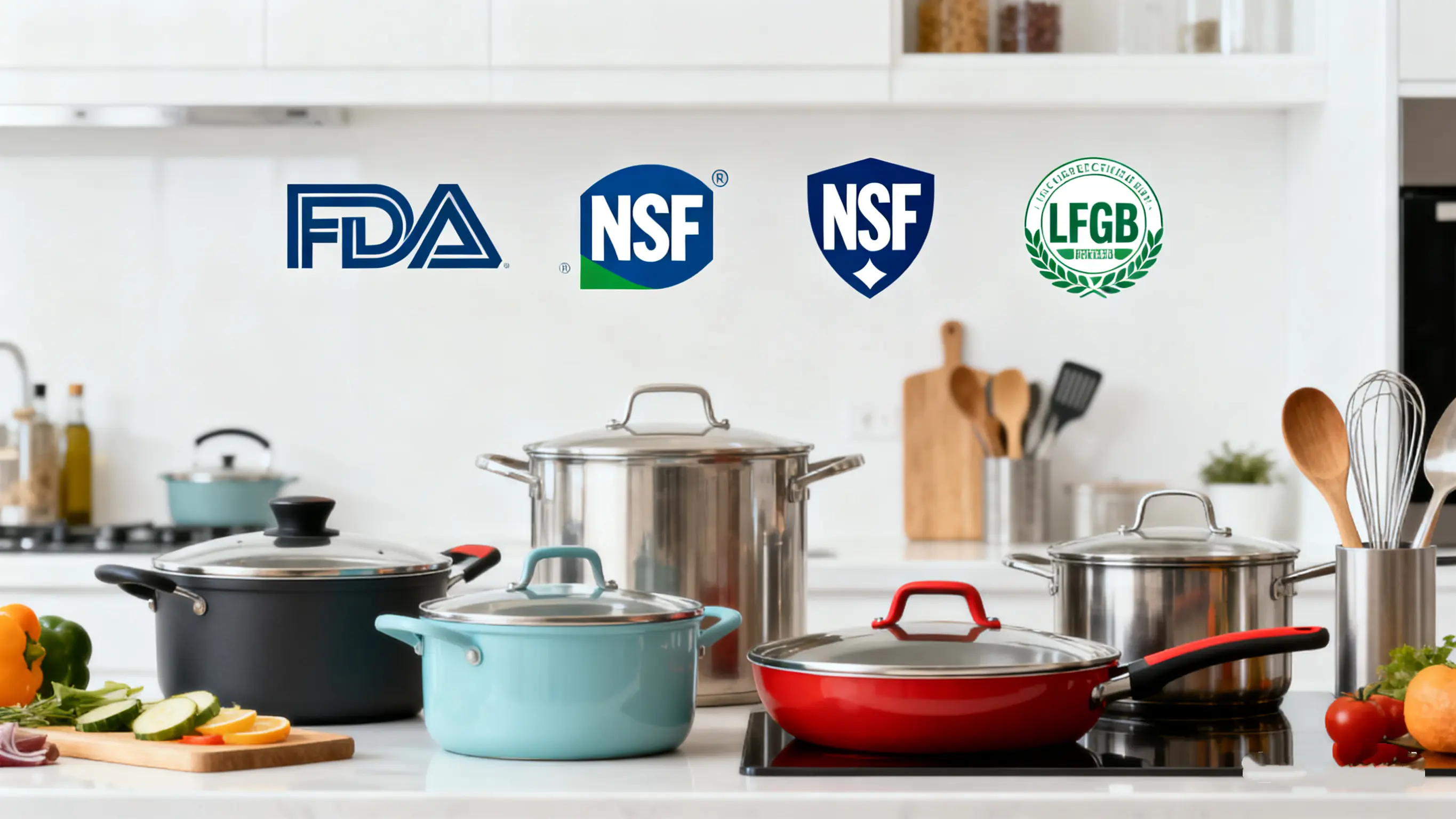
The significance of certifications in cookware cannot be overstated. At its core, cookware certification is about safeguarding consumers and enhancing product quality. Understanding the impact of certifications like FDA, NSF, and LFGB is vital for manufacturers and their end-users.
2.1 The Importance of Consumer Trust in Certified Cookware
Consumer trust is a critical factor in any market, particularly in the cookware industry. With a multitude of products available, consumers rely heavily on certifications to make informed purchasing decisions. Cookware certification, such as that from the FDA or NSF, serves as a protective mechanism for consumers, allowing them to choose products that meet established safety standards.
When cookware bears certification marks, it assures consumers that their health is prioritized. For instance, businesses often highlight that they use FDA-approved cookware in their production processes—this not only enhances brand legitimacy but also assures potential buyers that their cooking products are free from harmful additives. With public awareness around health and safety increasing, consumers actively seek out certified products over non-verified options.
Moreover, the certification process serves as a quality control measure for manufacturers, ensuring that they adhere to industry standards during production. This leads to improved manufacturing practices and, consequently, higher quality products. Therefore, manufacturers who invest in obtaining credible certifications benefit from increased consumer trust, which translates to better market position and sales growth.
2.2 How Certification Influences Product Performance and Durability
Beyond consumer trust, cookware certification plays a significant role in product performance and durability. Certified cookware undergoes rigorous testing, which evaluates its ability to withstand high temperatures, resist corrosion, and maintain structural integrity over time. This is particularly important for pots and pans manufacturers, as poor-quality cookware can lead to product failures that severely damage a brand’s reputation.
For example, NSF-certified cookware must meet rigorous safety and performance benchmarks that require materials to be durable and suitable for repeated use. This means that while consumers are looking for aesthetically pleasing designs, they are also prioritizing functionality and longevity. Certified cookware types are often designed to endure higher cooking temperatures without degrading, thus maintaining performance over extended usage periods.
Additionally, certifications help manufacturers streamline production processes, ensuring that efficiency does not sacrifice quality. By adhering to recognized standards, manufacturers can expect reduced rates of defects and recalls, leading to greater customer satisfaction and loyalty.
In conclusion, cookware certification is essential not only for consumer safety but also as a pathway to enhanced product quality. As manufacturers navigate the complexities of international trade, understanding and obtaining the relevant certifications becomes paramount for success in the global marketplace.
3. What Is the Process for Obtaining Cookware Certification for a New Product?
Navigating the intricate landscape of cookware certification can be daunting for manufacturers, especially when launching new products. Ensuring compliance with established standards is crucial not only for legal operation but also for consumer trust.
3.1 Steps to Initiate the Certification Process
The journey towards achieving cookware certification begins with a clear understanding of the specific regulations that apply to your products. The initial step is to identify which certification(s) are relevant based on your target market. For example, if you’re focusing on the U.S. market, then understanding FDA-approved cookware standards and FDA cookware regulations is essential. Conversely, if you’re looking at the European market, you’ll need to focus on LFGB regulations.
Once you’ve determined the applicable certifications, the next step is to contact an accredited laboratory. These laboratories are responsible for conducting testing on your cookware. Popular certification bodies include NSF International and laboratories recognized for LFGB compliance. It’s crucial to select a laboratory familiar with the specific requirements of the certifications you are pursuing.
Next, develop a comprehensive plan detailing your product specifications, including materials, design, and intended usage. This plan serves as a foundation for testing and is critical when communicating with the laboratory. For example, if you’re manufacturing FDA Teflon pans, include specifics about the coating materials and any innovations you are utilizing.
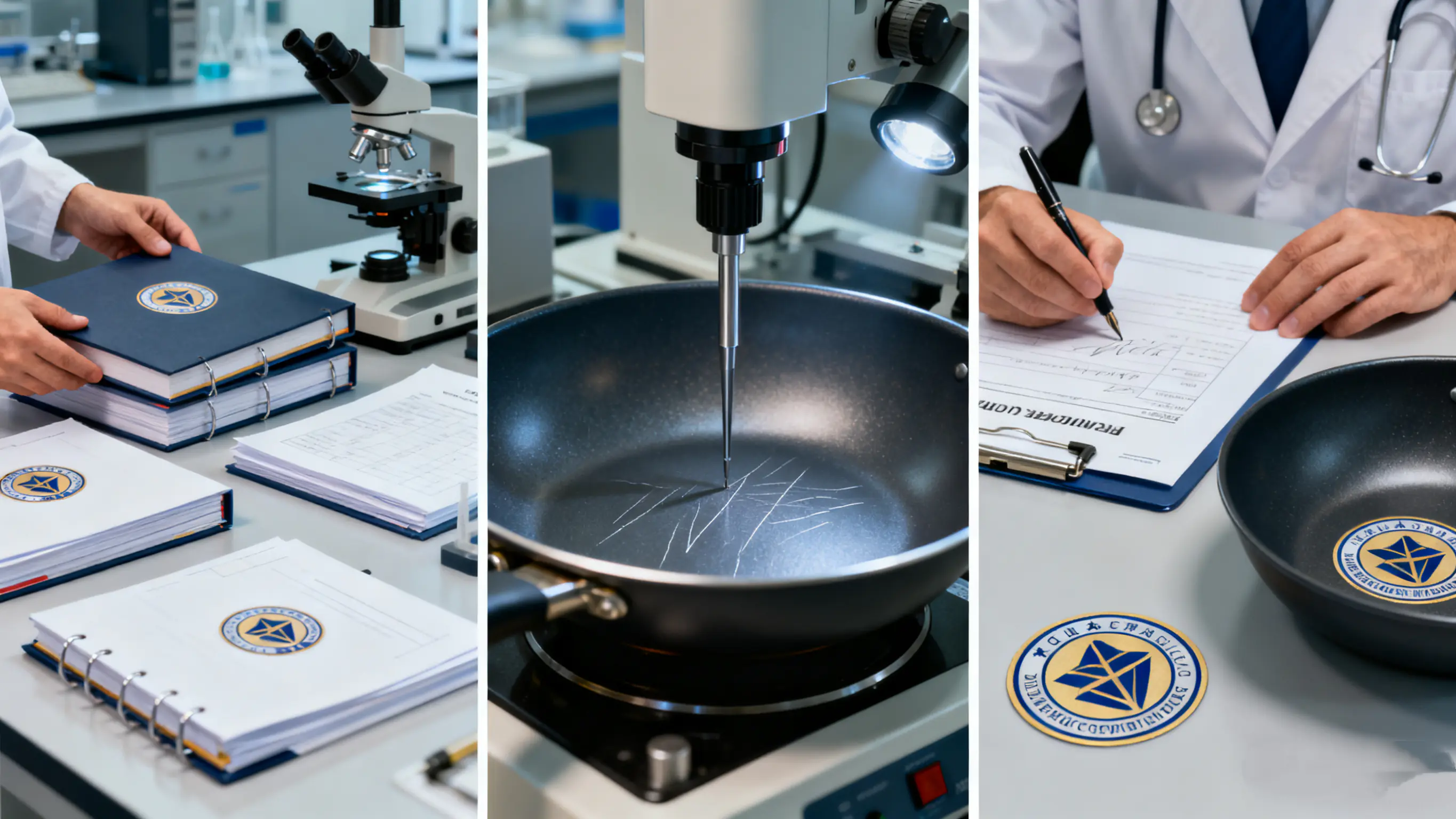
After submitting your product and plan to the laboratory, the testing phase begins. This is where your cookware is critically examined for safety and performance. Results can take several weeks, depending on the complexity of the tests. Manufacturers must be prepared for comprehensive evaluations, including migration tests for leachate assessment and assessments of overall durability.
Once testing is completed successfully, you’ll receive certification documentation that confirms your product’s compliance. It’s advisable to periodically retest and recertify your products, especially if there are changes in materials or manufacturing processes, to maintain compliance and market confidence.
3.2 Documentation and Testing Requirements Explained
The documentation required for cookware certification can be extensive. A well-prepared manufacturer will need to compile several key documents that showcase compliance with the necessary standards. Beginning with a Declaration of Compliance, this document outlines that your cookware adheres to applicable safety requirements.
Additionally, Technical Files are essential comprising detailed information about the product’s manufacturing process, materials used, and any risk assessments carried out. These files may also need supporting data from the accredited laboratory, including test results that ascertain the cookware’s safety and performance parameters.
Testing requirements can greatly vary depending on the certification body. For instance, to achieve NSF certification, your cookware must meet health standards that involve tests on heat resistance, corrosion, and non-toxicity of materials. Similarly, for LFGB compliance, testing must validate that cookware does not leach harmful substances when in contact with food.
For stainless steel pot manufacturers, specific tests must be conducted to ensure that chemicals and heavy metals remain below the allowable limits dictated by regulations. It’s vital to understand that each certification may have specific nuances regarding testing methods and acceptable thresholds for pass rates.
Overall, manufacturers seeking cookware certification must be diligent about documenting their processes and results throughout the certification journey. Compliance with regulatory testing ensures that products are safe for consumers and helps maintain a reputable market presence.
4. How Do Different International Cookware Certifications Compare?
In the global marketplace, understanding the landscape of cookware certification can provide crucial insights for manufacturers and consumers alike. Certifications such as those from the FDA, NSF, and LFGB each serve distinct roles and emphasize different aspects of safety and quality.
4.1 Comparing Standards: FDA vs. NSF vs. LFGB
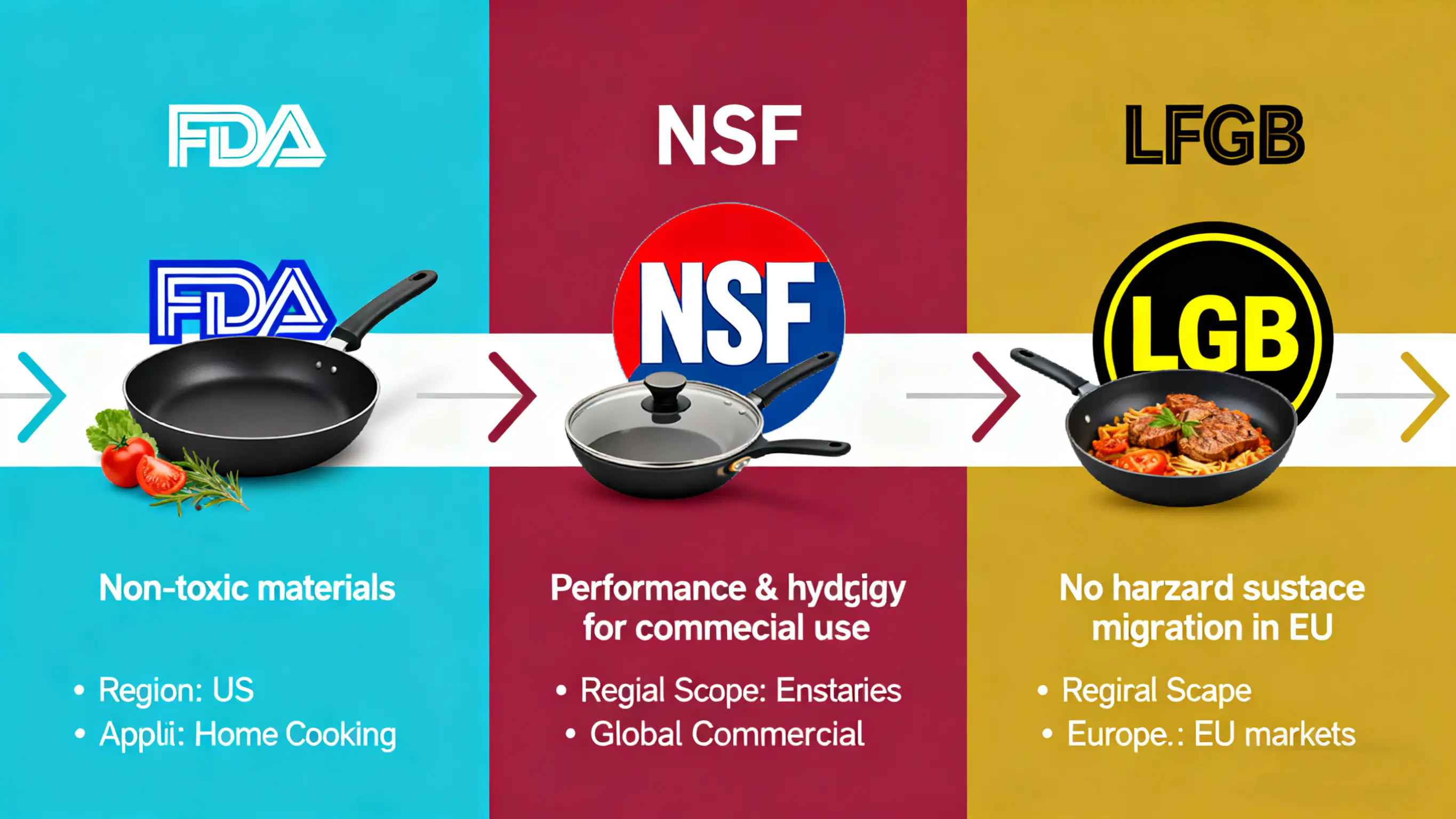
When determining which certification best suits their product, manufacturers must compare the core standards associated with these regulatory bodies. The FDA focuses primarily on ensuring that materials deemed to be in contact with food remain non-toxic and safe during typical usage conditions. For cookware, this means subjecting products such as FDA-approved cookware to tests that verify the absence of harmful chemicals during cooking.
In contrast, NSF certification emphasizes product performance and hygiene, making it particularly relevant in commercial settings where high sanitation standards are paramount. The NSF standards also encompass the operating procedures within a kitchen, providing peace of mind to restaurants and commercial buyers that their products meet industry expectations.
On the international front, the LFGB sets rigorous safety standards specifically for food contact materials used within European markets. The LFGB emphasizes testing that ensures materials do not migrate or leach hazardous substances into food, providing robust guidelines that align with consumer safety priorities within Europe. Understanding these differences is vital for cookware manufacturers looking to penetrate multiple markets.
Ultimately, each certification has its unique strengths and areas of focus. Manufacturers should assess their target market needs and product application to determine which certification provides the best fit for their cookware products.
4.2 Regional Differences in Cookware Certification Requirements
The variance in certification requirements across regions can pose significant challenges for cookware manufacturers aiming for global distribution. In the United States, FDA cookware regulations provide a flexible framework, but compliance can often be complex due to varying state regulations that can impose additional requirements on manufacturers.
Conversely, the NSF system provides nationwide standards that help clarify requirements, particularly beneficial for pots and pans manufacturers catering to commercial kitchens. The consistency offered by NSF allows businesses to comply with a single standard, simplifying the certification process in a highly dynamic industry.
In the European Union, the LFGB requires a more prescriptive approach that might involve multiple testing phases, depending on the product’s material composition. Manufacturers must be vigilant in understanding these regional variations to avoid costly delays in market entry. For instance, a cookware factory that caters to the EU market must invest in compliant testing and quality control measures to ensure LFGB certification.
Moreover, regional differences may also arise based on consumer preferences and regulatory attitudes towards health and safety, which can shift the focus of certain certifications. For manufacturers of stainless steel pots, recognizing regional differences not only aids in compliance but also enhances product development tailored to consumer expectations.
In conclusion, acknowledging and navigating the distinctions between international cookware certifications empowers manufacturers to better serve their global markets. Understanding these requirements is pivotal for cultivating a competitive edge and achieving sustainability in the cookware industry.
5. Can Cookware Manufacturers Guide You in Meeting Certification Standards?
Navigating the complexities of cookware certification standards can be daunting for manufacturers who wish to bring their products to market. However, partnering with the right cookware manufacturer can provide invaluable support throughout the certification journey.
5.1 How to Choose the Right Manufacturer for Certification Support
Selecting a cookware manufacturer that can guide you in meeting certification standards is crucial for ensuring compliance and product safety. Here are key considerations when choosing a manufacturer:
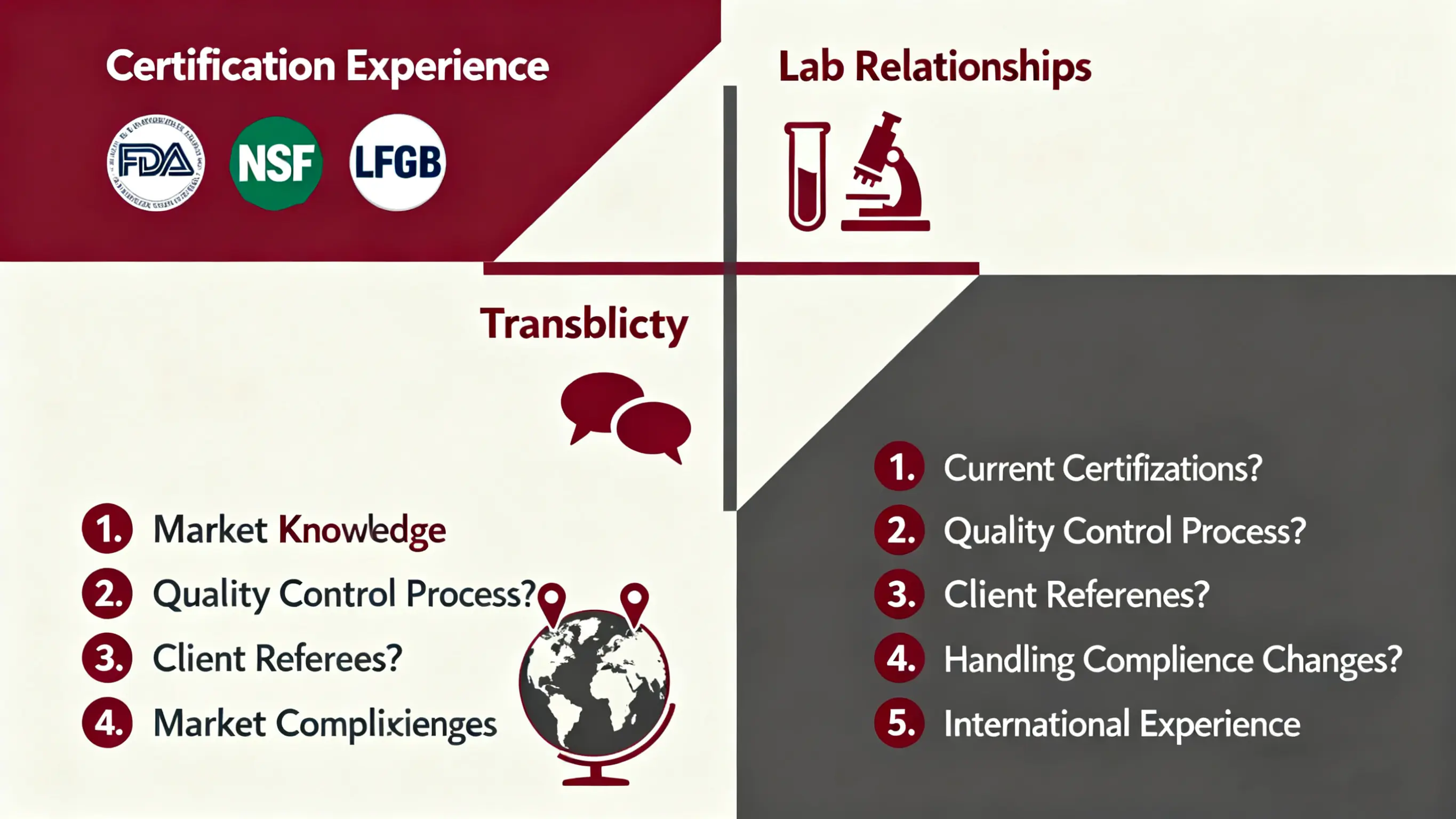
1. Certification Experience: Look for manufacturers with a proven track record of working with various certification standards. Whether your focus is on FDA-approved cookware, NSF-certified cookware, or compliance with LFGB regulations, ensure that the manufacturer has experience in navigating these certification processes successfully. Their understanding of specific testing protocols and requirements can save you time and potential setbacks.
2. Established Relationships with Testing Labs: A manufacturer that collaborates closely with accredited testing labs will have an advantage in streamlining the certification process. They will understand the requirements better and can facilitate communication to expedite the testing phase. This relationship can significantly influence lead times and ensure that partitions are prepared for necessary evaluations, particularly for FDA Teflon pans.
3. Transparency and Communication: Choose a manufacturer that values transparency and is open to discussing certification processes. They should be willing to share information about their own compliance as well as guide you in aligning your products with industry standards. A reputable manufacturer will be proactive in providing updates on testing, documentation, and certification timelines.
4. Market Knowledge: A manufacturer that understands regional certification requirements will be instrumental in navigating international regulations. They should be familiar with various markets, especially if you’re targeting specific regions such as the EU, where LFGB standards apply. Knowledge about essential terms—such as “what does NSF mean on cookware”—is an added advantage that can enhance your product’s acceptance in competitive markets.
In summary, the right cookware manufacturer should be a partner in the certification journey, helping to mitigate risks and ensuring that your products meet necessary certification standards efficiently.
5.2 Key Questions to Ask Your Cookware Manufacturer
To ensure you select a cookware manufacturer adept at guiding you through certification standards, it’s essential to ask the right questions. Here are some pivotal inquiries to consider:
1. What Certifications Do You Currently Hold? Understanding the manufacturer’s current certification status will give you insight into their compliance processes. If they possess certifications like NSF-certified cookware, it indicates their commitment to maintaining high safety standards throughout the manufacturing process.
2. How Do You Handle Quality Control and Testing? Inquire about their quality control measures and how they conduct internal testing before submitting products to external labs. A manufacturer that prioritizes thorough quality checks is likely to deliver reliable products that meet regulatory requirements.
3. Can You Provide References from Other Clients? Testimonials from previous clients can provide valuable insight into the manufacturer’s efficiency in supporting certification processes. Trustworthy manufacturers will be more than willing to share references.
4. How Do You Manage Changes in Compliance Standards? Regulations and certification standards can evolve. A manufacturer that stays updated on these changes demonstrates a commitment to long-term compliance. Ask how they factor updates into their production and testing processes.
5. Are You Experienced with International Certification Standards? Particularly if you aim to sell in global markets, ensure your manufacturer has experience with international standards like LFGB or FDA requirements. Their knowledge will be pivotal in ensuring your cookware meets diverse international compliance needs.
These questions will provide clarity on whether the manufacturer can not only meet your product specifications but also support you effectively through the required certification processes.
6. What Are the Benefits of Using Certified Cookware?
The decision to use certified cookware extends beyond compliance and safety; it also encompasses a range of advantages that can significantly impact both consumer choices and market positioning.
6.1 Enhancing Kitchen Safety Through Certification
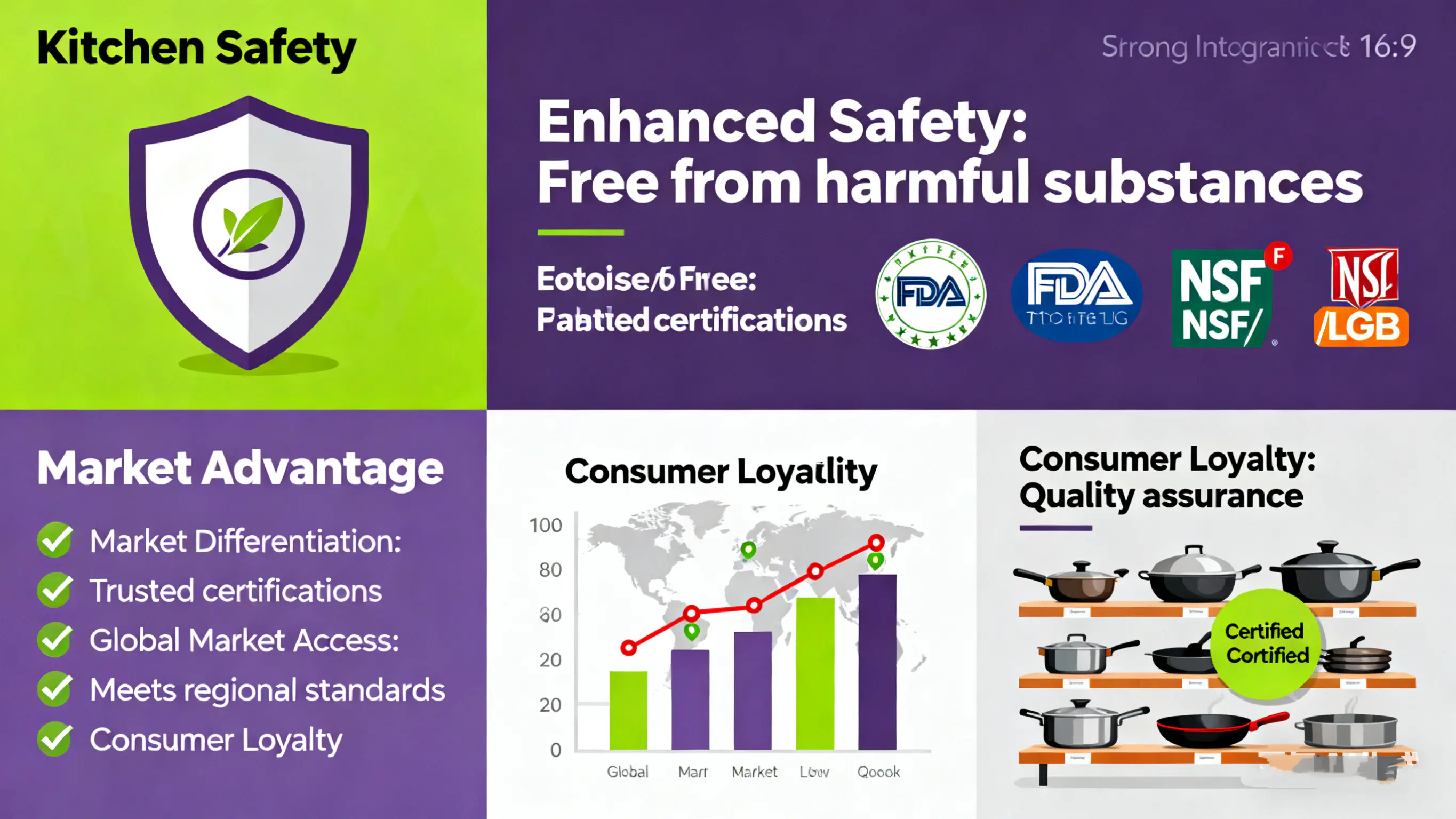
One of the most compelling benefits of cookware certification is the assurance it provides regarding safety. Certified cookware must undergo comprehensive testing to validate that it meets specific safety standards, giving consumers peace of mind that the products they are using are free from harmful substances.
For example, FDA-approved cookware ensures that materials used in manufacturing pots and pans do not leach toxic chemicals into food during cooking. This is particularly crucial in the case of non-stick surfaces, such as FDA Teflon pans, where the integrity of the coating can be of concern. Certifications such as NSF and LFGB also emphasize the importance of hygiene and safety standards, ensuring that cookware meets high health benchmarks.
Certified cookware can help mitigate risks associated with cookware defects that could lead to health hazards. Home cooks and professional chefs alike are increasingly aware of the importance of using safe and reliable cooking tools, directly influencing purchasing decisions. Consequently, certified products not only enhance consumer safety but also foster trust in brands committed to quality.
6.2 The Market Advantage of Certified Products
In addition to improving kitchen safety, certified cookware offers a competitive market advantage in today’s increasingly health-conscious consumer environment. Having certifications like NSF, LFGB, or FDA on the packaging can differentiate products from non-certified options and positively influence consumer perception.
1. Enhanced Credibility: Certified cookware is often viewed as more reliable compared to non-certified alternatives. Having well-recognized certifications can enhance a brand’s image, providing credibility and distinguished quality in the marketplace. For pots and pans manufacturers, being able to promote NSF-certified or LFGB-compliant products can be a distinctive selling point that appeals to wholesalers and retail partners.
2. Access to New Markets: Certification opens doors to international markets where compliance is a prerequisite for the sale of cooking products. For example, EU regulations explicitly require LFGB compliance for cookware sold in their jurisdictions. Manufacturers who can prove certification are better positioned to obtain partnerships, contracts, and retail opportunities abroad.
3. Fostering Consumer Loyalty: As consumers become more aware of the potential hazards associated with low-quality cookware, the demand for certified products will continue to grow. Brands that prioritize certification can build long-term relationships with their customers by providing quality and assurance, leading to repeated purchases.
4. Greater Retailer Confidence: Retailers are more likely to stock certified cookware as it reduces liability risks and aligns with consumer health trends. This can provide manufacturers with an upper edge when negotiating shelf space, essential for sales growth.
In conclusion, the benefits of using certified cookware are multifaceted, impacting safety, marketability, and consumer trust. For manufacturers, investing in cookware certification is not just about regulatory compliance but also an empowering strategy to enhance brand value and secure a competitive position in a dynamic global market.
7. Future Trends in Cookware Certification: What to Expect?
As consumer preferences evolve and the regulatory landscape becomes more complex, the future of cookware certification is poised for significant changes. Understanding these trends will help manufacturers navigate forthcoming challenges while capitalizing on opportunities for growth and market acceptance.
7.1 Emerging Certifications and Their Implications
In the coming years, cookware certification is likely to expand beyond traditional offerings such as NSF-certified cookware and FDA-approved cookware. We can expect to see the introduction of new certifications that address specific consumer concerns, promote environmental sustainability, and respond to technological advancements.
1. Focus on Sustainability: As consumers become increasingly environmentally conscious, certifications that validate sustainability practices in the cookware production process will gain traction. Emerging certifications will focus on eco-friendly materials and production practices, emphasizing the use of recyclable, non-toxic, and sustainably sourced materials. For instance, certifications that assess the carbon footprint of cookware manufacturing processes could become mainstream, offering a competitive advantage for brands that prioritize sustainability.
2. Health-Centric Certifications: With growing awareness around health and safety, future certifications may concentrate on ensuring that cookware does not contain harmful chemicals that can leach into food. While existing certifications like LFGB already emphasize safety, new certifications may focus on specific contaminants such as PFAS in non-stick coatings. Products like FDA Teflon pans will likely face scrutiny, leading to the development of certifications that guarantee safer alternatives free from harmful substances.
3. Smart Cookware Certifications: As technology integrates further into kitchenware, we may also see the emergence of certifications for smart cookware that incorporates IoT (Internet of Things) technology. These certifications would evaluate the safety and reliability of connected cooking devices, ensuring that they adhere to data security and cooking performance standards.
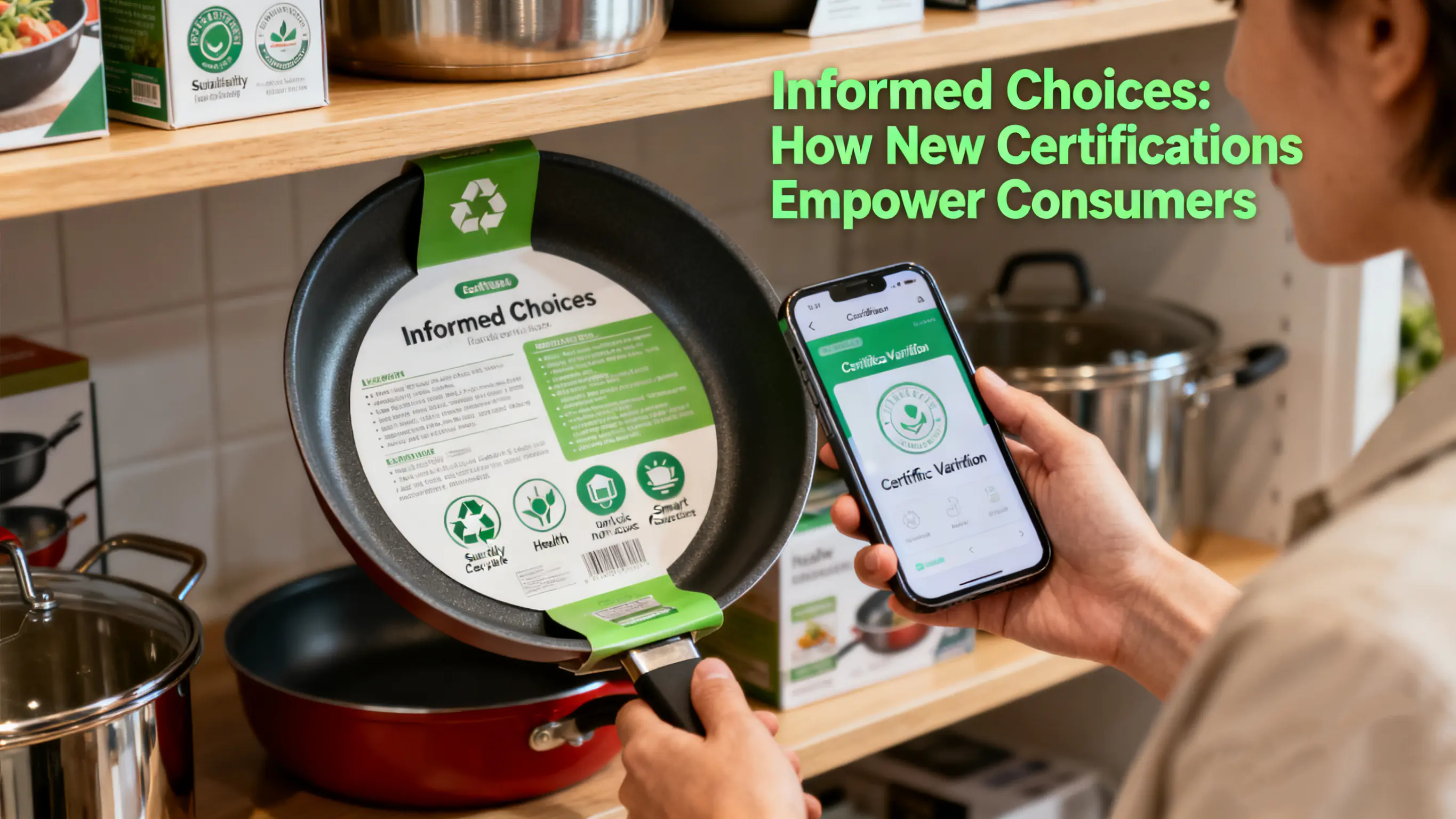
In essence, the introduction of these emerging certifications will not only create more options for manufacturers but will also empower consumers to make informed purchasing decisions based on environmental and health considerations.
7.2 The Evolution of Consumer Awareness and Standards in Cookware
Consumer awareness regarding cookware safety and standards has been on an upward trajectory in recent years. This enhanced awareness is likely to shape future expectations for cookware certification and drive manufacturers to foster transparency and accountability in their products.
1. Increased Demand for Information: Today’s consumers require detailed information about the cookware they purchase. They are increasingly aware of terms like “what does NSF mean on cookware?” and seek products that bear reputable certifications. This demand translates to manufacturers needing to provide comprehensive information about the sourcing, labeling, and safety of their cookware. Cookware manufacturers that adopt a transparent approach, detailing how their products meet certifications like FDA cookware regulations, will likely build stronger consumer relationships.
2. Shifting Standards for Performance: As consumers become more educated, they are no longer satisfied with basic compliance. They seek cookware that not only adheres to certification requirements but also excels in performance. This shift necessitates that manufacturers invest in research and development to push the boundaries of quality and performance, particularly among stainless steel pot manufacturers and pots and pans manufacturers who must stay ahead of competition while adhering to rigorous safety standards.
3. Global Perspective on Standards: As the market for cookware becomes increasingly global, manufacturers must navigate various regional standards like LFGB, which is essential for access to the EU market. Consumer expectations will drive manufacturers to ensure that their products meet an array of international certifications, thereby enhancing their ability to penetrate diverse markets without compromising safety.
4. Community Engagement and Brand Loyalty: Engaging with consumers about the importance of certification can be a powerful strategy to build brand loyalty. Manufacturers who actively promote the benefits of certified cookware are likely to resonate with health-conscious and eco-aware consumers, fostering loyalty that enhances market competitiveness.
In summary, as consumer awareness continues to evolve, the implications for cookware manufacturers are vast. Embracing emerging certifications and adapting to changing consumer preferences will not only ensure compliance but also position brands favorably in a rapidly changing marketplace. In the future, manufacturers that prioritize innovation and transparency in their cookware certification processes will likely emerge as leaders in both safety and consumer trust.
Conclusion
In conclusion, the landscape of cookware certification is set to transform dramatically in the coming years. As consumer desires for safer, more sustainable products heighten, manufacturers must adapt by embracing new certifications and enhancing their transparency about product safety and sourcing practices. By staying ahead of these trends, cookware manufacturers can differentiate themselves and foster greater trust with their customers. If you are a manufacturer seeking guidance on navigating the complexities of cookware certification or looking to improve your compliance strategies, do not hesitate to reach out to us. Together, we can ensure your brand meets the evolving standards and thrives in an increasingly discerning market. Contact us today to learn more!

Lola Zhang is a Kitchenware Sourcing & Market Specialist at Auspace Kitchenware, with years in China’s kitchenware wholesale sourcing. She helps buyers spot trending products, optimize procurement, and handle post-purchase issues.With deep industry experience, she offers tips on market-matching and smooth sourcing. Her expertise links buyers to trusted Chinese manufacturers, making her a reliable partner for efficient kitchenware sourcing.