

I’ve spent years working in the cookware manufacturing and import/export business, so when people ask me about big brands, I can usually give them a real answer — not just what’s on the marketing page. Tramontina is one of those brands that comes up constantly, and the “where is it made” question is genuinely complicated. The honest answer is: it depends on which product you’re looking at and where you’re buying it.
Let me walk you through everything I know.
A Quick Background on Tramontina
Before we get into the manufacturing locations, it helps to understand what kind of company Tramontina actually is.
Tramontina is a family-run Brazilian metallurgical company founded in 1911 by Valentin Tramontina, the son of Italian immigrants. Headquartered in Carlos Barbosa, Rio Grande do Sul, their products are sold in over 120 countries. They’re the largest cookware and cutlery company in the Americas, with around 10,000 employees.
That’s over 110 years in business. They make everything from cookware and cutlery to garden tools and kitchen appliances. For this article, I’m focusing purely on their cookware line.
Tramontina Cookware Is Made in Multiple Countries
This is the part that trips people up. Tramontina doesn’t manufacture everything in one place. Depending on the specific product line and where you’re buying it, your Tramontina cookware could have come from Brazil, China, or India.
Made in Brazil: Their Home Base
Brazil is Tramontina’s origin and still their main production hub. They have eight factory plants across Brazil — six in Rio Grande do Sul alone, in the cities of Carlos Barbosa, Farroupilha, and Garibaldi. The Farroupilha facility in particular handles cookware, tableware, cutlery, and stainless steel kitchen items.
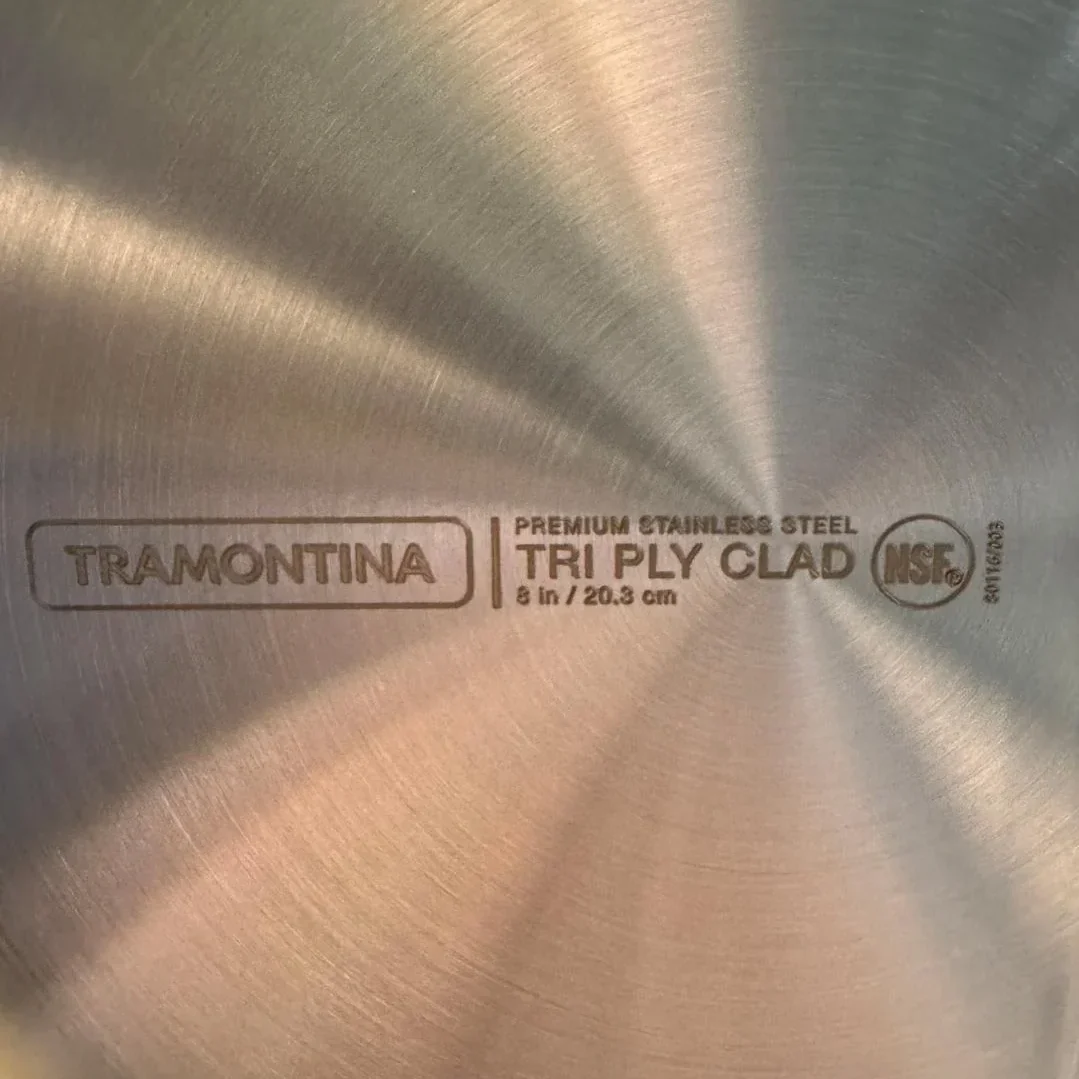
Their Pro, Prima, Tri-Ply Clad, and Knife collections are all made in Brazil. If you buy Tramontina tri-ply clad stainless steel from a specialty kitchenware retailer or directly from Tramontina’s own website, there’s a good chance you’re getting the Brazil-made version.
There’s also a subtle difference in the steel itself. The Brazil version uses a non-magnetic grade of stainless steel on the exterior for extra corrosion resistance. The tradeoff? That version is not induction-compatible.
For many home cooks, the Brazil-made stainless is considered the “premium” Tramontina. It’s also harder to find in mass-market retail.
The USA Factory — And Why It No Longer Exists
This is the biggest content gap I’ve seen in almost every article on this topic, and I want to address it directly because it matters if you’re trying to buy American-made.
Yes, Tramontina did have a manufacturing facility in Manitowoc, Wisconsin, producing aluminum and nonstick cookware from 2005 onwards. You’ll still find a lot of websites and listings referring to “Made in USA” Tramontina nonstick. A lot of those claims are outdated.
The Wisconsin factory closed permanently on July 8, 2019. About 145 workers showed up for their shift and were told on the spot that the plant was shutting down immediately. Tramontina cited rising raw material costs, labor expenses, freight costs, and increased tariffs on components like glass lids, aluminum, and steel parts as the reasons. As one industry outlet put it, domestically produced items had become “less competitive in the housewares market” — and manufacturing moved back to Brazil.
So if you’re specifically searching for Tramontina cookware currently made in the USA — it doesn’t exist anymore. Any “Made in USA” Tramontina you find today is old stock.
Made in China: Cast Iron and Much of the Tri-Ply Clad
All of Tramontina’s cast iron cookware and accessories are made in China. That includes their enameled cast iron Dutch ovens and other cast iron pieces.
Beyond cast iron, a significant portion of their tri-ply clad stainless is also Chinese-made. Tramontina actually confirmed this directly in an Amazon Q&A: “the stuff at Walmart is Chinese-made…all others are Brazilian made…this applies to the Stainless only.”
The China version of their tri-ply clad uses a 304 stainless interior, aluminum alloy middle layer, and a magnetic stainless exterior — making it fully induction-compatible. Total thickness is about 2.6mm, the same as All-Clad Stainless.
Is that a dealbreaker? Not necessarily. If you use an induction cooktop, the China version is actually the practical choice. The day-to-day cooking performance difference between the two versions is minimal.
Made in India: The Factory Nobody Talks About
This one almost never gets mentioned in other articles. Tramontina has a joint venture facility in Hubballi, India — Tramontina India (ACPL) — that produces stainless steel and aluminum pots and pans.
This facility doesn’t appear to serve the US market in any significant way, but if you’re buying Tramontina internationally across South Asia, it’s worth knowing this production footprint exists.
Brazil vs. China: Which Tramontina Version Is Better?
Most Tramontina sold in big-box US retail is Chinese-made, while the higher-end stainless lines come from Brazil. Here’s my honest take from inside the industry:
- Brazil version: Non-magnetic stainless exterior, better corrosion resistance, not induction-compatible
- China version: Magnetic stainless exterior, fully induction-compatible, widely available, virtually identical cooking performance
For most home cooks, the China version is the more practical pick. The Brazil version has the premium cachet and slightly better corrosion resistance, but you won’t notice the difference while cooking.
How to Tell Where Your Specific Tramontina Piece Was Made
Check the bottom of the pan. The country of origin is stamped on the base. Flip it over before you buy.
Check the retailer. Walmart tends to carry Chinese-made Tramontina tri-ply clad. Specialty kitchenware stores and Tramontina’s own website tend to carry the Brazil versions.
Check the product listing. Tramontina’s official product pages typically include country of origin in the specifications — that’s the most reliable source.
Look at the steel type. If the listing says induction-compatible, it’s almost certainly the China version.
A Note From Our Side of the Industry
I work for Auspace, a cookware manufacturer with extensive experience in kitchenware production and international trade. One thing I always tell buyers: country of origin tells you a lot less than people assume. What actually determines quality is the factory’s standards, the materials spec, and the quality control process.
If you’re a retailer or brand looking to source stainless steel cookware, nonstick cookware, or enameled cast iron at wholesale, feel free to get in touch.
FAQ: Where Is Tramontina Cookware Made?
Q: Is Tramontina a US brand? No. Tramontina is a Brazilian company founded in 1911. Their US office is in Sugar Land, Texas. They previously had a factory in Wisconsin, but that plant closed in July 2019.
Q: Is any Tramontina cookware currently made in the USA? No. As of July 2019, Tramontina no longer manufactures cookware in the United States. Current production is split between Brazil and China.
Q: Is the Tramontina at Walmart made in China? Generally, yes. Tramontina confirmed this directly — the tri-ply clad at Walmart is Chinese-made. For the Brazil version, shop at specialty retailers or Tramontina’s own site.
Q: Is Tramontina made in Brazil better than made in China? For most cooking purposes, the difference is small. Check out this in-depth technical breakdown if you want to dig into the steel specs.
Q: Where is Tramontina cast iron made? All Tramontina cast iron cookware is made in China.
Q: Does Tramontina have a warranty? Yes, Tramontina offers a lifetime warranty on most cookware. They have a solid track record of honoring it — free replacements, no hassle. Worth noting for a brand at this price point.
Questions about cookware sourcing, manufacturing, or wholesale options? Feel free to leave a comment or get in touch directly.

Berry Bian is a Kitchenware Sourcing & Buyer Support Specialist at Auspace Kitchenware, with years in China’s kitchenware wholesale sourcing. She assists international buyers with order tracking, factory communication, and tailored product selections.
With hands-on trade experience, she offers practical tips on smooth sourcing workflows and solving supply chain pain points. Her support links overseas buyers to reliable Chinese manufacturers, making her a go-to for hassle-free kitchenware sourcing.