In the competitive landscape of the cookware industry, partnering with the right cookware manufacturers for bulk production is a critical decision that can significantly impact the success of your business. Whether you are a new entrant or an established brand, understanding the key factors involved in this partnership is essential. This article delves into the various aspects you need to consider, including manufacturing processes, certifications, quality control, lead times, and other relevant factors.
What Manufacturing Processes Are Used by Cookware Manufacturers?
Cookware manufacturers employ a diverse range of processes, each tailored to the type of cookware and the materials used. The choice of manufacturing process affects the quality, durability, and performance of the final product.
- Casting
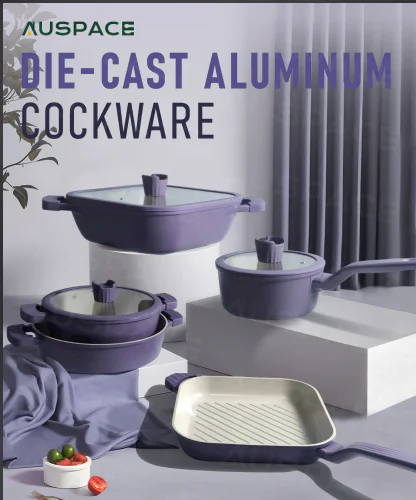
Die-casting is a common method for producing cookware, especially for aluminum-based products. In this process, molten aluminum is injected into a die under high pressure. This results in cookware with uniform thickness and excellent heat distribution. Cast iron cookware is typically made using sand casting, where molten iron is poured into a sand mold. Casting is favored by cookware manufacturers for its ability to create complex shapes and strong, durable cookware. - Stamping
Stamping involves cutting and shaping metal sheets, usually stainless steel or aluminum, using a press and dies. This process is efficient for producing large quantities of cookware with relatively simple designs. It is commonly used for making frying pans, saucepans, and other basic cookware items. Stamped cookware is often more affordable but may have slightly less uniform heat distribution compared to cast cookware. Cookware manufacturers often use stamping for high-volume production runs. - Forging
Forging is a process where metal is heated and then shaped using a hammer or press. This method creates cookware with exceptional strength and durability. Forged aluminum cookware, for example, is known for its ability to withstand high temperatures and heavy use. Forging can be done either by hand or by machine, with machine forging being more common in large-scale production by cookware manufacturers. - Cladding
Cladding involves bonding multiple layers of different metals together to create a composite material. This is often used in high-end stainless steel cookware, where a layer of aluminum or copper is sandwiched between layers of stainless steel. The aluminum or copper core provides excellent heat conductivity, while the stainless steel exterior offers durability and resistance to corrosion. Cladding can be done using various techniques, including roll bonding and explosion bonding, and is a specialty of many cookware manufacturers. - Non-stick Coating Application
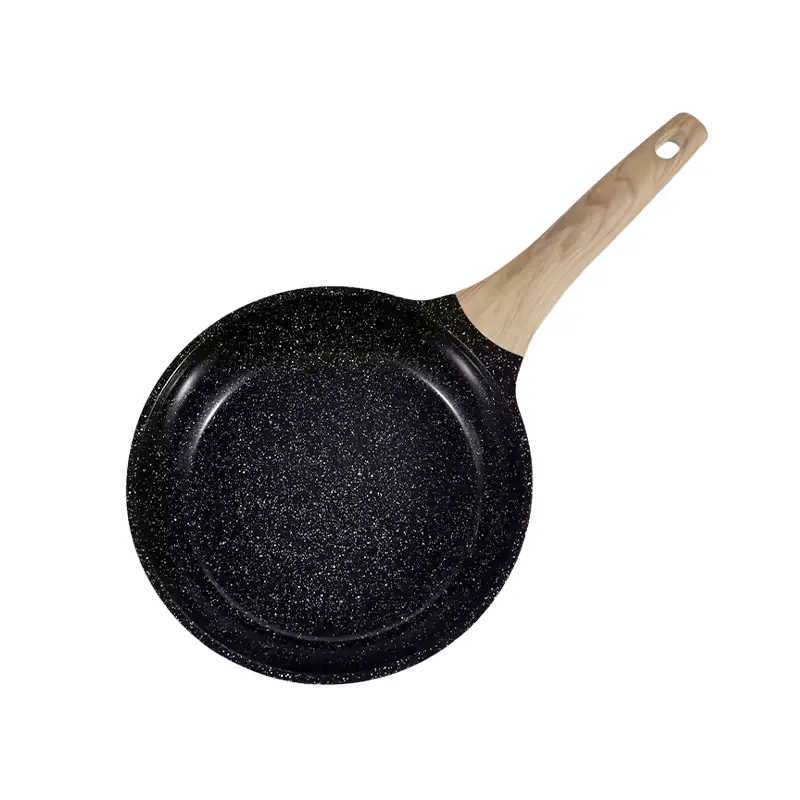
For non-stick cookware, a coating such as PTFE (Polytetrafluoroethylene) is applied to the surface. The process typically involves pre-treating the metal surface, spraying or dipping it into the coating material, and then curing it at high temperatures. The number of coating layers and the curing process can vary depending on the cookware manufacturers‘ specifications and the desired quality of the non-stick surface.
Can Cookware Manufacturers Produce Cookware with Specific Certifications?
Yes, reputable cookware manufacturers can produce cookware with a variety of specific certifications, which are essential for meeting industry standards, ensuring product safety, and gaining consumer trust.
- Food Safety Certifications
Certifications such as FDA (Food and Drug Administration) approval in the United States and LFGB (Lebensmittel- und Futtermittelgesetzbuch) certification in the European Union ensure that the cookware materials and coatings are safe for contact with food. These certifications involve rigorous testing to ensure that no harmful substances leach into food during cooking. Cookware manufacturers must adhere to strict protocols to obtain and maintain these certifications. - Quality Management Certifications
ISO 9001 certification is a widely recognized standard for quality management systems. Cookware manufacturers with this certification follow strict quality control processes throughout the production cycle, from raw material sourcing to final product inspection. This ensures consistent product quality and reliability. - Environmental Certifications
With increasing consumer awareness of environmental issues, certifications such as Cradle to Cradle and Energy Star are becoming more important. These certifications assess the environmental impact of the cookware, including its manufacturing process, material sourcing, and recyclability. Cookware manufacturers committed to sustainability often pursue these certifications to demonstrate their environmental responsibility. - Performance Certifications
Certifications related to performance, such as induction compatibility certification, verify that the cookware works effectively on induction cooktops. This is crucial as induction cooking becomes more popular worldwide. Additionally, certifications for heat resistance and durability may be obtained through independent testing laboratories. Cookware manufacturers specializing in high-performance cookware will often have these certifications.
When selecting cookware manufacturers, it is important to inquire about their ability to obtain and maintain these certifications. A manufacturer with a proven track record of producing certified cookware is more likely to deliver products that meet your requirements and comply with relevant regulations.
How Do I Ensure Quality Control with Cookware Manufacturers?
Ensuring quality control is paramount when partnering with cookware manufacturers for bulk production. Poor quality control can lead to defective products, customer dissatisfaction, and financial losses. Here are some key steps to ensure effective quality control:
- Pre-production Inspection
Before mass production begins, conduct a pre-production inspection to verify the quality of raw materials and the cookware manufacturers‘ production setup. This includes checking the specifications of the materials, such as the grade of stainless steel or aluminum, and ensuring that the manufacturing equipment is in good working condition. - In-process Quality Checks
Implement in-process quality checks at various stages of production. This can include inspecting the thickness of the cookware walls during casting or stamping, checking the uniformity of the non-stick coating application, and verifying the dimensions of the cookware parts. These checks help identify and address any issues before they escalate. Cookware manufacturers with robust quality control systems will have these checks in place. - Final Product Inspection
Perform a final product inspection before the cookware is shipped. This involves checking each piece for defects such as dents, scratches, uneven coatings, or improper assembly. Random sampling can be used for large production runs, but for critical products, 100% inspection may be necessary. Cookware manufacturers should provide detailed inspection reports for your review. - Third-Party Quality Audits
Engage third-party quality audit companies to conduct independent inspections and audits of the cookware manufacturers‘ facilities and production processes. These audits provide an objective assessment of the manufacturer’s quality control systems and can help identify areas for improvement. - Continuous Communication
Maintain open and continuous communication with the cookware manufacturers. Regularly discuss quality standards, production progress, and any issues that arise. This helps build a strong partnership and ensures that both parties are aligned on quality expectations.
By implementing these quality control measures, you can minimize the risk of receiving substandard cookware and ensure that your products meet the highest standards of quality and performance.
What’s the Lead Time for Custom Cookware Production by Cookware Manufacturers?
The lead time for custom cookware production can vary significantly depending on several factors, including the complexity of the design, the manufacturing process, the quantity of the order, and the cookware manufacturers‘ production schedule.
- Design and Prototyping Phase
The first step in custom cookware production is the design and prototyping phase. This can take anywhere from a few weeks to a few months, depending on the complexity of the design and the number of iterations required. During this phase, the cookware manufacturers will create a prototype of the cookware, which will be tested and refined to meet your specifications. - Tooling and Setup
Once the design is finalized, the cookware manufacturers will need to create the necessary tools and molds for production. This is known as the tooling phase. The time required for tooling can vary from a few weeks to several months, depending on the type of cookware and the manufacturing process. For example, die-casting molds for aluminum cookware can take longer to produce than stamping dies for stainless steel cookware. - Production Phase
The production phase itself can take anywhere from a few weeks to several months, depending on the quantity of the order and the cookware manufacturers‘ production capacity. Larger orders will naturally take longer to produce, as will cookware with complex designs or multiple components. - Quality Control and Shipping
After production is complete, the cookware will undergo quality control inspections, which can take a few days to a week. Once the products pass inspection, they will be packaged and shipped, which can take additional time depending on the destination and shipping method.
In general, the lead time for custom cookware production can range from 3 to 12 months. It is important to discuss lead times with potential cookware manufacturers early in the partnership process and to factor in sufficient time for design, prototyping, tooling, production, and shipping when planning your product launch.
Other Relevant Factors
- Custom Cookware Manufacturing
Custom cookware manufacturing allows you to create unique products that stand out in the market. When choosing cookware manufacturers for custom cookware, look for one with experience in handling custom projects, a skilled design team, and the ability to work with a variety of materials and finishes. - Heavy-gauge Cookware Suppliers
Heavy-gauge cookware is known for its durability and superior heat distribution. When sourcing heavy-gauge cookware, it is important to partner with cookware manufacturers who specialize in this type of cookware and use high-quality materials. Heavy-gauge cookware is often more expensive, but it offers better performance and a longer lifespan, making it a worthwhile investment for consumers. - Induction-compatible Cookware
As induction cooking becomes more popular, the demand for induction-compatible cookware is on the rise. Induction-compatible cookware must be made of a magnetic material, such as cast iron or stainless steel with a magnetic base. When working with cookware manufacturers, ensure that they have the expertise to produce cookware that is compatible with induction cooktops and can provide the necessary certifications. - PFOA-free Cookware Manufacturers
PFOA (Perfluorooctanoic acid) is a chemical that was once commonly used in the production of non-stick coatings but has been linked to health concerns. Today, many consumers are seeking PFOA-free cookware. When selecting cookware manufacturers, prioritize those who use PFOA-free coatings and can provide documentation to support this claim. - Cookware Production Cost Analysis
Conducting a thorough cost analysis is essential when partnering with cookware manufacturers. The cost of production will depend on several factors, including the material used, the manufacturing process, the quantity of the order, and any customizations or certifications required. It is important to obtain detailed quotes from multiple cookware manufacturers and to compare not only the price but also the quality of the products and the manufacturer’s reputation.
Kitchen Storage Supplier | Auspace
Conclusion
Partnering with the right cookware manufacturers for bulk production requires careful consideration of multiple factors. By understanding the manufacturing processes, certifications, quality control measures, lead times, and other relevant factors, you can make an informed decision that aligns with your business goals. Whether you are looking for custom cookware, heavy-gauge cookware, induction-compatible cookware, or PFOA-free cookware, taking the time to research and evaluate potential cookware manufacturers will help ensure the success of your partnership and the quality of your products.

Nathan is a Kitchenware Compliance & Sourcing Advisor at Auspace Kitchenware, with years in China’s kitchenware sourcing and global market fit. He works with Chinese factories to ensure quality, FDA/CE compliance, and alignment with buyers’ needs.With cross-border trade background, he guides on certification, quality checks, and cost-optimized sourcing. His expertise connects buyers to China’s manufacturers, making him a trusted resource for compliant kitchenware.