


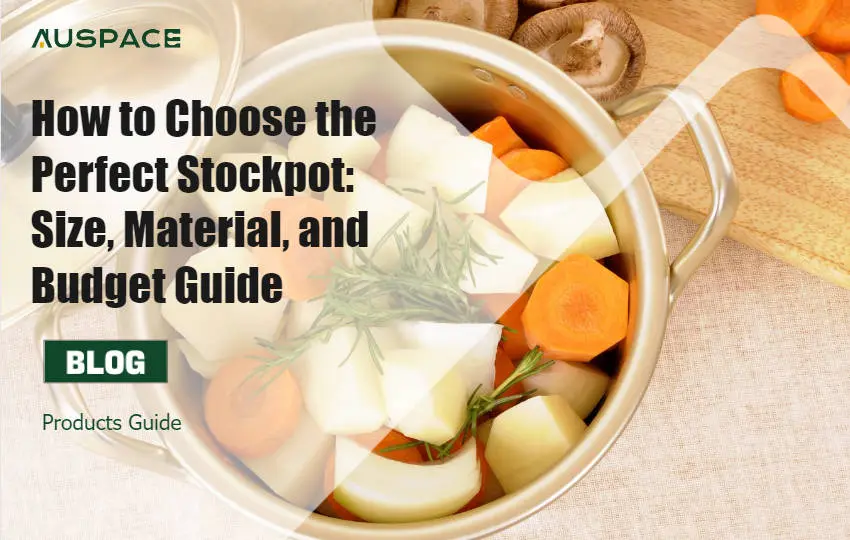
A stockpot is the workhorse of any kitchen — the pot behind Sunday soups, weekend bone broth, pasta night for a crowd, and the seafood boil that feeds the whole table. Yet it is also one of the most commonly mis-purchased pieces of cookware: too small for the job, made from the wrong material, or priced far above the value it delivers.
Choosing well comes down to three decisions: the right size for your cooking volume, the right material for your cooking style, and a budget that reflects how the pot will actually be used. This guide walks through each decision in practical terms — whether you are buying one pot for a home kitchen or stocking a product line for retail, catering, or restaurant supply.
How to Choose the Right Stockpot Size
Size is the first spec to lock down, because it determines what the pot can physically do. A stockpot that is too small boils over; one that is too large wastes energy and takes up storage.
Quick Size Chart
| Capacity | Best For | Typical Users |
| 6–8 qt (5.7–7.6 L) | Daily soups, pasta, blanching | 1–4-person households |
| 8–12 qt (7.6–11.4 L) | Batch cooking, meal prep, family stock | 4–6-person households, meal preppers |
| 12–20 qt+ (11.4 L+) | Bone broth, seafood boils, canning | Large families, caterers, restaurants |
Small (6–8 qt): Everyday Soups and Small Households
A 6–8 quart pot (roughly 5.7–7.6 L) handles soups and stews for two to four people, boiling pasta for a family dinner, and blanching vegetables. It is also the easiest size to store and lift when full. If you cook for a small household most nights, this is the practical daily driver.
Medium (8–12 qt): Family Meals and Batch Cooking
The 8–12 qt range (roughly 7.6–11.4 L) is the sweet spot for most buyers. It covers batch cooking, meal prep, whole-chicken stock, chili for a gathering, and preserving small batches of sauce. For businesses, this is the volume segment with the broadest retail demand — the default “family size” that moves consistently across markets.
Large (12–20 qt+): Bone Broth, Seafood Boils, and Commercial Use
Pots from 12 quarts upward (11.4 L+) are built for long-simmered stocks, crawfish and lobster boils, canning, and commercial kitchens running high volumes daily. They cost more, take serious storage space, and are heavy when full — but nothing smaller can do the same job.
Capacity vs. Diameter: Why Both Dimensions Matter
Two 12-quart pots can behave very differently. A tall, narrow pot minimizes evaporation — ideal for stock, where you want liquid to reduce slowly. A wider pot with a broader base gives more surface area for browning bones or aromatics before adding liquid, and accommodates whole lobsters or corn on the cob. Check both dimensions, not just the quart rating.
How to Choose the Right Stockpot Material
Material determines how the pot heats, how long it lasts, how it cleans, and what it costs. These are the four options that matter.
Material Comparison Table
| Material | Heat Distribution | Durability | Weight | Price Tier | Best For |
| Tri-ply stainless steel | Excellent (aluminum core) | Very high | Medium | ––$ | All-purpose, stock, acidic dishes |
| Die-cast/pressed aluminum | Excellent | Medium (coating-dependent) | Light | $ | Budget lines, high-volume retail |
| Non-stick coated | Very good | Low–medium (coating wears) | Light–medium | ––$ | Low-oil cooking, easy cleanup |
| Enameled cast iron | Very good (retention) | Very high | Heavy | $$$ | Oven-finished dishes |
Stainless Steel Tri-Ply: The Versatile Premium Standard
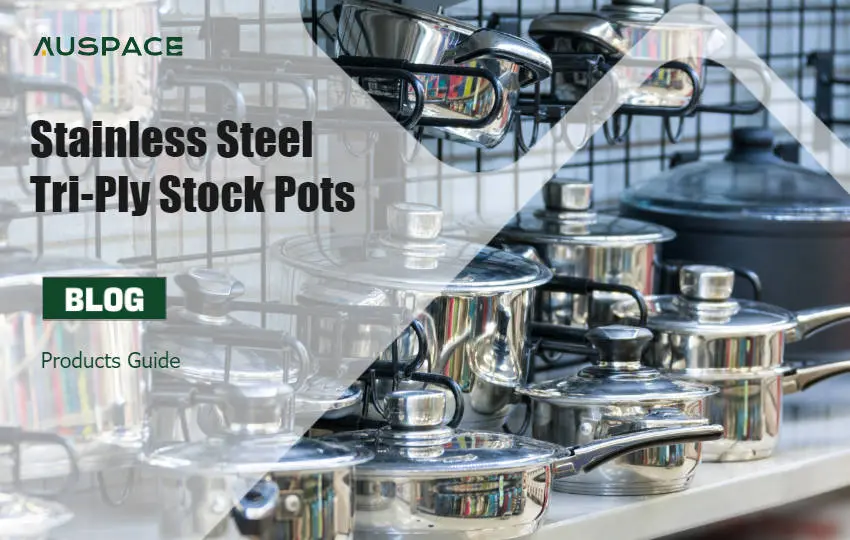
Tri-ply construction bonds an aluminum core between two layers of stainless steel. The aluminum core spreads heat evenly across the base and walls, eliminating hot spots; the stainless surfaces are durable, non-reactive, and safe with acidic ingredients like tomato-based stocks. Food-grade SS304 is the benchmark for cookware interiors.
This is the category most worth paying up for, because it combines even heating, warp resistance, and a long service life. A practical example of the current format: AUSPACE’s stockpot pairs the tri-ply body with a honeycomb-textured non-stick interior and a vented glass lid, in a brushed stainless finish. The honeycomb pattern reduces food adhesion and adds scratch resistance over a smooth steel surface.
If you want to go deeper on construction and sourcing considerations for this category, see the stainless steel tri-ply stock pot sourcing guide.
Aluminum (Die-Cast and Pressed): Lightweight and Cost-Effective
Aluminum conducts heat roughly fifteen times better than stainless steel — approximately 237 W/m·K versus 15 W/m·K. The result: fast heat-up and responsive temperature control, at a notably lower price and about a third of the weight.
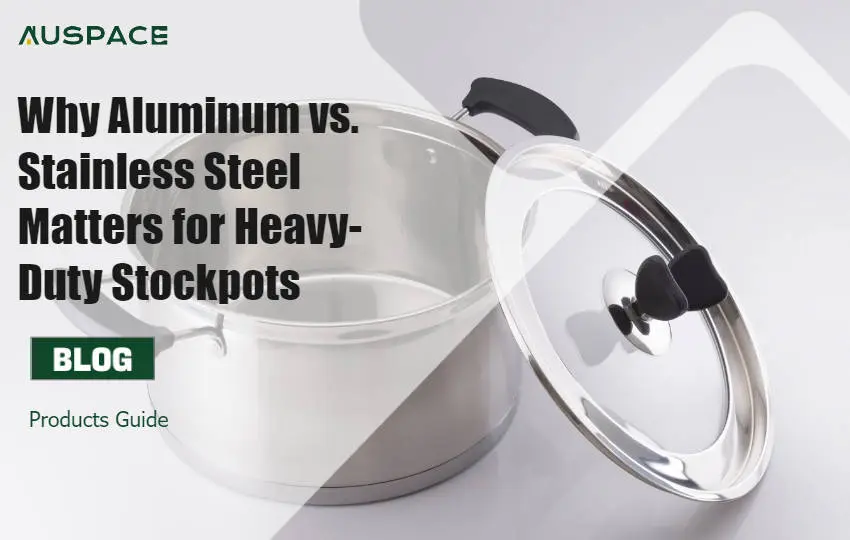
The trade-offs are real: bare aluminum reacts with acidic foods, so quality aluminum stockpots carry a non-stick or ceramic coating, and coated interiors have a shorter usable life than bare tri-ply steel. For volume-driven retail programs and budget-conscious buyers, aluminum remains the value workhorse. The physics and trade-offs are covered in detail in aluminum vs. stainless steel for heavy-duty stockpots.
Non-Stick Coated: Easy Release but Shorter Lifespan
A non-stick interior makes cleanup after rice, beans, or oatmeal effortless and lets you cook with less oil. The limitation is durability: coatings degrade with high heat, metal utensils, and abrasive cleaning, so a non-stick pot is a consumable, not a lifetime purchase. It is best treated as a convenience layer — which is exactly why honeycomb-textured stainless interiors are gaining ground: they deliver much of the release benefit without the coating’s expiration date.
Enameled Cast Iron: Superior Heat Retention at a Higher Weight
Enameled cast iron holds and radiates heat like nothing else, transitions from stovetop to oven, and lasts decades. But for a stockpot specifically, it is usually the wrong tool: stock cooking is about steady simmering, not searing heat retention, and an enameled 12-quart pot can weigh more than a full aluminum one twice its size — at a premium price. It earns its place for oven-finished dishes, not long-simmered stock.
How to Set Your Stockpot Budget
Entry-Level (10–30 retail): Aluminum and Basic Non-Stick
Pressed or die-cast aluminum with a standard non-stick coating. Perfectly serviceable for light home use and the workhorse of promotional and volume retail programs. Expect a shorter replacement cycle.
Mid-Range (30–80 retail): Tri-Ply Stainless Steel
The value sweet spot. Tri-ply construction at this price delivers professional-grade heat distribution and a pot that outlasts several entry-level replacements. For most home cooks and most retail assortments, this is where the “perfect” stockpot lives.
Premium (80–200+ retail): Multi-Ply Clad and Enameled Cast Iron
Five-ply constructions, designer finishes, and enameled cast iron. Worth it for serious cooks and premium brand lines; overkill for boiling pasta.
Cost-per-Use: The Number That Actually Matters
A $60 tri-ply pot used weekly for ten years costs about 12 cents per meal. A $20 coated aluminum pot replaced every two years costs more over the same decade. Buy at the tier that matches frequency of use — not the lowest sticker price.
Wholesale and Bulk Pricing: What Business Buyers Should Know
For distributors, private-label brands, and procurement managers, the same tiering logic applies at the factory level, with different math: unit pricing, MOQ, and lead time drive the decision.
Conclusion
The perfect stockpot is not the most expensive one — it is the one where size, material, and budget line up with how you actually cook. Match capacity to your real cooking volume, default to tri-ply stainless unless weight or price dictates aluminum, and pay for the tier your usage frequency justifies rather than the lowest sticker price.
If you are sourcing stockpots for a brand, retail line, or food-service operation, the same framework applies — with customization added on top. AUSPACE manufactures its tri-ply stockpot line in Ningbo with full OEM support covering handles, finishes, logo application, and retail packaging, backed by FDA/LFGB-compliant materials and independent inspection reporting. Browse the cookware collection or request a quote to see current specs and pricing for your market.