


Introduction
Selecting the right raw substrates is the single most important decision for global commercial buyers. Food-Grade Stainless Steel remains the absolute gold standard for manufacturing professional culinary tools. However, importing bulk inventory without knowing specific metal compositions can lead to severe compliance issues.
Are you currently struggling to choose between different metal grades for your next production order? Selecting the wrong material can lead to low durability, customer complaints, and serious customs rejections.
In this guide, you will discover the technical differences between 304 and 316 metal compositions. This knowledge ensures you source high-quality products that meet global safety laws. For a broad look at all available manufacturing substrates, read our Ultimate Guide to Kitchenware Materials.
Key Takeaways
- Grade 304 Dominance: 304 stainless steel is the most cost-effective and popular choice for everyday commercial kitchen tools.
- Grade 316 Excellence: 316 stainless steel provides superior protection against salt and food acids due to added molybdenum.
- Compliance Focus: Verifying strict stainless steel safety protocols is vital to passing international customs inspections.
- Sourcing Partner: Working with an experienced partner helps you secure verified materials and authentic lab testing reports.
Understanding Food-Grade Stainless Steel: The Foundation of Safe Sourcing
Global B2B buyers must understand why Food-Grade Stainless Steel dominates the international commercial market. This specialized alloy resists chemical migration, meaning it will not leach harmful metallic toxins into meals during high-heat cooking. It provides a non-reactive cooking surface that perfectly preserves natural food flavors.
Furthermore, this premium food-grade metal is exceptionally strong, scratch-resistant, and entirely non-porous. It withstands intense daily usage and harsh chemical cleaning in commercial dishwashers without degrading. For wholesale distributors, investing in this material guarantees a highly durable product line that appeals to both home chefs and professional restaurants.
The Technical Breakdown: 304 Stainless Steel vs. 316 Stainless Steel
Exploring 304 Stainless Steel
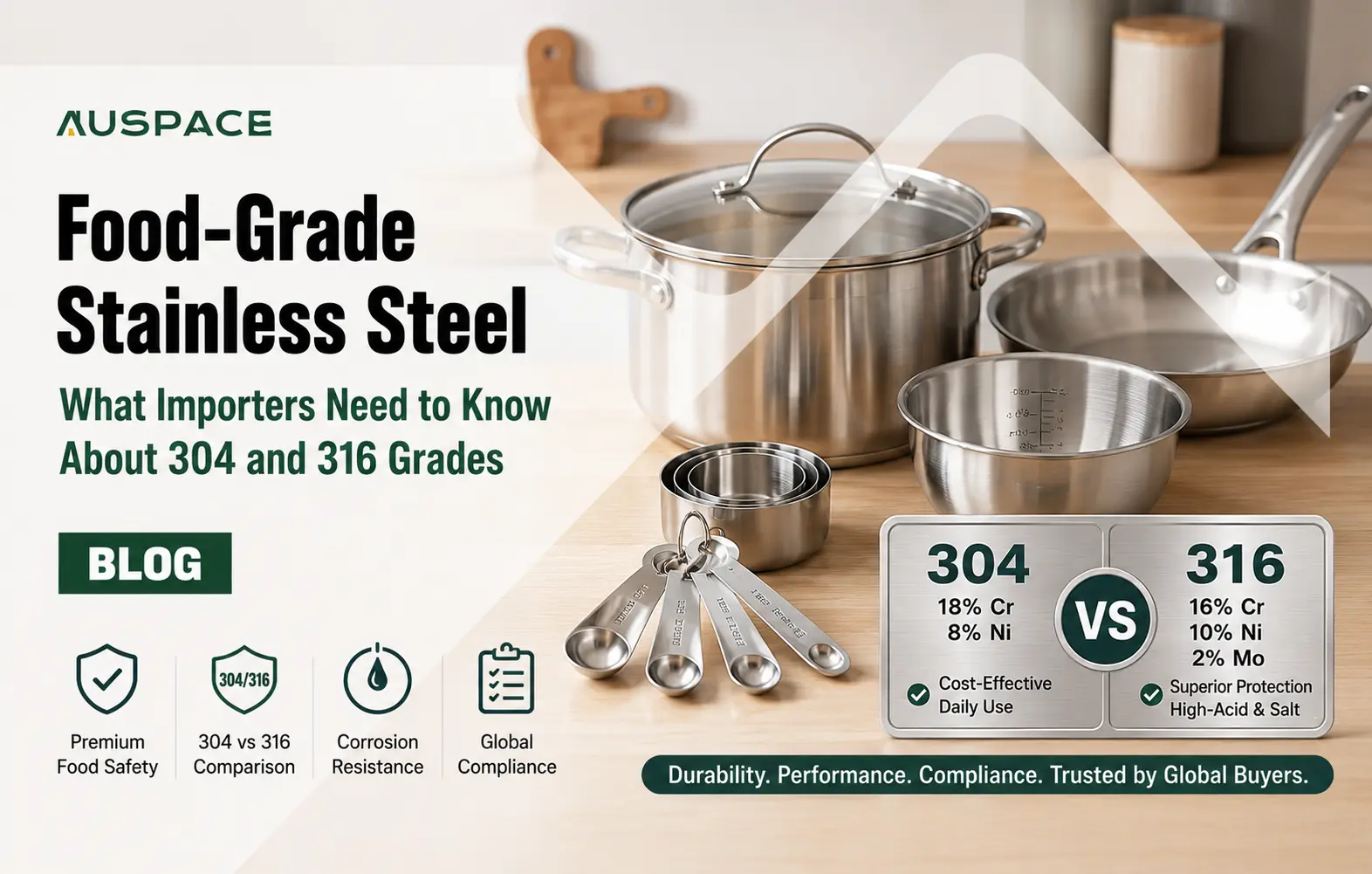
The most common alloy used in the culinary industry is 304 stainless steel. Known scientifically as 18/8 stainless steel, it contains approximately 18% chromium and 8% nickel. The essential nickel content is what gives the metal its bright, reflective look and vital rust protection.
This grade is highly flexible for factory shaping, making it perfect for manufacturing deep stockpots, mixing bowls, and cutlery. Because it offers a great balance between affordable production costs and high durability, it is the top choice for mass-market retail brands.
Evaluating 316 Stainless Steel
For more demanding environments, 316 stainless steel is the superior structural choice. This alloy contains roughly 16% chromium, 10% nickel, and an essential 2% molybdenum. This specific chemical addition significantly upgrades the metal’s performance in specialized situations.
While it costs more to manufacture, 316 grade represents the absolute peak of premium cookware materials. Sourcing this elite grade allows wholesale distributors to target luxury consumer markets, marine catering businesses, and industrial food processing factories.
Corrosion Resistance and Cookware Performance
The primary difference between these two metal grades lies in their overall level of corrosion resistance. Standard 304 grade provides excellent rust protection under normal cooking conditions with everyday ingredients. It handles water, heat, and basic cleaning agents without showing surface wear.
However, when cooking highly acidic foods like tomato sauces or salty broths, 316 grade performs much better. The added molybdenum prevents pitting corrosion and surface scarring caused by chloride exposure. This maximum protection ensures a flawless lifespan, making it highly valued by professional chefs who require the ultimate stainless steel cookware performance.
Ensuring Stainless Steel Safety and Global Compliance
Navigating international trade laws requires strict verification of raw material purity. Customs authorities in the United States and Europe closely monitor incoming shipments for heavy metal leakage. Importers must proactively verify all stainless steel safety metrics before shipping mass orders.
Reliable manufacturers always provide independent chemical analysis certificates to prove authentic metal composition. Every batch of Food-Grade Stainless Steel must pass strict regulatory standards to avoid costly border delays. Ensuring this legal compliance protects your wholesale brand reputation and secures your long-term business investments.
FAQ
Why is nickel content so important in stainless steel cookware?
The specific nickel content directly determines the metal’s resistance to rust and its overall structural durability. It helps create a smooth, non-porous surface that prevents chemical reactions with food. Higher nickel levels also give premium cookware materials their bright, high-end polished appearance.
Is 304 stainless steel safe for long-term commercial cooking?
Yes, 304 stainless steel is completely safe and remains the industry standard for commercial kitchens worldwide. It provides excellent stainless steel safety compliance and does not leach toxic chemicals into ingredients. It is a highly cost-effective, durable food-grade metal for everyday bulk sourcing.
When should an importer upgrade to 316 stainless steel cookware?
An importer should upgrade to 316 grade when targeting luxury markets or specialized culinary sectors. This includes professional marine catering, industrial high-acid food production, or premium medical-grade kitchen tools. Its enhanced corrosion resistance justifies the higher manufacturing budget.
Conclusion
Mastering the technical details of Food-Grade Stainless Steel is essential for running a profitable wholesale import business. Choosing between 304 and 316 grades allows you to balance manufacturing budgets with specific customer needs. Prioritizing material purity and strict compliance eliminates supply chain risks and builds strong consumer trust.
Managing material sourcing and factory verification alone can be incredibly complex. As an experienced Chinese kitchenware supplier with 11 years of industry expertise, AUSPACE simplifies your entire importing journey. We provide comprehensive, one-stop solutions from custom product design and raw material verification to final container logistics.
We protect your business by delivering third-party standardized testing reports for every order, ensuring 100% legal compliance. Our professional service offers flexible, negotiable payment terms to optimize your cash flow, all backed by an efficient 25-day standard production lead time.

Berry Bian is a Kitchenware Sourcing & Buyer Support Specialist at Auspace Kitchenware, with years in China’s kitchenware wholesale sourcing. She assists international buyers with order tracking, factory communication, and tailored product selections.
With hands-on trade experience, she offers practical tips on smooth sourcing workflows and solving supply chain pain points. Her support links overseas buyers to reliable Chinese manufacturers, making her a go-to for hassle-free kitchenware sourcing.