


China is the world’s largest producer of cookware and kitchenware. For international buyers, the challenge is ensuring that what leaves the factory matches the approved sample in quality, safety, and durability. This guide explains how kitchenware quality control China, from factory floor processes to third-party inspection and practical defect reduction tools.
Factory Quality Control Process: Three-Layer Model
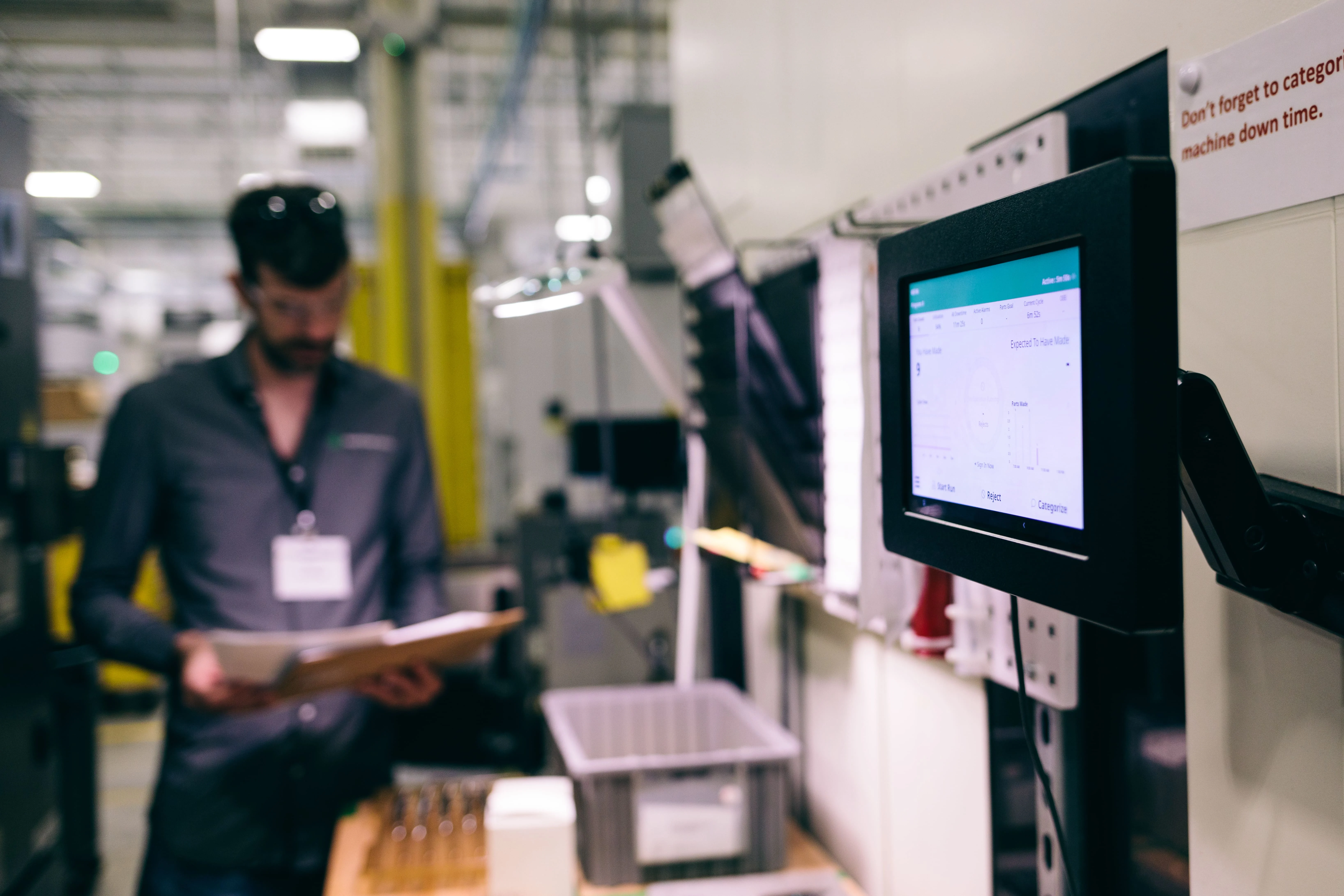
Many buyers rely solely on final inspection, but that rarely solves consistency problems. Cookware production involves casting, stamping, grinding, coating, firing, assembly, and packaging. A quality failure at any stage can ruin a batch. An end-to-end framework is required, organized into three phases: IQC (Incoming Quality Control), IPQC (In-Process Quality Control), and OQC (Outgoing Quality Control).
Incoming Quality Control (IQC). Cookware quality begins with materials: cast iron, stainless steel, enamel frit, non-stick coatings, handles, rivets, lids. If any component is off-spec, later process control cannot fully compensate. In a well-run IQC, materials are screened before regular supply begins. High-risk materials receive stricter controls. For cast iron, inspectors check composition, wall thickness, and surface defects (porosity, sand inclusions). For stainless steel, they verify material certificates, thickness tolerance, and surface condition. Accessories are checked for dimensional fit and finishing. Nonconforming materials are quarantined, documented, and returned if severe. Data is archived for future sourcing decisions.
In-Process Quality Control (IPQC). The biggest risk is gradual drift: coatings become thinner, firing temperatures drift, polishing tools wear. IPQC catches drifts before large quantities of defects are produced. Inspectors monitor key steps in real time. For enamel and non-stick coatings, adhesion and thickness are measured periodically. For cookware bodies, dimensional checks ensure flatness and roundness remain within spec. Corrective action is taken immediately when a drift is detected, preventing hundreds or thousands of defective pieces.
Outgoing Quality Control (OQC). Even with strong IQC and IPQC, every finished batch must undergo final verification before shipment. OQC serves as the last protection gate. Finished and packed products are sampled according to the agreed statistical plan. Inspectors confirm that workmanship, functionality, packaging, and labeling conform to buyer requirements. Many buyers combine OQC with third-party pre-shipment inspection for an independent assessment before goods leave the factory.
Defect Classification and AQL Standards

Quality control without a standard for measuring defects is subjective. The international standard used in China is ISO 2859-1 (ANSI/ASQ Z1.4). It uses the Acceptable Quality Limit (AQL) to define how many defective products are tolerable.
Defects are divided into three categories. Critical defects make a product unsafe or violate regulations; these are never accepted. Major defects affect usability or durability to a degree most end users would find unacceptable. Minor defects are small deviations most users would not complain about (e.g., a barely visible cosmetic blemish).
Common AQL thresholds for consumer goods from China: 0% for critical defects, 2.5% for major, 4.0% for minor. Example: a batch of 40,000 pieces. Using ISO 2859 with normal severity and level II, the sample size may be 500 pieces. If the inspection finds 0 critical defects, no more than 14 major defects, and no more than 21 minor defects, the batch is accepted. Any excess triggers rejection.
Pre-Shipment Inspection (PSI)

Pre-shipment inspection is the most common QC service. It occurs when merchandise is finished and at least 80% of products are packed. Products are randomly drawn according to the ISO 2859 sampling plan. The inspection covers quantity verification, labeling, safety checks, functional testing, appearance evaluation, and performance verification against the purchase order and approved sample.
A typical PSI for kitchenware includes: handle strength test, lid fit check, wobble base check on a flat surface, temperature resistance test for stovetop/oven use. Quantity and assortment are verified. Packaging integrity is tested, including carton drop tests (ISTA 1A standards, drops on six faces, three edges, one corner). Labels, markings, logos, and barcodes are scanned for correctness. Visual defects – scratches on non-stick surfaces, pinholes in enamel, dents, discoloration, uneven coating – are documented.
A practical rule: if a defect can be seen from 50 cm distance, it is generally classified as major. If not visible from that distance, it is minor. This provides a simple, reproducible standard.
Production Monitoring and In-Line Inspection

PSI is reactive; production monitoring (in-line inspection or DUPRO – During Production Inspection) is proactive. Production monitoring takes place when approximately 20% or more of the run is complete. Inspectors check products as they come off the line. Issues are identified immediately, often when only a small number of pieces are affected. The factory can correct before producing thousands of defective units.
In-line inspectors check coating thickness while the coating line is still running, check base convexity on freshly stamped bodies, verify lid fit before the batch moves to packaging. The cost of correcting a defect at this stage is trivial compared to a rejected container shipment.
Another form is the Initial Production Check (IPC), at the very start of mass production. IPC verifies that the factory correctly understood all specifications and that the first mass-produced units match the approved sample. Catching misunderstandings before 10,000 pieces are made is one of the highest-return quality investments.
Third-Party Inspection in China

Many buyers hire independent third-party inspection companies to perform quality checks. Third-party inspectors are not factory employees, so their reports are more objective and carry greater weight in disputes.
Third-party companies in China typically offer: product inspections (pre-shipment, during production, initial production checks, container loading supervision), factory audits (quality management system verification, social compliance, technical capability assessment), and laboratory testing for safety and regulatory compliance. Some specialize in kitchenware, offering customized checklists for cast iron, aluminum, enamel, and stainless steel cookware.
Inspections are often arranged within two to three days of booking. Detailed reports with photos and video findings are issued within 24 hours. Professional firms maintain teams across all key manufacturing regions.
Cost: For a typical order, pre-shipment inspection fees generally range from $250 to $600, depending on scope and complexity. Production monitoring is slightly more expensive due to longer on-site presence, but the defect-prevention value often far exceeds the additional cost.
Quality Control Checklist for Kitchenware

A well-designed QC checklist is the core of any effective program. It serves two purposes: guiding inspectors and providing a record for both buyer and supplier.
Typical checklist categories:
Appearance and workmanship: visible cracks, chips, discolorations, fading, scratches, blemishes, unusual odors, staining, peeling or flaking of non-stick coatings, sharp edges or rough surfaces that could pose safety hazards.
Function and assembly: securely attached handles and knobs, lid fit and seal, smooth operation of moving parts, stability on flat surfaces (no wobbling), heat resistance (oven or stovetop testing when applicable).
Packaging and labeling: export cartons meet drop test requirements, barcodes scannable and correct, shipping marks match the purchase order, labels legible and properly applied.
Many buyers also conduct a supplier audit (factory assessment) before any production order. This verifies the factory’s quality management system, production equipment, calibration records, quality documentation, and export history. Auditing before signing a contract prevents costly mistakes.
Laboratory Testing and Regulatory Compliance

Not all quality issues can be detected by visual inspection on the factory floor. Cookware contacts food, so chemical safety is paramount. Substandard products present health risks.
Requirements vary by market: USA requires FDA compliance for food contact materials, CPSIA for children’s products, California Proposition 65 warnings. EU enforces Food Contact Materials Regulation (EU 10/2011) and REACH. For kitchenware sold in China, mandatory GB 4806 series applies (updated 2025; older versions invalid).
Laboratory testing typically includes overall migration, specific migration limits for heavy metals, volatile organic compounds for silicone and plastic parts, and coating durability (cross-hatch adhesion tests per ASTM D3359). These tests require accredited laboratories; they cannot be properly performed by a general QC inspector on a factory floor. Inspection companies routinely select samples during PSI and forward them to accredited labs.
Inspection Report Sample: What You Receive

A professional inspection report contains several essential sections.
Header: inspection date, company name and inspector ID, factory name and location, buyer name, product description, PO number, total batch quantity.
Sampling plan: AQL levels for critical, major, minor defects; sample size drawn; code letter from ISO 2859.
Checklist results: each test item with requirement, inspector comment, and pass/fail. Example entries: “carton drop test (10 drops from 76cm per ISTA 1A on 3 cartons) – PASSED”; “handle strength test (15kg downward force for 60s) – PASSED”; “non-stick coating adhesion (cross-hatch tape test on 3 samples) – PASSED”; “enamel pinholes – 2 pinholes on one unit, within AQL limit.”
Defect summary table: lists every defect with category (critical/major/minor), quantities, and descriptions. Photographs of representative defects are attached.
Sample status: batch accepted, conditionally accepted, or rejected based on AQL comparison. If rejected, recommendations for corrective actions (sorting, rework, replacement, re-inspection).
Measurements and material verification: for stainless steel, thickness measurements at multiple points and mill certificates; for cast iron, weight consistency and porosity check; for non-stick, coating thickness gauge readings.
Risk Reduction: Practical Strategies for Buyers

Reducing defect rates requires a structured quality program, not just one pre-shipment check. Here are proven strategies.
Supplier audit before first order. Visit the factory or hire an audit service to verify quality systems, equipment calibration, and past export performance.
Initial Production Check for every new product and new factory. Ensures the factory correctly interprets specifications and starts mass production aligned with the approved sample.
Production monitoring for large orders or high-risk products. Enamel and non-stick cookware benefit enormously from in-process inspection. The factory knows an inspector is watching, and that changes behavior.
Set clear AQL standards in the purchase contract. Specify thresholds for critical, major, minor defects and state the sampling standard (ISO 2859-1, Level II, normal severity, single sampling plan).
Review inspection reports systematically as data. Track which defect types recur, which factories perform best, which product categories are most problematic. Adjust inspection strategies accordingly.
Mandate corrective action reports whenever a batch is rejected or defect thresholds exceeded. The report must identify root causes and specify changes to prevent recurrence. A supplier that cannot produce a credible corrective action plan is not ready for larger orders.
Container loading supervision. Even when products have passed PSI, substitutions, mixing of defective goods, or incorrect loading quantities can occur during loading. A third-party inspector supervising loading verifies that the exact goods that passed inspection go into the container.
Conclusion
Kitchenware quality control in China is systematic but requires consistent attention. Factories that produce high-quality cookware operate a three-layer framework: incoming, in-process, and outgoing quality checks. Buyers who receive consistently good shipments build layered programs including supplier audits, initial production checks, production monitoring, pre-shipment inspection, and container loading supervision. They set clear AQL standards, review inspection data over time, and require corrective action plans. Third-party inspection services provide objective, professional verification that bridges the distance between buyer and factory. With the right quality system, importing kitchenware from China becomes a reliable, repeatable process.

Iris is a seasoned sourcing expert in the cookware industry with years of experience. She specializes in product development, quality assurance, and international compliance, providing trusted insights and practical solutions for buyers and professionals.